1029, 4024 Elkhart Rd. Ste 26, Goshen, IN 46526
Call Us at 574-505-6246
INTEREST FREE PLAN
| Rated Excellent 4.8/5
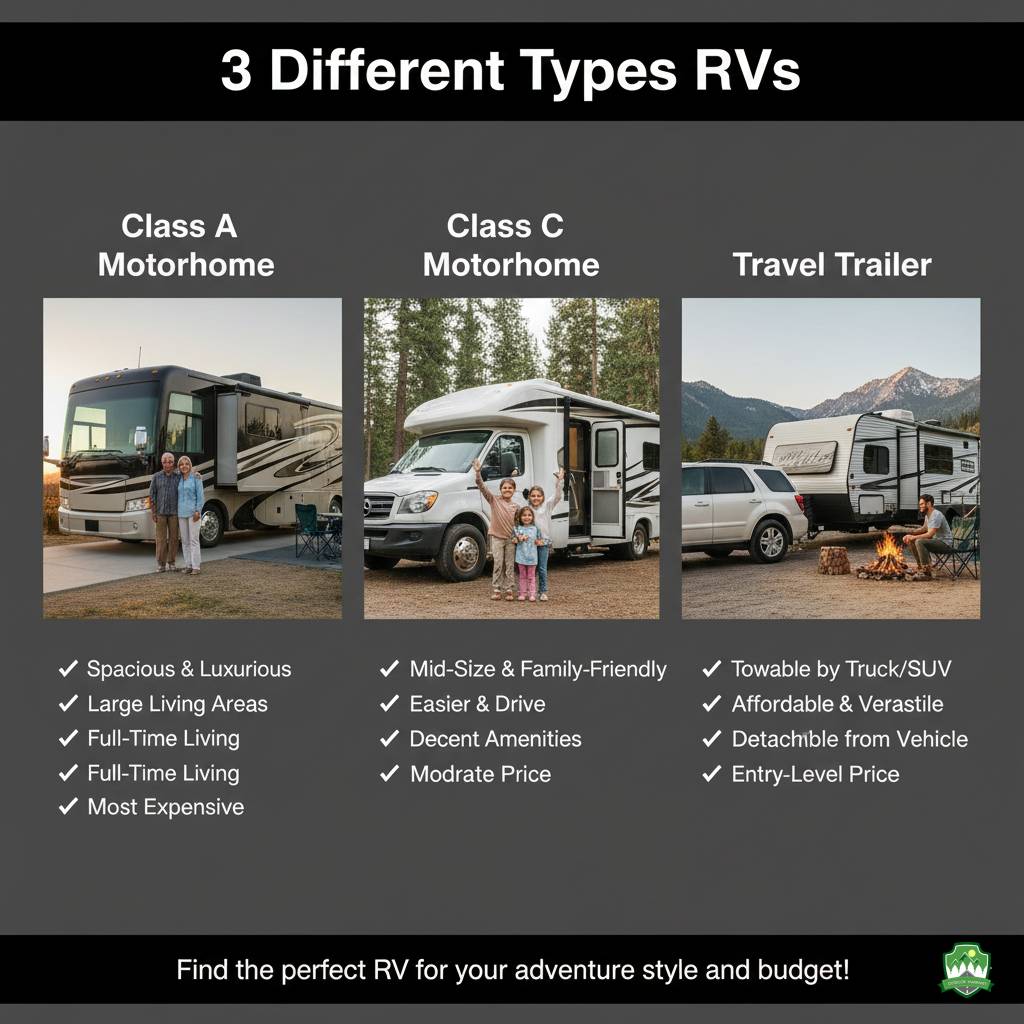
Different types of RVs include Motorized RVs, Towable RVs, and Specialty RVs, each serving different travel needs. Motorized RVs (self-driving, spacious) such as Class A, B, and C offer various amenities and driving capabilities. Camper types under towable RVs include fifth-wheel campers, travel trailers, and pop-up campers, designed for flexibility and different towing capacities. Specialty RVs (for unique purposes) like truck campers and park model RVs cater to off-road travel, seasonal living, and specific lifestyle needs.
The primary purpose of buying a Recreational Vehicle (RV) is to experience freedom in travel, reduce accommodation costs, and enjoy home-like comfort on the road. Travelers choose RVs for family vacations, full-time living, or outdoor adventures, allowing access to scenic destinations without hotel restrictions. Choosing the right RV matters because different RV types provide varying space, amenities, and driving requirements, making selection crucial based on travel duration, number of occupants, and road conditions. Types of RV trailers, such as travel trailers, toy haulers, and fifth-wheel campers, provide options for different budgets and tow vehicles.
Each RV type has distinct benefits and features. Class A motorhomes provide luxury, Class B camper vans offer compact efficiency, and towable RVs allow flexibility. Costs and maintenance vary significantly, with Class A RVs costing over $100,000, while towable options like travel trailers start at $5,000. Regular upkeep includes engine maintenance, roof inspections, plumbing care, and tire replacements. Living and driving in an RV requires adjusting to space efficiency, road conditions, and parking challenges, with motorized RVs offering seamless mobility and RV trailers requiring careful hitching and maneuvering.
Motorized RVs are self-contained vehicles with built-in engines, offering convenience and comfort for travel, such as Class A, Class B, and Class C. Class A is the largest and most luxurious. Class B is a compact camper van for easy maneuvering, and Class C is a mid-sized motorhome with an over-cab sleeping area.
Motorized RVs are self-contained vehicles with built-in engines, offering convenience and comfort for travel, such as Class A, Class B, and Class C. Class A is the largest and most luxurious. Class B is a compact camper van for easy maneuvering, and Class C is a mid-sized motorhome with an over-cab sleeping area.
Towable RVs attach to a towing vehicle and offer flexibility in size and features. They include fifth-wheel campers for spacious living, travel trailers for affordability, toy haulers for transporting outdoor gear, pop-up campers for lightweight travel, and teardrop trailers for minimalist camping.
Specialty RVs cater to specific needs, such as truck campers that mount on pickup beds, park model RVs for extended stays, horse trailers with living quarters, ice fish houses for winter fishing, and teardrop trailers for compact, lightweight travel.
Types of Motorized RVs are listed below
Class A Motorized RVs are the largest and most luxurious motorhomes, built on a bus or truck chassis and ranging from 26 to 45 feet long. These RVs accommodate 4 to 8 occupants and include full-size kitchens, bedrooms, and bathrooms. They are ideal for full-time RVing, long trips, and family vacations, offering home-like amenities such as washers, dryers, and spacious storage. Prices range from $100,000 to $600,000 for Class A RVs, depending on features and brand. Advantages include ample space, luxurious interiors, and the ability to tow additional vehicles, while downsides include high fuel consumption, large size, and parking challenges.
Class B Motorized RVs, or camper vans, are compact motorhomes built on van chassis, between 17 and 24 feet long. They are designed for solo travelers, couples, or small families, offering essential amenities such as a small kitchenette, a bed, and a bathroom. These RVs are well-suited for short trips, urban travel, stealth camping, and off-road adventures. Prices range from $80,000 to $150,000 for Class B RVs, with rental costs averaging $100-$200 per night. Benefits include easy maneuverability, fuel efficiency, and parking convenience, but drawbacks include limited living space, fewer amenities, and a cramped interior for extended trips.
Class C Motorized RVs are mid-sized motorhomes built on a truck or van chassis, featuring a distinctive cabover bunk above the driver's seat. These RVs balance space, comfort, and affordability, making them popular for families and group travel. They include essential amenities such as a full kitchen, sleeping areas, and an entertainment system, making them ideal for camping trips, road trips, and extended vacations. Class C RVs range from $40,000 to $300,000, with used models available for $30,000 to $150,000. Advantages include affordability, ease of handling, and widely available parts, while disadvantages include less storage than Class A models, fewer slideouts, and cabin noise while driving.
Types of Towable RVs are listed below.
Fifth Wheel Campers are large towable RVs that attach to a pickup truck using a special fifth-wheel hitch. Their raised forward section extends over the truck bed, providing extra bedroom or living area space. These campers are ideal for extended travel or full-time RV living, offering spacious interiors, enhanced stability, and ample storage tanks. Prices range from $74,000 to $150,000, with luxury models exceeding the range. The main benefits include better towing stability, abundant storage, and high-end amenities, but they require a pickup truck and a specialized hitch, making them costly and less maneuverable.
Travel Trailers are versatile RVs that attach to a vehicle’s bumper or frame hitch, available in various sizes for different camping styles. They are suitable for weekend trips or full-time living. Prices range from $5,000 to $50,000, with new models costing between $12,000 and $40,000. They are more affordable than motorhomes, easy to detach at campsites, and provide flexibility in travel. However, they handle poorly on the road compared to fifth wheels and are more susceptible to crosswinds.
Toy Haulers are RVs with a built-in garage for transporting motorcycles, ATVs, or kayaks, making them perfect for outdoor enthusiasts. The rear section often doubles as a patio or extra living space. Prices vary widely, with travel trailer toy haulers costing $10,000 to $30,000, while high-end models range from $130,000 to $230,000. They offer versatility, heavy-duty construction, and full-sized appliances, but the garage section reduces living space and adds to the overall cost.
Pop-Up Campers are lightweight, collapsible trailers with a hard base and canvas sides that expand to provide sleeping space. They are a budget-friendly option for families and first-time campers. Prices start at $500 for used models, with new units ranging from $9,000 to $20,000. Their affordability, easy setup, and lightweight design make them attractive, but they provide limited insulation, storage, and durability compared to hard-sided RVs.
Teardrop Campers are compact, aerodynamic trailers with a distinctive teardrop shape, designed for travelers needing basic amenities for short trips. Prices range from $5,000 to $20,000, with high-end models exceeding $23,000. They are easy to tow, convenient for quick getaways, and offer a simple sleeping space with a kitchenette. However, they lack bathrooms, have minimal interior space, and require outdoor cooking.
Types of Specialty RVs are listed below.
Teardrop Trailers are compact, lightweight campers designed for easy towing and minimalistic travel. They feature a sleeping area for two adults and a small kitchenette in the rear. These trailers are ideal for solo travelers, couples, and minimalists who prioritize mobility and simplicity. They are commonly used for weekend getaways and road trips, offering easy parking and outdoor accessibility. Prices range from $5,000 to over $20,000, with luxury models starting at $23,000. Pros include ease of towing, fuel efficiency, and low maintenance. Cons include limited space, lack of an indoor bathroom, and higher costs than tent camping.
Truck Campers are detachable living spaces mounted on a pickup truck bed, providing a compact yet functional camping solution. They are available in hard-sided or pop-up configurations, offering a mix of mobility and comfort. Ideal for off-road adventurers and travelers who prefer a tow-free setup, truck campers allow easy access to remote locations. They are detachable when the truck is needed for other purposes. Prices range from $5,000 to over $50,000, with high-end models exceeding $75,000. Pros include versatility, maneuverability, and affordability compared to larger RVs. Cons include limited space, potential weight constraints on the truck, and some models' lack of bathroom facilities.
Toy Haulers are RVs with built-in garages for transporting motorcycles, ATVs, and other outdoor gear. They feature a rear ramp for easy loading and have convertible sleeping areas in the cargo space. These RVs are ideal for adventure enthusiasts who want to bring recreational vehicles on trips. They are suitable for families who need extra living space. Prices range from $10,000 to over $200,000, depending on size and features. Pros include secure transportation for gear, versatility in living arrangements, and ample storage. Cons include higher costs, the need for a heavy-duty tow vehicle, and reduced living space due to the garage area.
Park Model RVs are spacious, semi-permanent RVs designed for long-term stays in campgrounds or seasonal destinations. Built with residential-style features, they offer amenities like full kitchens, large living areas, and full-size appliances. These RVs are ideal for retirees, seasonal campers, and vacation homeowners looking for a stationary yet mobile living space. They are commonly used as summer cottages or secondary homes. Prices range from $45,000 to over $80,000, with luxury models reaching $200,000. Pros include home-like comfort, energy efficiency, and customization options. Cons include restrictions on placement, lack of self-containment, and limited mobility compared to other RVs.
Horse Trailers are specialized trailers designed for safely transporting horses to events, trail rides, and competitions. They come in various styles, including bumper pull, gooseneck, and slant-load configurations. Other models include living quarters for added convenience. These trailers are ideal for horse owners, equestrians, and professional riders who frequently travel with their animals. Prices range from $10,000 to over $60,000, with luxury models exceeding $100,000. Pros include safe and comfortable horse transport, convenience for long-distance travel, and added storage space. Cons include high costs, the need for a large towing vehicle, and maintenance requirements.
Ice Fish Houses are portable shelters designed for ice fishing, providing insulation and protection from extreme winter conditions. They come in collapsible and permanent structures, with other models featuring built-in kitchens, heating, and seating. These shelters are ideal for anglers in cold regions who want a comfortable and extended fishing experience. Different models are used for camping and hunting in the off-seasons. Prices range from under $500 for basic shelters to over $20,000 for Ice Castle-style houses. Pros include warmth, extended fishing time, and added amenities. Cons include limited mobility, lack of plumbing in some models, and higher costs for advanced versions.
👉 Call Us 574–505–6246
Let us give you the best quote we can! 👇
You agree to receive automated follow-up, reminder, and promotional messages with varying frequency. Text and data rates may apply. Reply STOP to end. Text HELP for help. Click for Terms of Service and Privacy Policy.