1029, 4024 Elkhart Rd. Ste 26, Goshen, IN 46526
Call Us at 574-505-6246
INTEREST FREE PLAN
| Rated Excellent 4.8/5
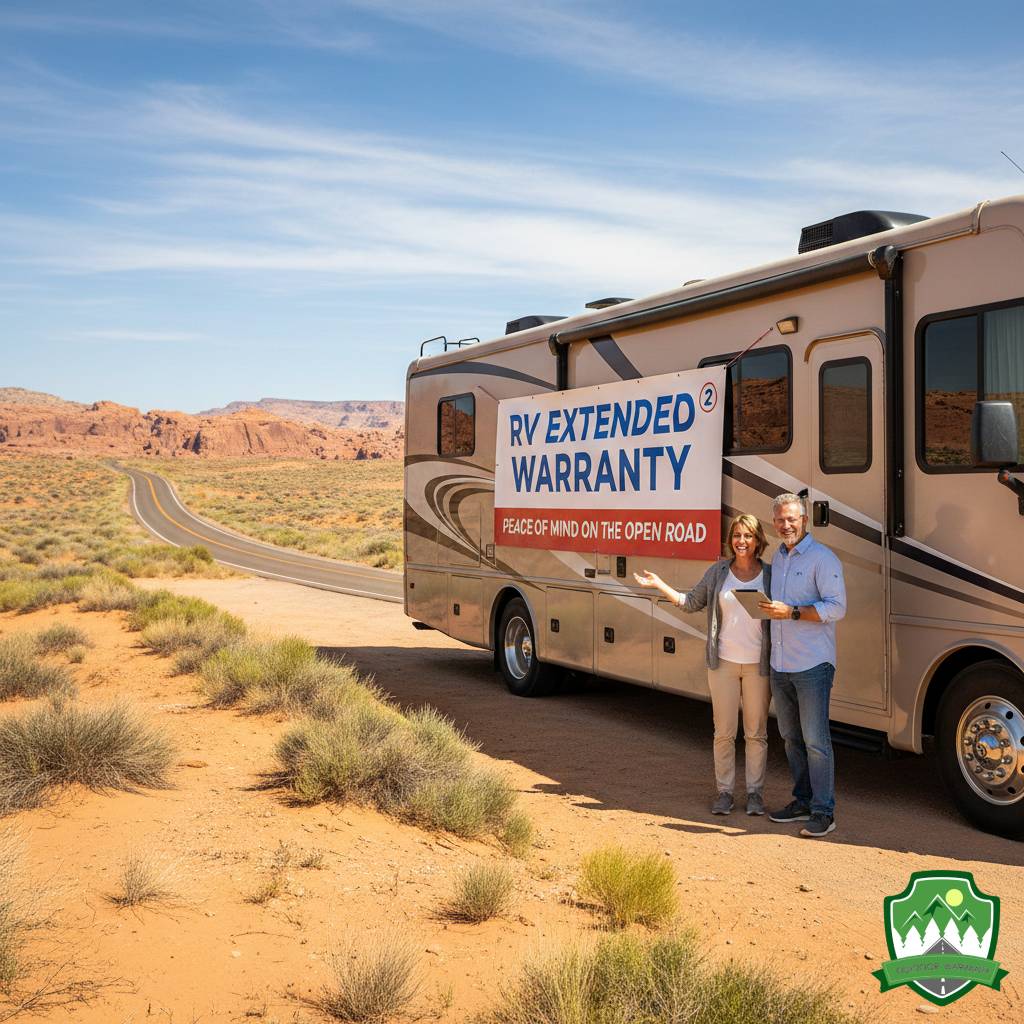
An RV extended warranty is a service contract that provides additional coverage for repairs and replacements beyond the manufacturer’s warranty. The RV extended warranty covers mechanical, electrical, and system failures after the original warranty expires. Owners of recreational vehicles are given peace of mind by being protected against the cost of unexpected repairs and ensuring the continued functionality of the RV components.
RV extended warranties include RV Roadside Assistance, RV Tire and Wheel Protection, and vehicle service contracts. These are for motorhomes, fifth wheels, Travel Trailers, and campers. A motorhome extended warranty covers the engine and transmission, and all major appliances with exclusionary, stated, or powertrain-only coverage options. Travel trailer extended warranty protects appliances, electrical, and mechanical living systems. Camper warranties focus on mechanical and functional systems. RV roadside assistance offers support like towing, key lockout, and tire changes. Tire and wheel protection covers repairs or replacements if an object on the road damages a tire or wheel. The different warranty types have unique exclusions, limitations, and coverage variations.
Purchasing an RV extended warranty provides peace of mind by covering unexpected repair costs and protecting against expensive mechanical or electrical failures. An RV warranty covers roadside assistance, appliances, engine, transmission, or chassis. Exclusions include damages from accidents, poor maintenance, or off-road use. Cost considerations include the upfront price of the warranty and the ongoing maintenance cost. Price varies based on RV type, age, and coverage level. Evaluate coverage limits, exclusions, and the risk of warranty voiding due to modifications or improper maintenance.
An RV Extended Warranty minimizes expenses for major system failures, such as engine or plumbing repairs, while providing peace of mind during travel. Roadside assistance and towing coverage address emergencies efficiently, and trip interruption reimbursement covers unexpected lodging or meal costs. Access to authorized repair facilities ensures high-quality service with genuine parts, keeping the RV in peak condition.
An RV Extended Warranty is a service contract that covers the repair or replacement of mechanical and system components beyond the manufacturer's original warranty period. The extended warranty protects RV owners from the high costs of unforeseen breakdowns and repairs. The warranty ensures the continued functionality and safety of essential systems such as the engine, plumbing, electrical components, and appliances, throughout the vehicle's lifespan.
An RV Extended Warranty provides financial protection and support for Recreational Vehicle owners when the original manufacturer's warranty has expired. The Recreational Vehicle. Extended Warranties grant access to authorized repair shops and skilled technicians, ensuring high-quality and reliable repairs. The warranty covers repair costs to reduce the financial burden of maintaining a complex vehicle. An extended warranty offers quality and convenience in the repair process. RVs have intricate mechanical and electrical systems, and an extended warranty protects owners from costly, unpredictable repairs and provides peace of mind, allowing RV owners to travel worry-free.
The types of RV extended warranties available are listed below.
Motorhome Extended Warranties protect motorhomes after the manufacturer's warranty ends, covering mechanical and electrical systems such as the engine, transmission, and drivetrain. The warranties offer coverage options, including exclusionary, inclusionary, and powertrain-only plans.
Travel Trailers Warranties safeguard towable RVs from unexpected repair costs, covering the chassis, axles, and living area systems. The warranties offer comprehensive, exclusionary plans, including additional roadside assistance and towing benefits.
Camper warranties protect compact RVs from breakdowns and repairs, covering systems including heating, cooling, and water. The warranties provide financial protection and support through emergency roadside assistance and authorized repairs.
RV roadside assistance offers 24/7 support for RV owners in emergencies, including towing, tire changes, and fuel deliveries. The service is available as a standalone plan or as part of extended warranties to address common roadside challenges.
RV tire and wheel protection help RV owners manage the cost of repairing or replacing tires and wheels damaged by road hazards. Coverage includes repair costs, replacements, and towing to repair facilities, ensuring safety and vehicle functionality.
Motorhome extended warranties protect motorhome owners after the original manufacturer’s warranty expires. The warranties cover various mechanical and electrical components, such as the engine, transmission, and drivetrain required for the vehicle's operation. The extended warranties are available through dealerships or specialized providers, and customized plans are offered for one to seven years. Coverage options include exclusionary, inclusionary, or powertrain-only plans tailored to the owner’s needs and preferences.
Inclusionary plans cover the engine, transmission, air conditioning system, and water pumps. Exclusionary plans for Motorhome Extended Warranties cover all components except for explicitly stated exclusions. Powertrain-only plans are more limited, covering engine, transmission, and drivetrain, providing more affordable protection for the vehicle's main components.
Motorhome Extended Warranties provide repair and replacement coverage for components that break down after the original warranty expires. Coverage includes additional services such as emergency roadside assistance, towing, and mobile mechanic services. Standard exclusions include damage caused by accidents, weather conditions, poor maintenance, and cosmetic issues such as paint or interior furnishings. Understanding the terms and exclusions ensures effective use of the warranty.
Trailer and 5th wheel extended warranties protect towable recreational vehicles from the financial burden of unexpected repairs. The warranties cover components prone to failure, including the chassis, axles, and living area systems. The two kinds of extended warranties available for trailers and 5th wheels are exclusionary and comprehensive plans. Exclusionary plans cover mechanical systems, such as axles and suspension, with essential living area components like water, electrical, and HVAC systems. Comprehensive or extensive plans focus on components prone to regular breakdowns or repairs, such as the engine, transmission, axles, and suspension.
The warranties are purchased at the time of the vehicle's acquisition or separately enhance the ownership experience by reducing repair-related stress. Trailer Extended Warranties cover mechanical breakdowns and include benefits such as emergency roadside assistance, towing, and mobile mechanic support. Repairs are completed at licensed repair facilities when an issue arises, ensuring quality service. The warranties are renewable and transferable, making them a flexible option for long-term ownership or resale. Coverage excludes damage caused by accidents, poor maintenance, environmental factors, cosmetic issues, or damage from off-road use.
Pop-up and camper extended warranties protect pop-up campers' mechanical and functional systems and similar compact recreational vehicles. The warranties are designed to cover repair costs for unexpected issues, providing financial protection and reducing the burden of expensive repairs. Covered components include heating, cooling, water systems, and features prone to wear and failure during travel. Extended warranties are available during camper purchase or as a separate purchase to ensure ongoing protection.
Pop-up and Camper Extended Warranties offer repair or replacement services for covered systems when a breakdown occurs. Owners contact the warranty provider to initiate a claim, and authorized technicians are dispatched to diagnose and address the issue. Emergency roadside assistance and related services are included, minimizing disruptions during travel. Coverage terms of Pop-up and Camper Extended Warranties depend on the warranty plan. Exclusions are damage caused by accidents, neglect, or environmental factors such as hailstorms, heavy snowfall, floods, or hurricanes. Prolonged exposure to ultraviolet (UV) rays results in fading, cracking, or deterioration of exterior materials that are not covered. Cosmetic issues, damage from off-road use, and limitations for systems such as heating or water are excluded, emphasizing the importance of understanding the warranty's scope.
RV roadside assistance is a specialized service designed to support recreational vehicle owners during emergencies on the road. The coverage provides towing to repair facilities, tire changes, emergency fuel deliveries, and trip reimbursements. The plans are customized to address RV travelers' common roadside challenges, such as mechanical breakdowns, flat or blown-out tires, and engine failure. RV roadside assistance is available as an independent service or as part of extended warranty programs. The assistance ensures dependable support by connecting travelers to professionals who effectively manage emergencies.
RV Roadside Assistance operates through 24/7 support systems accessible via phone or online platforms. A traveler seeks assistance when an issue arises, such as towing to a designated repair facility, flat tire assistance, or emergency transport arrangements. Coverage conditions of RV Roadside Assistance vary by plan, and factors such as the number of allowed claims, towing distance limits, or geographical service boundaries influence the scope of assistance. Exclusions involve certain vehicle types, extreme weather, or inaccessible locations. Understanding the terms and limitations ensures effective utilization of the service.
RV Tire and Wheel Protection is a service designed to help the financial burden of repairing or replacing tires and wheels damaged by road hazards, including debris, potholes, and uneven surfaces. The coverage is designed as a standalone plan or an addition to extended warranties. RV Tire and Wheel Protection provides solutions for tire punctures, rim damage, and other challenges arising from common road-related incidents. Repair costs, replacements, and towing to qualified repair facilities are included to minimize disruption and maintain the vehicle's operability.
The service offers reimbursement or direct payment for repairs and replacements for road hazard-related damages. RV Tire and Wheel Protection plans address the specific needs of RV owners, emphasizing functionality and safety. Damaged vehicles are towed to a repair facility where qualified technicians restore them to their original condition. Policies vary in scope, with specific plans limiting the number of annual claims or specifying eligible tire types. Exclusions apply for damages related to off-road use, cosmetic flaws, or custom tire modifications.
Reviewing terms and conditions ensures clarity about geographical restrictions, conditions influenced by remote locations, and factors like severe weather. Highlighting RV Tire and Wheel Protection as part of the plans strengthens its role in protecting RV owners against unforeseen expenses.
The things that RV Extended Warranty covers are shown in the table below.
| Component | Description |
|---|---|
| Frame | The frame includes the L.P. mounting bracket, bumper welds, all chassis frame welds, manual lift jacks, hitch lift cranks, cables, pulleys, and motor. |
| Brake System | The brake system includes a master cylinder, hydraulic or electric actuators, wheel cylinders, disc brake caliper, backing plates, clips, retainers, and seals and gaskets. |
| Suspension System | The suspension system covers wheel bearings, wheel hubs, spindles, springs, shackles, axle shafts, actuators, rubber suspension bushings, and coil and leaf springs |
| Water System | The water system includes the water pump, sink(s), sink faucet, shower faucet, shower head, holding tank(s), and their traps, fittings, connections, and valves. |
| Waste System | The waste system includes a Toilet vacuum breaker, float assembly, ball valve, waste valve, water inlet valve, holding tank, traps, fittings, connections, and gate valves. |
| Water Heater | The water heater includes a Burner assembly, tank, thermostat, thermocouple, heating element, gas valve, pressure relief valve, electronic ignition, wiring harness, switch, and the PC board. Other inclusions are fittings, connections, and gate valves. |
| Range and Oven | The range and oven include the burner assembly, thermostat, thermocouple, burner valves, igniter, heating element, fan, pole motor, power hood, fittings, connections, PC board, and microwave oven. |
| Refrigerator and Freezer | The refrigerator and freezer include the thermostat, thermocouple, burner assembly, igniter, cooling unit, fittings, connections, and PC board. |
| Heating/Furnace | The heating/furnace system includes the thermostat, thermocouple, main gas valve, igniter, burner assembly, blower motor, fittings, connections, and the PC board. The hydronic heating units are not included. |
| Airconditioning | The air conditioning system includes the compressor, condenser, evaporator, receiver-dryer, accumulator, expansion valve, capacitors, fan hub, heat strips, reversing valve, relays, blower motor, blower motor fan, and high/low cut-off switch. Other inclusions are a pressure/cycling switch, electronic module, thermostat, and vent fans. |
| Auxiliary Powerplant / Generator | The auxiliary powerplant/generator includes all internal lubricated parts of the engine, mounting flanges, connecting rods and bearings, wrist pins, crankshaft, and main bearings. Other inclusions are camshaft bearings, camshaft and followers, valves, valve springs, guides, pistons, piston rings, hydraulic lifters, and the cylinder block and head if damaged by the failure of an internally lubricated part. The starter motor, alternator, voltage regulator, PC board, power converter/inverter, breaker box(es), breakers, and wiring harnesses for covered components (excluding the power cord) are included. |
| LP Gas System | The LP gas system includes regulators, valves, gauges, pigtails, fittings, connectors, gas lines, automatic shut-off, and mounting brackets. |
| Hydraulic / Electric Steps | The hydraulic/electric steps include the step motor, step mechanism, and switch. |
| Retractable Awning | The retractable awning includes the retractable awning power motor, control switch, power/manual crank system, awning rails, arms, track, and rafter. |
| Fuel System | The fuel system includes the fuel pump, fuel nozzle, fuel hoses, valves, gauges, gas lines, and mounting brackets. |
| Tax / Fluid / Lubricants | Tax / Fluid / Lubricants includes reimbursement for state and local taxes, necessary fluids, lubricants, and refrigerant to complete covered repairs. |
RV coverage excludes routine maintenance, wear and tear, and damages from misuse or neglect. Routine maintenance tasks, such as oil changes, tire rotations, and fluid checks, are the responsibility of the RV owner and are not covered by warranties. Wear and tear is the gradual deterioration of components due to regular use. Damages caused by accidents, improper use, or failure to perform required maintenance are not covered. Other exclusions include damages from environmental factors, such as weather conditions or road debris, and cosmetic damage, like scratches or fading paint. Review the warranty contract to understand exclusions and limitations.
The things not covered under the RV extended warranty are listed below.
The warranty excludes anything not explicitly mentioned under the "What Is Covered" section. Incidental or consequential damages such as property damage, personal injury, inconvenience, or loss of use, are included. The exclusions ensure that specific, eligible issues are addressed.
Repairs covered by the original manufacturer’s warranty or recalls are excluded. Examples include manufacturer defects addressed in the recall process. Overlapping coverage is prevented, and concerns outside the manufacturer's scope are addressed.
Mechanical or operational issues during the sale are not covered. Pre-existing conditions include corrosion, rust, and prior damage that affects performance. Coverage begins after the point of purchase, ensuring responsibility for new occurrences.
Changes or modifications to parts or components, including aftermarket additions, are excluded. Alterations such as custom parts or performance adjustments fall outside the original specifications. The warranty focuses on preserving the integrity of the original manufacturer's design.
Units for business purposes like ride-share services, rentals, or construction are not included. The high demand for commercial vehicles exceeds the intended use of personal RVs. The purpose is to ensure that coverage applies solely to standard recreational use.
Issues caused by negligence, misuse, or failure to follow maintenance guidelines are not covered. Examples include improper fluid levels, unauthorized repairs, or abuse through overloading. Excluding causes promotes proper care and operation.
Damages from external sources like floods, fire, or other natural disasters are excluded. The incidents are considered external and unrelated to the mechanical or operational quality of the RV. Separate insurance policies cover the situations.
Tires, belts, and brake pads, which degrade with regular use, are not covered. The consumables have a limited lifespan and are considered the owner's responsibility. The warranty focuses on mechanical issues, not maintenance-related replacements.
Non-mechanical items such as televisions, upholstery, or audio equipment are excluded. The features are considered optional or aesthetic and do not affect the core operation of the RV. The exclusion simplifies coverage and defines mechanical priorities.
Batteries, hoses, and clutch assemblies that degrade due to exposure to elements are excluded unless covered by supplemental policies. The exclusion ensures that issues tied to external exposure do not burden the warranty system, reinforcing the need for proper storage and care.
The warranty excludes costs for handling or disposing of dangerous waste, such as old batteries or fluids. Hazardous waste management falls under environmental regulations and personal responsibility. Compliance with legal protocols is guaranteed outside of warranty provisions.
Damage to exterior or cosmetic components, such as dents, scratches, or worn paint, is not covered. The issues do not affect the functionality of the RV and are typically aesthetic. The warranty prioritizes performance and mechanical integrity.
Problems resulting from improper storage, including water intrusion, corrosion, or rust, are excluded. Proper storage practices are necessary to prevent environmental damage over time. Responsibility for storage-related damage lies outside warranty terms.
Supplemental coverage for RV warranties provided by Outdoor Warranty offers additional protection for specific components and systems. The coverages address specialized features such as high-end appliances, advanced technology, and accessibility equipment, ensuring comprehensive support for RV owners. The options extend warranty benefits to meet unique needs and provide the vehicle's value and functionality.
Supplemental coverage is optional and added based on personal preferences and requirements. Availability depends on the RV type, price range, or the chosen warranty package. The customized approach allows customers to select protections aligned with the RV's features and usage.
The Supplemental Coverage for RV Warranties is listed below.
Deluxe Appliance coverage in RV warranties offers protection for high-end or specialty appliances installed in recreational vehicles. The coverage includes upgraded refrigerators, ovens, and microwaves that exceed standard appliance features. The coverage ensures repair or replacement costs are covered for malfunctions or failures due to normal usage.
Coverage for hydraulic or electric leveling jacks and slide-outs ensures the mechanical systems are protected. The coverage includes repairing or replacing components that stabilize or expand the RV for added space. Coverage for hydraulic or electric leveling jacks and slide-outs prevents high out-of-pocket expenses when the systems fail.
Electronic Hitech Plus coverage addresses advanced technology components in RVs, such as navigation systems, backup cameras, or innovative control panels. The coverage ensures repairs or replacements are included for failures due to mechanical or electrical breakdowns and supports maintaining functionality in high-tech RV systems.
Wheelchair lift coverage ensures the repair or replacement of mobility lift systems in RVs. The coverage provides financial support for maintaining the accessibility features when mechanical or hydraulic components fail. The coverage is beneficial for travelers requiring reliable wheelchair access.
Audio/Video coverage focuses on the repair or replacement of entertainment systems, including speakers, TVs, and multimedia setups. The coverage ensures that malfunctions in the non-essential, though valuable, systems are addressed. Audio/Video coverage supports maintaining leisure and entertainment functionality in the RV.
The Convenience Package coverage offers protection for amenities designed to enhance comfort, such as power awnings, upgraded lighting systems, or climate control enhancements. The coverage covers the costs of repairs or replacements for the convenience-focused features and ensures the RV remains comfortable and user-friendly.
Solar Panel coverage protects photovoltaic systems installed on the RV. The coverage includes repairs or replacements for failures in panels, wiring, or associated controllers due to normal usage and supports maintaining the RV’s renewable energy functionality.
Hydronic Heating coverage addresses repairing or replacing liquid-based heating systems in RVs. The coverage includes pumps, tubing, and thermostats, ensuring consistent and efficient RV heating performance during cold-weather use
Commercial Use coverage is designed for RVs for business purposes, such as rentals or mobile offices. The coverage provides warranty protection for increased wear and tear or additional usage stress associated with commercial applications. Commercial Use coverage ensures the vehicle remains operational and meets business demands.
Mobile Service Call Plus coverage ensures reimbursement or financial support for service technicians dispatched directly to the RV’s location. The coverage addresses labor costs for repairs performed in remote or stationary situations. Mobile Service Call Plus coverage is valuable for emergencies when visiting a service center is impractical.
Supplemental coverage for RV warranties differs from the main warranty coverage by focusing on optional, specialized protections beyond the scope of standard warranties. The main warranty covers the engine, drivetrain, and basic electrical systems. Supplemental coverage addresses features like high-end appliances, advanced technology systems, or accessibility equipment. Supplemental plans are customizable, allowing RV owners to choose protections based on their needs. The distinction provides an opportunity to safeguard non-standard or upgraded RV features not covered under the primary warranty.
The additional benefits of the Supplemental Coverage for RV warranties are listed below.
Towing Assistance Reimbursement covers the costs of towing an RV to a repair facility when it becomes inoperable due to a covered mechanical issue. The benefit ensures that the financial burden of towing, which is needed for large RVs, is reduced. Towing Assistance Reimbursement is an additional benefit, providing peace of mind and convenience during unexpected breakdowns and when traveling far from home.
Trip Interruption Reimbursement compensates for lodging, meals, and other necessary expenses when an RV breaks down far from home and requires extended repairs. The benefit relieves the financial burden of unexpected travel disruptions, allowing the journey to continue with minimal stress. Covering essential expenses during repair delays ensures RV owners remain comfortable while restoring their vehicles.
Pet Boarding Reimbursement covers expenses related to the care and boarding of pets when an RV is inoperable due to a covered issue. The benefit ensures pets receive safe accommodations while the RV is being repaired. Pet owners who travel in RVs with pets appreciate the feature, which addresses one of the concerns during unexpected breakdowns.
Mobile Service Calls Reimbursement covers fees charged by technicians for on-site repairs when the RV is unable to reach a repair facility. The benefit provides added convenience by eliminating the need for towing in remote areas where towing services are hardly feasible. Mobile Service Calls Reimbursement ensures that repairs are handled promptly, minimizing travel disruptions.
The Reduced Deductible at Selling Dealer benefit reduces the deductible cost when repairs are made at the dealership where the RV was purchased. The feature encourages loyalty to the selling dealer while offering financial savings to the warranty holder. The Reduced Deductible at Selling Dealer is an additional incentive, reducing out-of-pocket expenses and promoting the continued use of a trusted service provider.
Food Spoilage Reimbursement compensates for perishable items lost due to a covered mechanical failure affecting refrigeration. The benefit helps with the financial burden of replacing spoiled food and beverages during RV breakdowns. Food Spoilage Reimbursement offers practical relief, addressing an everyday challenge travelers face when refrigeration systems fail unexpectedly.
Fuel/L.P. Gas Replacement Reimbursement covers the expense of replacing fuel or propane lost during a covered repair or mechanical failure. The benefit ensures RV owners do not face unexpected costs when fuel is lost due to an unavoidable issue. Fuel/L.P. Gas Replacement Reimbursement provides financial relief, mitigating the burden of refueling after a breakdown or repair.
An RV Extended Warranty costs from $2000-$15000. The RV type, age, mileage, and level of coverage selected influence the warranty price. Newer or with lower mileage RVs cost less to insure than older models with high mileage. Comprehensive coverage plans with a broader range of components or longer durations are more expensive. RV warranty costs vary based on whether the warranty covers the basic mechanical systems or includes appliances, plumbing, and electrical components.
Approximate price ranges for different warranty plans differ, with basic coverage plans starting around $2,000 for a few years of protection. Extensive plans cost $20,000 or more for extended coverage periods with high-end and high-mileage RVs. Providers offer flexible payment structures, such as deductibles paid per repair or monthly installment options to spread out the RV warranty cost. Monthly installments are available, and the price varies based on the deductible chosen, with lower deductibles resulting in higher monthly payments. Review the terms carefully to understand costs, including deductibles, and determine the most suitable plan based on unique needs.
The best provider of RV extended warranty is the Outdoor Warranty. A reputable warranty provider like Outdoor Warranty is recognized for its comprehensive coverage options, competitive pricing, and commitment to customer satisfaction. The company is known for offering plans that cater to various types of RVs, including motorhomes, fifth wheels, and travel trailers, ensuring flexibility and customized protection. Outdoor Warranty emphasizes transparency in the policies, detailing what is covered and any exclusions. The provider stands out for having responsive customer service, which assists RV owners in navigating claims and addressing concerns efficiently.
The extended warranty plans offered by Outdoor Warranty cover critical systems such as the engine, transmission, electrical components, and appliances, providing peace of mind for owners of travel-related vehicles. The plans are designed to minimize out-of-pocket repair costs for unexpected breakdowns, making them a practical investment for RV owners. Prospective customers of Outdoor Warranty are encouraged to review ratings and testimonials from other RV owners to evaluate the provider's reliability and service quality. Feedback from experienced RV users offers valuable insights into the claims process and satisfaction, helping to make an informed decision about selecting the company as a trusted partner.
Yes, an Extended Warranty for an RV is worth it. Investing in an extended warranty provides financial protection against unexpected repair costs due to the complexity of systems within an RV. Repairs to engines, appliances, plumbing, or electrical systems are expensive, and an extended warranty helps mitigate unforeseen expenses. Extended warranties offer added benefits such as roadside assistance and trip interruption coverage, adding value to the product.
The effectiveness of an extended warranty varies based on unique circumstances. Thoroughly research the warranty providers and understand the terms and conditions of the contract. Buyers must carefully assess their specific needs, the age and condition of the RV, and their ability to handle repair costs out-of-pocket. The evaluation helps determine whether an extended warranty aligns with a buyer’s financial situation and risk tolerance. An extended warranty offers valuable protection and peace of mind, and the worthiness depends on unique circumstances and the quality of the warranty provider.
The common RV damages are listed below.
HVAC systems are prone to damage due to clogged air filters or broken thermostats, which hinder functionality. The problems reduce the cooling or heating efficiency, creating discomfort in the RV. Prompt diagnosis and repair are needed to maintain proper climate control within the vehicle.
Refrigerators in RVs face damage due to improper fluid circulation caused by sediment buildup in the cooling unit. Extended periods of inactivity worsen the issue, reducing cooling capacity. Regular maintenance is needed to prevent problems and ensure consistent performance.
RV batteries are standard damage points when left uncharged, leading to insufficient power and eventual failure. Poor fluid levels or incorrect cable connections contribute to the problem, impacting the vehicle’s electrical systems. Proper care and monitoring are necessary to extend battery life.
Leaks in windows and roofs are recurring due to the constant exposure to weather elements. Damage from sun, rain, snow, or low-hanging branches compromises seals, leading to water damage, mold growth, or electrical issues. Immediate repairs are required to avoid complications.
Tire blowouts occur due to the RV's weight, uneven pressure, or poorly maintained roads. Debris and abnormal inflation levels cause the incidents. Regular inspection and proper inflation reduce the risk of blowouts.
Burst water lines are expected in unheated areas of RVs, where pipes are prone to freezing and splitting. Repairing minor damage involves clamping the pipe, while extensive issues require replacing the entire line. Proper insulation helps mitigate the problem.
RVs experience toilet malfunctions due to wear and tear over the years. Problems such as water leakage or valve issues occur after years of use. Regular maintenance helps address concerns and ensures reliable operation.
Slide-out systems face damage due to worn-out moving parts or insufficient lubrication. Electrical issues of faulty wiring or blown fuses hinder functionality. Periodic maintenance and inspections help prevent problems.
Braking systems on RVs endure stress from the vehicle's weight, leading to rotor misalignment, brake shoe wear, or master cylinder malfunctions. The issues compromise safety and require regular testing and maintenance to remain functional.
Carbon monoxide leaks in RVs occur from faulty exhaust systems, clogged vents, or damaged gas tanks. The silent and dangerous issue causes severe health risks. Proper ventilation and regular inspections contribute to preventing carbon monoxide buildup.
RV extended warranties cover HVAC malfunctions, refrigerator failures, battery issues, window and roof leaks, tire blowouts, burst water lines, toilet malfunctions, slide-out problems, braking system failures, and carbon monoxide-related issues. The warranties function as service contracts that cover repair or replacement costs for mechanical and electrical components beyond the manufacturer's warranty period. The coverage depends on the warranty plan, with comprehensive options including major and minor systems. Extended warranties require the owner to follow regular maintenance guidelines, including deductibles or exclusions for pre-existing conditions. RV extended warranties offer financial protection by mitigating unexpected repair expenses, ensuring peace of mind for RV owners.
No, you cannot extend the RV Warranty forever. Warranties are designed to cover a given period or mileage, after which the risk of mechanical breakdowns increases, making it financially impractical to offer unlimited coverage. Warranty providers with lifetime warranties last as long as the original owner keeps the RV and meets specific maintenance requirements. The warranties are called "Warranty Forever" and are offered as long as the RV owner maintains the necessary maintenance.
A lifetime warranty provides continuous coverage as long as the RV is regularly maintained according to the provider’s guidelines. RV owners must maintain detailed maintenance records and have their RVs serviced by authorized providers. An RV Warranty Forever offers long-term protection and has specific exclusions, such as wear and tear or damage from lack of maintenance. Review the terms to understand the extent of the coverage and conditions that affect the warranty.
An RV can last from 10 to 30 years or 100,000 to 300,000 miles. The lifespan depends on the type of RV, usage, and maintenance. Motorhomes have a longer life due to strong construction, while travel trailers wear out quickly under heavy use. Regular maintenance and attention to the condition of the mechanical and living components contribute to determining longevity.
Factors influencing an RV's lifespan include the build's quality, duration of use, and environmental exposure. High-quality materials and craftsmanship result in a longer-lasting RV. Extreme temperatures, humidity, and UV exposure accelerate wear and tear on roofs, seals, and exterior finishes. Proper storage and protection from harsh conditions reduce the effects.
Consistent maintenance is needed to maximize the RV’s life span. Regularly inspecting and addressing issues with the engine, electrical systems, plumbing, and structural components prevent minor problems from escalating. Part of RV maintenance is keeping the vehicle clean after exposure to salt or dirt, which helps reduce rust and wear. Routine tasks such as sealing roof seams, maintaining tires, and servicing appliances ensure the vehicle remains functional and safe for extended use.
The benefits of an RV Extended Warranty are listed below.
An RV extended warranty helps cover the cost of unforeseen repairs, minimizing out-of-pocket costs for engine, plumbing, or appliance failures. Financial security is valuable due to RV parts and labor costs. The financial burden of maintaining a complex vehicle is reduced with time.
Coverage for potential system or mechanical failures allows RV owners to relax. The warranty protects against unforeseen expenses, allowing for worry-free travel. The assurance of security enhances the RV ownership experience.
RV extended warranties include roadside assistance for emergencies like tire blowouts or breakdowns. The service ensures that help is easily accessible, even in remote areas. RV extended warranties offer safety and convenience during long-distance travel.
Towing an RV is expensive, and an extended warranty covers the costs when a breakdown occurs. The benefit eliminates the financial stress of arranging professional towing services and ensures that the RV is safely transported to a repair facility.
Trip interruption benefits reimburse expenses such as lodging and meals if an RV breakdown disrupts travel plans. The support helps travelers manage unexpected costs and continue their journey smoothly. An extended RV warranty reduces the inconvenience caused by unforeseen mechanical issues.
Extended warranties provide access to authorized repair facilities with trained technicians. The facilities ensure high-quality repairs and the use of genuine parts. The convenience saves time and ensures the RV remains in optimal condition.
The disadvantages of an Extended Warranty for RVs are listed below.
Extended warranties require an upfront payment or higher monthly premiums, adding expense to RV ownership. The cost tends to exceed the price of repairs when a few problems occur with an RV. Assess whether the coverage justifies the investment. Compare the cost of ordinary repairs to the warranty price to determine the value.
Extended warranties exclude specific types of damage, such as cosmetic wear, pre-existing issues, or damages due to accidents or improper maintenance. Exclusions limit the value of the warranty, which means the owner must cover repair costs for items not covered.
Filing claims under an extended warranty involves extensive paperwork, approval delays, and navigating unfavorable terms to the policyholder. The complexity results in frustration and delayed repairs, leaving the vehicle unusable for extended periods. Clarify the steps and requirements for filing claims to prevent delays or denials.
Warranty providers deny claims for repairs for damages outside the warranty's scope. The denial occurs even for issues that seem covered, leading to unexpected out-of-pocket expenses. Denial of claims emphasizes the importance of understanding policy limitations. Understand terms, exclusions, and requirements to avoid surprises.
Warranties restrict repairs to specific facilities or require pre-approval before RV servicing. The limitation leads to inconvenience if an approved facility is far away or immediate repairs are needed.
RV owners that encounter fewer issues lead to underuse of the warranty during the term. Inadequate use of coverage results in paying for a service that is not fully utilized, reducing the cost-effectiveness of the policy.
The factors to consider when choosing an RV Extended Warranty are listed below.
Warranty Terms and Conditions. Reviewing the warranty terms ensures clarity about what is covered and excluded to avoid misunderstandings.
Choose a reputable provider. Choosing a provider with a strong reputation and years of experience adds reliability and trust.
Verify coverage scope. Ensure the policy covers engines, appliances, and plumbing, protecting expensive systems.
Evaluate customer service. Check responsiveness and ensure timely support when filing claims or addressing concerns.
Researching reviews and feedback. Testimonials from RV owners help assess the provider's reputation and claims process.
Requesting sample contracts. An overview of the contract provides insight into the terms and conditions before committing.
Confirming plan flexibility. The options allow the selection of a warranty customized according to needs.
Check wear and tear coverage. Checking for coverage on wear-and-tear items ensures broader protection for the components.
Align policy with travel habits. A policy that aligns with travel habits and vehicle usage results in long-term satisfaction.
Investigate the claim process. Claims investigations ensure transparency and customer friendliness.
Yes, extended warranties transfer owners. The extended warranty is transferable to the new owner of the covered RV when a private sale is made. It is non-transferable to another RV or an RV dealer. The transfer requires following specific terms and conditions outlined in the warranty contract, and a fee is associated with the transfer process. Consult the warranty agreement for precise details regarding transferability and the applicable cost to ensure a smooth transition.
Transferable warranties add resale value to an RV by offering the new owner continued protection and peace of mind. The extended warranties remain valid under the new RV ownership, enhancing the RV’s attractiveness to future buyers and avoiding additional expenses for repairing or replacing faulty components. The added protection makes the RV more appealing and supports higher value during resale. Transferring the warranty ensures it stays valid, benefits the two parties, and increases the RV’s market value. Transferable warranties create a smoother transition for buyers, boosting confidence in the purchase and RV ownership.
Your RV warranty will be voided once modifications or alterations are made that the manufacturer does not approve or if the RV is not maintained correctly according to the manufacturer's guidelines. Actions that lead to warranty voiding include unauthorized modifications, such as installing third-party parts or making structural changes without approval. The alterations affect the RV’s performance or safety features, breaching the warranty terms. Neglecting regular maintenance, such as failing to perform necessary inspections, change fluids, or replace worn-out components, leads to warranty issues. Follow the manufacturer's recommendations to prevent problems.
The manufacturer's maintenance and repair guidelines must be followed to maintain warranty coverage, including following the recommended service intervals for inspections, fluid changes, and part replacements. Repairs must be conducted by authorized professionals using OEM (Original Equipment Manufacturer) parts to ensure the vehicle maintains warranty protection. Regularly performing maintenance tasks and documenting the actions helps demonstrate compliance with the warranty terms. Keeping detailed records of maintenance and repairs performed ensures clear evidence of proper care and maintenance in case of a claim, which supports warranty validation.
A manufacturer’s warranty on RVs lasts between one to three years. The period varies depending on the RV manufacturer and the components included in the coverage, such as the engine, chassis, or interior features. Manufacturers provide extended coverage for key systems like the RV’s structure, while others restrict coverage solely to mechanical or electrical parts. The warranty protects against defects in materials or craftsmanship, offering repair or replacement of faulty parts at no additional cost to the owner during the coverage term. The warranty becomes invalid after the period unless an extended warranty is purchased.
An extended warranty provides coverage beyond the manufacturer’s warranty, addressing components or repairs the original warranty excludes, such as wear and tear or specific system failures. The warranties vary in length, cost, and what is covered, depending on the provider and plan selected. Verify the specifics of the manufacturer’s and extended warranties directly with the RV dealer or manufacturer. Understanding the details, including exclusions and maintenance requirements, ensures the owner knows what is protected and avoids surprises during ownership.
No, extended RV Warranty does not ensure compliance and safety. The warranty focuses on repairing or replacing defective parts and does not guarantee that the RV meets safety standards or complies with local laws and regulations. An extended RV warranty protects against mechanical and electrical breakdowns and does not address the broader safety concerns or legal requirements of owning and operating an RV. Understand that a warranty is not a substitute for the necessary actions to maintain a safe and legally compliant vehicle.
Ensuring compliance with safety standards requires adherence to regulations and practices set by regulatory bodies, which include regular inspections, maintenance, and updates to the RV’s systems and equipment. The RV regulations and compliance involve regular inspections, maintenance, and updates to the RV's systems and equipment. The rules ensure the vehicle remains safe on public roads and in different environments. An extended warranty excludes covering responsibilities, and the RV owner must stay informed about applicable safety laws, perform routine checks, and update the vehicle to meet evolving standards. RV owners must maintain compliance proactively to avoid safety risks and legal penalties.
To file a claim for Extended RV Warranty, follow the eight steps below.
Examine the warranty contract to confirm the issue falls within the coverage scope and identify any exclusions or conditions.
Notify the warranty provider and follow the instructions to begin the claims process.
Prepare documents such as the warranty agreement, maintenance records, and relevant receipts to support the claim.
Arrange for the RV to be inspected at an authorized service center approved by the warranty provider to evaluate the reported problem.
Allow the authorized technicians to perform the necessary repairs based on the agreed scope and standards.
Pay any applicable deductibles as specified in the warranty agreement; the warranty provider covers the remaining authorized costs.
Keep the documentation related to the claim, including repair invoices and communications, for future reference.
An extended warranty differs from RV insurance in that it covers repairing and replacing mechanical and system components within the RV. RV insurance protects against external risks such as thefts and accidents. An extended warranty protects RV owners from the high costs of repairing or replacing broken or malfunctioning engines, appliances, and plumbing after the manufacturer's warranty expires. An extended warranty provides peace of mind for issues related to the internal functionality of the RV, ensuring that repair expenses are covered.
RV insurance protects against unforeseen events such as accidents, natural disasters, vandalism, or theft while the RV is in use. Insurance includes liability coverage in case the RV causes damage to others or their property. For example, the extended warranty covers repairs to the engine for mechanical failure that occurs while on the road. RV insurance assists with damages caused by an accident involving another vehicle. The two types of protection offer comprehensive coverage for RV ownership.
The extended warranty and RV insurance ensure the internal functionality of the RV, and the external risks associated with ownership are effectively addressed. Obtaining an RV insurance quote helps to determine the cost of protection. The quote helps assess the specific coverage options and premiums based on the RV’s make, model, age, and the owner's driving history. Understanding the differences between the two forms of protection enables RV owners to make informed decisions about what coverage is needed.
Yes, pop up campers need insurance. Insurance for pop-up campers protects against potential risks, including damage from accidents, theft, vandalism, or natural disasters. The insurance policy of the towing vehicle includes liability coverage, though it rarely extends to the camper.
Comprehensive and collision coverage ensures the camper is financially protected in various scenarios, whether parked or in transit. Dedicated pop-up camper insurance provides liability protection if accidents occur while the camper is in use, such as causing property damage or injuries to others. Lenders require insurance for financed pop-up campers to protect their investments. Insuring a pop-up camper when not required mitigates financial risks and gives owners peace of mind.
👉 Call Us 574–505–6246
Let us give you the best quote we can! 👇
You agree to receive automated follow-up, reminder, and promotional messages with varying frequency. Text and data rates may apply. Reply STOP to end. Text HELP for help. Click for Terms of Service and Privacy Policy.