1029, 4024 Elkhart Rd. Ste 26, Goshen, IN 46526
Call Us at 574-505-6246
INTEREST FREE PLAN
| Rated Excellent 4.8/5
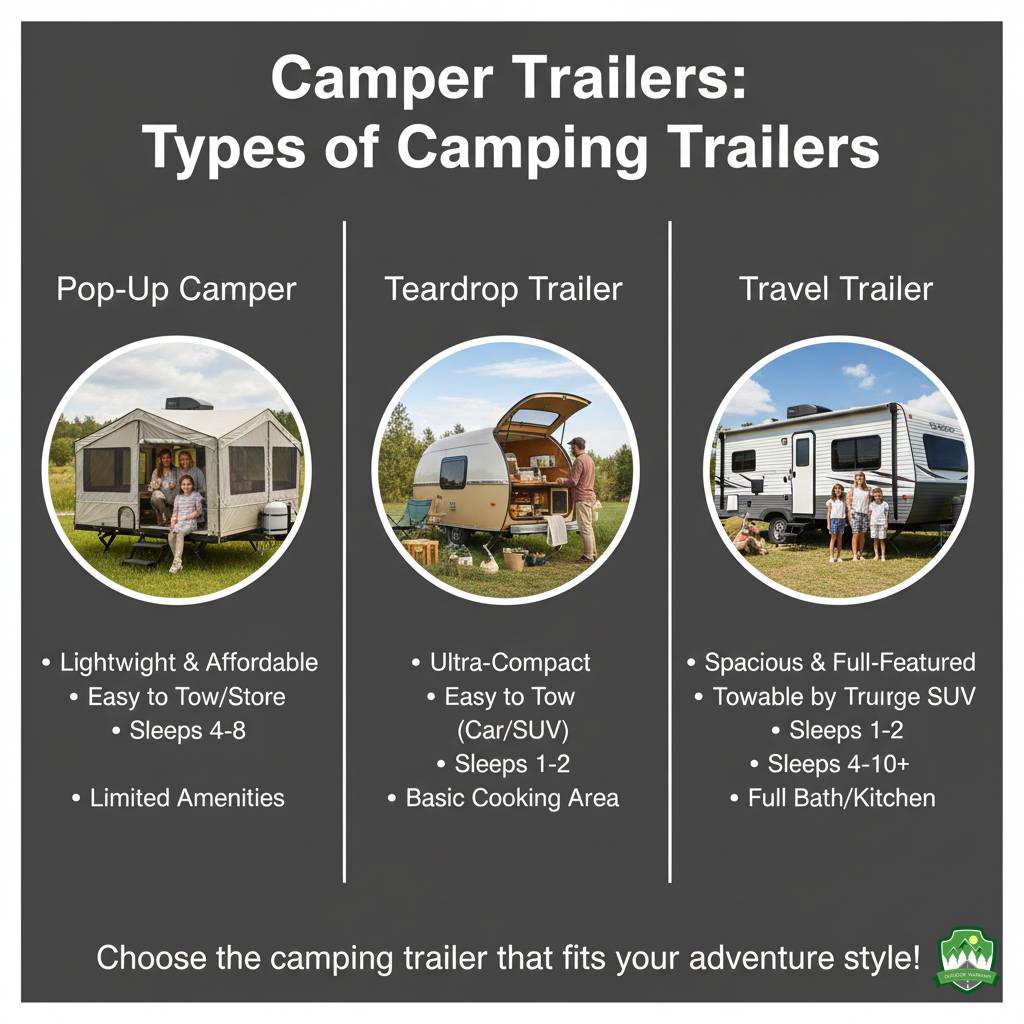
Camper Trailers are towable shelters designed for camping. The types of camping trailers include travel trailers and Fifth-wheel Trailers. Travel Trailers attach to a vehicle’s bumper hitch and offer different sizes with sleeping areas, kitchens, and bathrooms for convenience. Fifth-wheel trailers connect to a truck bed hitch, providing extra stability and spacious interiors for long trips.
A trailer for camping functions as a portable living space with essential amenities, making outdoor travel more comfortable. Camp trailers vary in size and design, from compact teardrop models to large toy haulers with extra storage for gear and vehicles. Aerodynamic designs improve fuel efficiency and towing performance by reducing wind resistance.
A standard camping trailer measures about 8 feet wide, ensuring safe travel on public roads. Proper maintenance, such as checking tire pressure, inspecting seals, and cleaning water systems, extends the lifespan of camp trailers. Choosing the right trailer requires considering weight capacity, storage needs, and off-road capabilities for different terrains. A well-maintained trailer for camping provides long-term reliability, making outdoor adventures more enjoyable and stress-free.
The types of Trailers for Camping are listed below.
Travel Trailers
Travel trailers are rigid-sided trailers towed by vehicles using bumper or frame hitches. Travel trailers include sleeping areas, kitchens, bathrooms, and entertainment systems, providing home-like amenities for families and travelers. Popular models include the Airstream Classic and Forest River Rockwood.
Fifth-Wheel Trailers
Fifth-wheel trailers are large towable trailers designed for pickup trucks using a special hitch in the truck bed. Fifth-Wheel offer spacious interiors with multiple slide-outs, full-size kitchens, and bathrooms, making them ideal for extended stays and full-time RV living. Popular models include the Keystone Montana and Grand Design Solitude.
Pop-Up Campers
Pop-up campers are collapsible trailers with canvas sides that expand to create sleeping and living areas. Pop-Ups are lightweight, compact for easy towing and storage, and include basic amenities like sleeping spaces and small kitchens. Popular models include the Forest River Flagstaff and Jayco Jay Sport.
Teardrop Trailers
Teardrop trailers are small, lightweight trailers with a distinctive teardrop shape. Teardrop provides sleeping space for two, basic kitchen facilities, and a minimalistic design, making them ideal for solo travelers or couples. Popular models include the nuCamp TAB 320 and Little Guy Mini Max.
Toy Haulers
Toy haulers are trailers that combine living quarters with a garage space for transporting recreational vehicles or equipment. Toy haulers feature a flexible garage area, sleeping and living spaces, and reinforced floors with tie-downs for securing gear. Popular models include the Heartland Torque and Keystone Raptor.
A-Frame Campers
A-frame campers are hard-sided, foldable trailers with a distinctive A-shaped roofline. A-frame campers offer quick setup, lightweight construction, and walls for better insulation and security. Popular models include the ALiner Classic and Forest River Rockwood A122S.
Truck Campers
Truck campers are compact camping units mounted onto the bed of pickup trucks. They include a sleeping area, basic kitchen facilities, and a small bathroom, offering mobility and access to remote locations. Popular models include the Lance 650 and Northstar Laredo SC.
Off-Road Trailers
Off-road trailers are durable camping trailers for rough terrains and off-road conditions. Off-road trailers feature high ground clearance, reinforced frames, all-terrain tires, and storage for water and fuel, making the trailers ideal for remote and rugged camping. Popular models include the Turtleback Adventure Trail and Patriot Campers X1.
Hybrid Trailers
Hybrid trailers blend the features of traditional travel trailers and pop-up campers. Hybrid trailers have a hard-sided body with expandable tent sections, providing lightweight towing and extra sleeping space. Popular models include the Jayco Jay Feather and Rockwood Roo.
Vintage Trailers
Vintage trailers are classic or retro-style campers, either restored originals or modern replicas. Vintage trailers feature a nostalgic design, compact size, basic amenities, and a unique aesthetic appeal. Popular models include the Airstream Bambi and Shasta Airflyte Reissue.
Overlanding Trailers
Overlanding trailers are designed for self-reliant, long-distance travel over challenging terrains. Trailers feature robust construction, off-road suspension, ample gear storage, and provisions for extended trips. Popular models include the TAXA Outdoors Mantis Overland and Opus OP15.
Micro Campers
Micro campers are ultra-compact trailers offering basic sleeping quarters and minimal amenities. They feature a lightweight design, limited storage, and sleeping space for one or two people, making them ideal for simple and economical camping. Popular models include the Polydrop Trailer and Happier Camper HC1.
Rooftop Trailers
Rooftop trailers are camping trailers equipped with rooftop tents, combining cargo space with elevated sleeping arrangements. They feature rooftop tent setups, storage compartments, and off-road capabilities, making them ideal for campers seeking an elevated sleeping area with added storage. Popular models include the Smittybilt Scout Trailer and Turtleback Getaway Trailer.
A Camper Trailer is a towable living space for camping and outdoor adventures. A trailer attaches to a vehicle using a hitch system, allowing travelers to make comfortable accommodations in remote locations. The trailers provide shelter and sleeping areas, and include basic amenities like kitchens and storage compartments. Camp Trailers range from small teardrop models to larger units with expandable sections that create additional living space when parked.
Camper trailers offer users flexibility and convenience without requiring a specialized towing vehicle like motorhomes. Trailers maintain separation between living and driving spaces, unlike truck campers that mount directly onto pickup beds. It costs less than a motorhome while providing similar comforts. Camper trailers represent a popular (RV) Recreational Vehicle market segment because it balances mobility with comfort. Camper trailers differ from other RVs primarily through their towable design, allowing travelers to detach and use their towing vehicle independently in the camping trips.
The functionality of a camper trailer is listed below.
Sleeping Accommodations: Offering built-in beds, convertible seating, or fold-out sleeping areas for comfort. Including bunk beds, queen-size mattresses, or loft spaces, depending on the design. It features insulated walls and blackout shades for restful sleep.
Offering Storage Solutions: Incorporating cabinets, under-bed compartments, and exterior gear lockers for organization. Using space-saving designs such as collapsible shelves or hidden compartments. Securing equipment with lockable storage areas for added safety.
Setting Up Kitchen Areas: Equipping compact kitchens with stoves, refrigerators, and sinks for food preparation. Integrating fold-out counters and outdoor kitchen extensions for added convenience. Utilizing propane, electric, or solar power sources for cooking appliances.
Towing Capabilities: Supporting various hitch types for secure attachment to towing vehicles. Balancing weight distribution with reinforced axles and suspension systems. Allowing compatibility with SUVs, trucks, and specialized towing vehicles.
Adapting Design Options: Customizing layouts with slide-out sections, pop-up roofs, or expandable rooms. Including aerodynamic builds for fuel efficiency and smoother travel. Offering modern interiors with premium finishes, LED lighting, and smart controls.
Including Off-Grid Features: Solar panels, lithium batteries, and water filtration systems for remote camping are installed. Add composting toilets and greywater recycling for self-sustainability. Supporting energy-efficient appliances and climate control systems.
Providing Climate Control Systems: Integrating air conditioning, heating units, and ventilation fans for comfort. Double-pane windows and insulated walls are used for temperature regulation. Controlling climate settings through digital or smart monitoring systems.
Ensuring Security: Incorporating door locks, motion-sensor lights, and alarm systems for protection. Installing fire extinguishers, smoke detectors, and carbon monoxide alarms. Reinforcing frames with impact-resistant materials for durability.
Upgrading Smart Technology Features: Connecting to mobile apps for remote power, water, and temperature monitoring. Offering voice-activated controls for lighting, security, and appliances. Including GPS tracking, tire pressure sensors, and backup cameras for navigation.
The different types of trailers for camping are listed below.
Travel Trailers: Travel trailers are towable RVs with a hard-sided structure and various size options. Providing sleeping areas, kitchens, bathrooms, and entertainment features for comfort. It supports different layouts with slide-outs, bunk beds, and luxury interiors.
Fifth-Wheel Trailers: Fifth-Wheel trailers are large towable RVs that attach to a pickup truck with a specialized hitch. Featuring spacious interiors with multiple rooms, full kitchens, and high ceilings. Enhancing stability with a unique over-bed design for better weight distribution.
Pop-Up Campers (Folder Trailers): Pop-Up Campers are lightweight trailers with foldable canvas or hard-sided sections. Expanding for additional sleeping and living space while remaining compact when towed. Including basic amenities such as small kitchens, dinettes, and beds.
Teardrop Trailers: Teardrop Trailers are small, aerodynamic campers with compact sleeping spaces. It features a rear kitchenette, lightweight frame, and minimal interior storage. Supporting solo travelers or couples with easy towing and simple designs.
Toy Haulers: Toy Haulers is a multipurpose trailer combining living space with a built-in garage. Accommodating motorcycles, ATVs, or outdoor equipment in a reinforced cargo area. Offering foldable beds, convertible seating, and secure tie-downs for storage.
A-Frame Campers: A-Frame Campers is a hard-sided folding trailer with an A-shaped roof structure. Providing better insulation and security compared to soft-sided pop-ups. Including compact kitchens, dinettes, and quick setup designs.
Truck Campers: Truck Campers are detachable RV units mounted on pickup truck beds. Offering a small living area with a bed, kitchenette, and a bathroom. Enhancing off-road capabilities with a compact and lightweight structure.
Off-Road Trailers: Off-Road Trailers is a rugged camper designed for rough terrains and remote areas. Reinforcing chassis with heavy-duty suspension, all-terrain tires, and high ground clearance. Including weather-resistant exteriors, storage compartments, and water tanks.
Hybrid Trailers: Hybrid trailers mix travel and pop-up campers with expandable tent sections. Combining hard-sided walls with soft canvas areas for additional sleeping space. Supporting lightweight towing while maintaining comfort and functionality.
Vintage or Retro Trailers: Vintage or Retro Trailers are classic-style campers with restored or modernized features. Showcasing nostalgic designs with curved exteriors, retro colors, and compact layouts. Offering basic amenities with modern upgrades like LED lighting, solar power, and upgraded insulation.
Overlanding Trailers: Overlanding trailers are self-sufficient camping trailers built for extended travel in remote locations. Including solar panels, water filtration, and rugged construction for off-grid adventures. Supporting long-term expeditions with heavy-duty storage and survival features.
Micro Campers: Micro Campers is an ultra-compact trailer with a lightweight frame and minimal interior space. Providing enough room for a small sleeping area, storage compartments, and basic cooking options. Supporting solo travelers or minimalists looking for a simple and fuel-efficient camping solution.
Rooftop Trailers: Rooftop Trailers are utility trailers equipped with rooftop tents for elevated sleeping. Featuring a durable base with storage space for gear, water, and supplies. Supporting overlanding and off-road camping with lightweight construction and easy setup.
Camping trailers differ from travel trailers in terms of design and functionality. Camping trailers are more compact and lightweight, making them easier to tow with standard vehicles and navigate through rough terrain. A camper trailer features basic amenities focused on essential needs, including pop-up or fold-out sections that expand when parked.
The units prioritize mobility and quick setup, allowing users to establish camp rapidly at various outdoor locations. Camping trailers have simpler construction and lower purchase and maintenance costs than their larger counterparts. Travel trailers offer more substantial living accommodations with permanent hard-sided structures and comprehensive interior features. Users seeking extended stays appreciate that Travel Trailers provide greater comfort and convenience.
Travel commonly includes full bathrooms, kitchen facilities, climate control systems, and dedicated sleeping areas without the need for daily conversion of spaces. Travel trailers focus on creating a more homelike environment for RV enthusiasts, while camping trailers emphasize portability and rugged outdoor use. Camping trailers are smaller and more essential than travel trailers, prioritizing mobility over luxury amenities.
The Best-Rated Camping Trailers for Families are the Jayco Jay Feather, Forest River Rockwood Premier, and SylvanSport GO Camp. The Jayco Jay Feather offers an excellent balance between comfort and mobility, with expandable sleeping areas and kitchen amenities that families appreciate. The Forest River Rockwood Premier features durable construction, spacious interiors, and convenient slide-outs that maximize camping living space. The Sylvansport GO Camp stands out for its lightweight design, allowing families to tow it easily with most vehicles while providing comfortable sleeping accommodations for up to four users.
The Minimalist camping trailer is a compact, lightweight option focused on simplicity and essential comfort, with the Polydrop Trailer, Happier Camper HC1, and Timberleaf Pika standing out. The Polydrop Trailer features an insulated, aerodynamic design with solar power for off-grid camping. The Happier Camper HC1 offers a modular interior, allowing users to customize the space for different travel needs. The Timberleaf Pika provides a teardrop-style structure with a cozy sleeping area, a small kitchen, and off-road capabilities for rugged adventures.
The most aerodynamic travel trailers are the Airstream Basecamp and the Bowlus Road Chief. The Airstream Basecamp features the iconic aluminum bullet shape with a streamlined teardrop design that reduces drag when towing. The compact trailer's rounded edges and smooth surfaces create minimal wind resistance, helping to improve fuel economy and provide better stability on highways.
The Bowlus Road Chief showcases an aircraft-inspired design with a pointed front end and tapering tail that allows air to flow smoothly around the trailer. The Bowlus is lightweight and has an aerodynamic profile, making it one of the most efficient trailers to tow, reducing strain on the towing vehicle and decreasing fuel consumption even at highway speeds. The trailers demonstrate how aerodynamic principles are effectively applied to travel trailer design to enhance performance and efficiency.
Standard camping trailers are 8 to 8.5 feet or 2.4 to 2.6 meters wide, which matches the legal width limit for vehicles on most roads across the United States. The width provides sufficient interior space while ensuring the trailer safely travels on highways and through standard campground entrances.
Compact models are narrower at 6 to 7 feet wide to improve aerodynamics and ease of towing, while offering enough living space. The width restrictions for camping trailers exist for safety reasons like preventing road obstructions. RV travelers must consider the limitations when planning routes and selecting campsites. Exceeding standard width limits requires special permits and escorts vehicles in most jurisdictions, according to RV Law.
Yes, Camper Trailers can have an Extended Warranty. Providers like Outdoor Warranty offer coverage plans beyond the standard factory warranty. The extended protection plans cover major systems like plumbing, electrical components, appliances, and structural elements for additional years after the original warranty expires.
RV dealers offer warranties at the time of purchase, and travelers purchase them separately later. Coverage terms, deductibles, and prices vary between providers, owners must carefully compare options before buying. The plans provide peace of mind for owners by protecting against unexpected repair costs that occur after the initial warranty period, similar to a Fifth Wheel Extended Warranty.
The advantages of camping trailers are listed below.
Mobility and Freedom: Mobility and Freedom is the ability to change locations without packing up equipment. A family visited multiple national parks in two weeks by hitching their trailer and driving to the next destination.
Home Comfort while Outdoors: Home comfort has beds, kitchens, and bathrooms in natural surroundings. A couple appreciated returning to a trailer’s hot shower and comfortable mattress after an exhausting 10-mile hike through muddy terrain.
Weather Protection: Weather protection shields occupants from rain, wind, and extreme temperatures. Campers stayed dry inside, while torrential rain flooded neighboring tents and forced many to leave the grounds.
Cost-Effective Accommodations: Cost-Effective Accommodations is eliminating hotel expenses on road trips. A family saved thousands of dollars on their summer vacation by using a trailer instead of booking hotel rooms for three weeks.
Security and Privacy: Security and privacy means having lockable doors and windows to protect valuables. A wildlife photographer stored expensive camera equipment securely in a locked trailer while exploring a remote mountain trail at sunrise.
Extended Travel Capability: Extended travel allows longer trips due to enhanced comfort and convenience. Travelers maintained a remote work schedule for three months while traveling through five states in a trailer equipped with solar panels and satellite internet.
Food Storage and Preparation: Food Storage and Preparation has refrigerators and cooking facilities for meal preparation. A family prepared fresh-caught fish with local vegetables in a trailer’s kitchen despite being miles from the nearest restaurant.
Storage Space: Storage Space provides dedicated areas for outdoor equipment and supplies. Travelers kept mountain bikes, kayaking gear, hiking equipment, and fishing tackle neatly organized throughout a national park tour.
Quick Setup: Quick Setup requires minimal preparation compared to tent camping. A traveler arrived at a campsite just before sunset and had a trailer leveled, connected, and ready for occupancy within minutes, while others struggled with tents.
Social Connection Opportunities: Social Connection Opportunities fosters interactions with fellow outdoor enthusiasts. Travelers met at a lakeside campground and formed a travel group, coordinating annual camping trips to new destinations.
The things to consider when choosing the Best Camping Trailer are listed below.
Trailer Size and Weight: Buyers must consider the trailer size and weight because an oversized trailer exceeds the towing capacity of a vehicle. A well-matched trailer prevents mechanical strain and ensures smoother handling on highways and rough roads.
Sleeping Capacity: Families must evaluate sleeping capacity because limited space leads to discomfort on long trips.
Storage Space: Campers must check storage space because outdoor gear, food, and supplies must be organized efficiently. A trailer with built-in cabinets and secure exterior compartments keeps essentials accessible and protected.
Kitchen and Cooking Features: Outdoor enthusiasts must review kitchen and cooking features because meal preparation reduces dining costs and improves convenience.
Bathroom and Plumbing Options: Buyers must look into bathroom and plumbing options because access to private facilities enhances comfort and hygiene.
Off-Road Capability: Adventure seekers must consider off-road capability because rough terrains require durable suspension and rugged tires. A trailer with high ground clearance and reinforced frames handles dirt paths and rocky trails better.
Climate Control Features: Campers must prioritize climate control features because extreme temperatures affect comfort and sleep quality.
Power and Electrical System: Long-term travelers must assess power and electrical systems because reliable energy sources support appliances and electronics.
Budget and Pricing: Buyers must consider budget and pricing because trailers vary in cost based on size, features, and brand. A well-planned purchase prevents financial strain and ensures long-term value.
Customization and Upgrade Options: Owners must explore customization and upgrade options because personal preferences improve comfort and functionality.
Yes, Camper Trailers work for families by offering a mobile home experience. Camper trailers work well for families when space matches family size, like a family of four fits comfortably in mid-sized models with designated sleeping areas. The Garcia family traveled through two national parks with their elementary-aged children, enjoying home-cooked meals and consistent bedtime routines despite changing locations daily.
Camper trailers become problematic when families outgrow available space. The Williamson family with three teenagers struggled in their 24-foot trailer as a lack of privacy created constant tension and arguments over bathroom access. Limited storage forced difficult decisions about what essentials to bring, causing frustration when items were left behind.
Yes, Camper Trailers can be insured through specialized coverage options for recreational vehicles and mobile living spaces. Insurance companies like Prime offer policies on the risks associated with towing, parking, and living in the trailers.
Coverage includes protection against collision damage, theft, vandalism, and natural disasters that affect the trailer while parked or in transit. Standard auto insurance policies exclude trailer damage, necessitating separate coverage. Lenders require full insurance coverage for financed trailers until the loan reaches completion.
Owners benefit from additional protection options such as personal belongings coverage, emergency expense reimbursement, and roadside assistance designed for larger vehicles. Experienced campers consider RV Insurance essential for peace of mind when investing in a travel trailer or fifth wheel.
The differences between Camper Trailers and Popup Trailers are in design, functionality, and user experience. Camper trailers have hard-sided structures and offer amenities such as kitchens, bathrooms, and sleeping areas. Popup trailers, or folding campers, have collapsible walls made of canvas or lightweight materials, providing a tent-like experience with basic facilities. Camper trailers offer better insulation and security, making them suitable for extended trips in various climates. Popup trailers are lighter and more compact, are easier to tow and store, appealing to campers seeking a closer connection to nature. Travelers must consider the Popup Trailer Insurance, because it costs less due to the lower value and simpler design for campers.
Yes, camper trailers are easy to maintain because they require basic upkeep tasks that owners easily perform. Regular maintenance includes inspecting seals, checking tire pressure, and cleaning the exterior, which helps prevent major issues. Following a consistent RV Maintenance routine ensures the longevity and reliability of the trailer, making it a manageable responsibility for most owners.
Yes, a camper trailer is still considered an RV because the term "RV" includes different types of vehicles and trailers that provide living quarters for temporary accommodation, such as motorhomes, camper vans, travel trailers, fifth-wheel trailers, popup campers, and truck campers.
👉 Call Us 574–505–6246
Let us give you the best quote we can! 👇
You agree to receive automated follow-up, reminder, and promotional messages with varying frequency. Text and data rates may apply. Reply STOP to end. Text HELP for help. Click for Terms of Service and Privacy Policy.