1029, 4024 Elkhart Rd. Ste 26, Goshen, IN 46526
Call Us at 574-505-6246
INTEREST FREE PLAN
| Rated Excellent 4.8/5
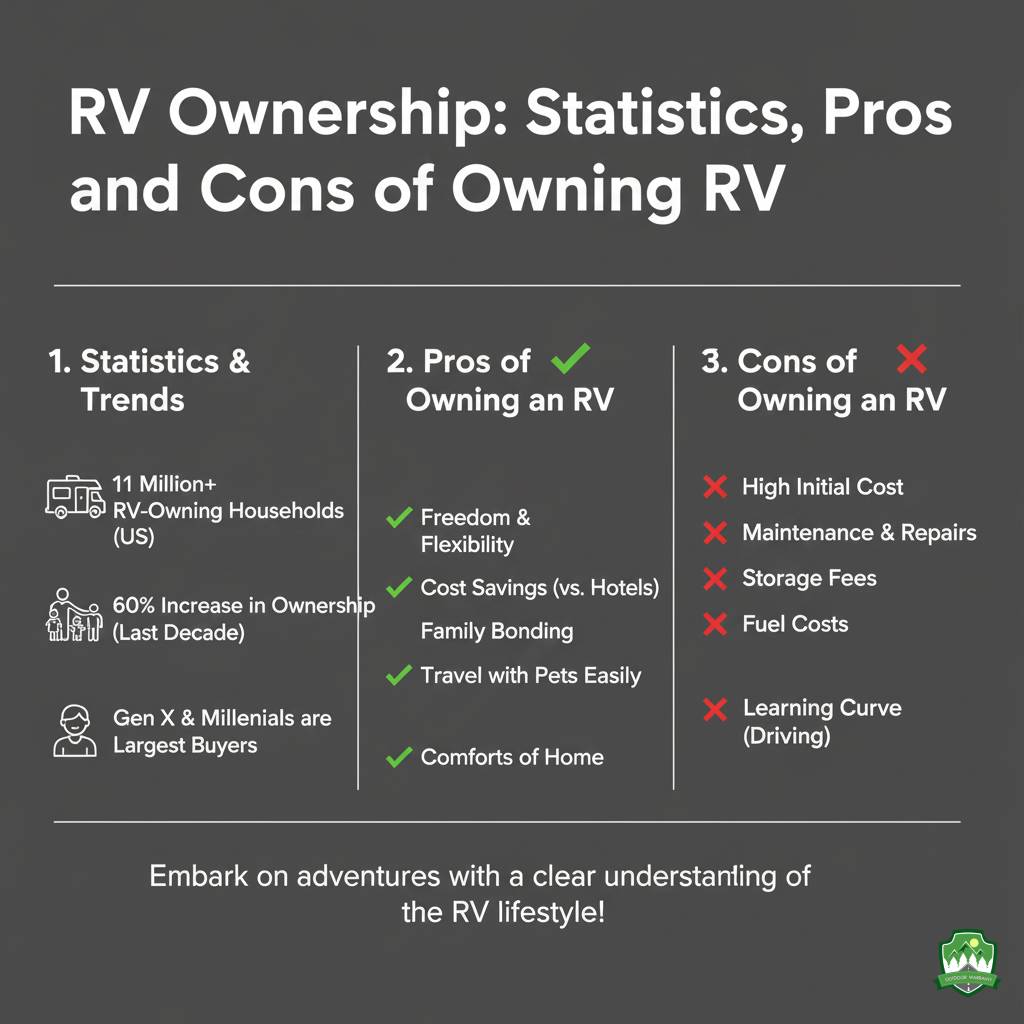
RV Ownership has been steadily growing, with 11.2 million households owning an RV (Recreational Vehicle), reflecting a 62% increase over the past two decades. RV owners use their vehicles for an average of 20 days per year, while potential buyers plan on using theirs for about 25 days annually.
Market trends suggest that the RV industry continues growing with a compound annual growth rate of 7% from 2021 to 2026. The RV ownership statistics by state show a huge rise of 56% to 62% in owners. RV’s appeal is wide, with RV owner demographics spanning various age of 49 to 55 years of age groups, from young families to retirees.
The financial implications of owning an RV include costs like maintenance, insurance, and storage. One of the pros of RV are owners enjoy the flexibility of road trips, reduced lodging costs, and the ability to personalize their living space. RV ownership has cons, such as high initial costs and potential depreciation.
Camper person finds the benefits outweigh the challenges, enjoying the freedom to explore the outdoors and travel on their terms. Buying and selling considerations remain important for RV owners looking to enter or exit the RV lifestyle as the market for RVs continues to grow,
RV ownership involves buying a recreational vehicle (RV) and paying for the initial purchase, registration, and insurance. Regular maintenance includes checking tires, brakes, and engines for safe operation. Interior maintenance involves plumbing, electrical systems, and appliances. Fuel costs depend on the vehicle size and travel distance.
Parking requires campground fees or designated spaces. Insurance covers damages, theft, and liability. Depreciation reduces resale value over time, and proper winterization prevents freezing damage in cold weather. Owners must follow weight limits and towing regulations for road safety. Full-time RV living helps reduce housing costs and offers a flexible lifestyle. Campers use RVs to reach remote areas while keeping essential amenities. Road trips become easier with the freedom to stop and rest anywhere. Travelers keep personal belongings in one place without the hassle of constant packing.
The age of RV ownership varies across different groups. The average owner of RVs is around 55 years old, with many being retirees. Younger buyers between 18 and above are increasing in number. Families with children purchase RVs for vacations and weekend trips. Full-time RV living attracts digital nomads and remote workers.
The storage of an RV depends on space availability and regulations. RV owners park at home if local laws permit. Storage facilities provide security, climate control, and protection from weather. Covered storage prevents sun damage and extends the vehicle’s lifespan. Winter storage requires draining water systems and battery maintenance.
Yes, owning an RV is worth it because it offers travel freedom and flexibility. Owners explore various destinations at their own pace without adhering to strict schedules. An RV provides a personal space, allowing travelers to feel at home while on the road. The mode of travel eliminates the need for hotel bookings, potentially reducing accommodation expenses.
RV owners access remote locations that are challenging to reach. The RV community is known for its friendliness, offering a sense of belonging to its members. An RV enables owners who work remotely to work from wide locations, and renting out the RV in idle times generates extra income to balance some ownership costs.
Owning an RV has drawbacks, including a high initial purchase price, especially for newer models, and ongoing maintenance costs that accumulate over time because regular upkeep is necessary to keep the RV in good condition. Storage becomes a challenge for owners without enough space at home, leading to extra expenses for off-site facilities, while fuel consumption remains high, making long-distance travel more expensive.
Depreciation lowers the resale value over time, similar to other vehicles, and insurance premiums add to the cost of ownership. Maneuvering and parking larger RVs create difficulties in urban areas or crowded campgrounds, requiring extra planning and skill.
The RV ownership statistics by state show huge differences across the United States. Texas had the highest number of RV parks in 2018, with 376 locations offering spaces for travelers. Texas’s large size, mild winters, and outdoor attractions contribute to high RV ownership. California had the most employees working in RV parks, with 3,161 staff members providing services. The demand for workers in California reflects the state’s popularity among RV travelers. RV parks in California, like Malibu Beach RV Park, offer long-term stays and attract full-time RV residents. California’s coastline, national parks, and warm climate encourage year-round RV travel.
Alaska had 31 RV parks like MT. View RV in 2018, but its employees earned the highest average annual payroll at $91,611 because the short summer season increases labor costs for park staff, and harsh winters limit RV travel, making seasonal work more expensive. RV owners visit Alaska for its remote places and highways, but the limited number of RV parks leads to a higher demand for available spaces, and long travel distances require careful planning for fuel, supplies, and maintenance. Climate, infrastructure, and tourism shape RV ownership trends and employment opportunities in different states.
Factors influencing RV ownership trends include economic conditions, demographic shifts, and regional preferences. States like California with favorable tax policies, such as no sales tax on RV purchases, attract more owners. For instance, South Dakota offers no sales tax on RV purchases and low registration fees, making it an attractive state for RV ownership.
Demographic trends, such as the aging baby boomer population and the rise of remote work, contribute to increased RV ownership. Younger generations are showing interest, seeking flexible travel and living options.
Yes, the RV industry has grown over the years, with RV ownership reaching a record high of 11.2 million U.S. households in 2021, showing a huge increase from previous years. The industry recorded a compound annual growth rate (CAGR) of 4.7% over the past five years, reaching an estimated $35.2 billion in 2024. The COVID-19 pandemic in 2020 and 2021 led to a surge in RV sales as owners chose safer travel alternatives, and towable RVs experienced the highest rise in popularity.
Remote work has contributed to RV market growth by allowing professionals to work from internet-connected RVs. Digital marketers manage content, social media, and advertising while traveling. Software developers write code, test applications, and attend virtual meetings from mobile workstations. Graphic designers edit images, design websites, and collaborate online. Writers, bloggers, and online educators create content, conduct webinars, and teach remotely.
Travel trends have increased RV demand because travelers prefer RVs over hotels to experience personalized travel. Families use RVs to visit national parks, beaches, and rural areas while maintaining privacy and comfort. Retirees enjoy long road trips without relying on expensive lodging. Adventure seekers use RVs to reach remote locations for hiking, fishing, and camping. RV owners now prioritize flexible travel over traditional vacation packages, leading to higher RV sales. The RV industry continues to grow as more owners choose remote work and seek travel freedom.
The pros and cons of Owning an RV are shown in the table below.
| Pros of Owning an RV | Cons of Owning an RV |
|---|---|
| Freedom to travel anytime | High initial purchase cost |
| No need for hotel stays or bookings | Expensive fuel and operating costs |
| Access to nature and national parks | Requires regular maintenance and repairs |
| Potential to rent out for extra income | Insurance, registration, and taxes add expenses |
| Saves money on frequent vacations | Limited living and storage space |
| Full-time living reduces housing costs | Driving and maneuvering requires skill |
| Pets travel with owners without extra cost | Depreciation lowers resale value over time |
| Ability to work remotely from any location | Internet access is unreliable in remote areas |
| Customizable interior and features | Requires proper waste disposal management |
| Family bonding and outdoor activities | Long trips require planning and fuel stops |
The things you should look for when buying a used RV from an owner are listed below.
The refrigerator, stove, microwave, and air conditioner require testing before purchase. Ask the owner if any appliances have been replaced or repaired. Verify if the RV operates on propane, electric, or dual power sources.
Check the tread depth and sidewalls for cracks or dry rot. Ask for the age of the tires and review any previous replacements. Aged or damaged tires require immediate replacement, adding extra costs.
Listen for unusual noises and check for smoke when starting the vehicle. Request maintenance records to confirm regular servicing. Ask the owner about any past engine repairs or issues while driving.
nspect the interior for water damage, mold, or soft spots in the flooring. Look for peeling wallpaper or stained ceilings, which indicate leaks. Test all cabinets, furniture, and upholstery for wear and structural integrity.
The electrical system powers appliances, lights, and entertainment features. Test all outlets, switches, and the breaker panel for functionality. Confirm that the battery holds a charge and the alternator charges correctly.
Run water through sinks, showers, and toilets to check for leaks or weak water pressure. Ask about the condition of the water heater and storage tanks. Verify if the waste system has been appropriately maintained.
Reviewing maintenance records provides insight into how well the RV has been cared for. A complete history of oil changes, tire rotations, brake inspections, and engine services indicates responsible ownership. Request receipts for major repairs to verify the work was done professionally.
Verify the ownership to ensure the seller has legal rights to sell the vehicle. The bill of sale and title must be free of liens, and the Vehicle Identification Number (VIN) must match the registration. Check local regulations when purchasing a used RV for sale in California by owner to ensure compliance with state transfer requirements.
Asking about previous usage helps determine the RV’s wear and tear. Frequent long-distance travel has put more strain on the engine and tires. Request information on climate exposure, as extreme temperatures cause structural damage.
Discussing past repairs reveals potential long-term issues. Ask if the RV has experienced water damage, engine failures, or major system replacements.
The best time of year to buy an RV is between October to January. Demand drops after the summer, leading to lower prices. Dealers offer discounts to clear out older models before new inventory arrives. End-of-year sales provide opportunities for better deals. RV manufacturers give rebates to dealerships, reducing prices further.
Financing terms become more flexible as sellers push to meet annual sales goals and buyers find better deals. The selection of models gets smaller, making it necessary to act quickly when finding the right RV. Purchasing in the off-season reduces competition with peak-season buyers, increasing the chances of securing a favorable deal.
RV expos and dealership promotions create more opportunities for buyers looking for discounts and exclusive offers. Expos bring multiple dealers together in one location, making comparing models, features, and prices easier. Manufacturers introduce new models and sometimes provide limited-time discounts to attract buyers. Special financing rates become available at major release events, helping to lower overall costs.
RV dealerships offer incentives such as free accessories, extended warranties, or service packages to encourage purchases. Researching prices in advance ensures that promotions provide savings rather than just marketing tactics.
The cost to own an RV ranges from $10,000 for used models to over $300,000 for new and luxury RV. Maintenance expenses are huge, with annual costs between $1,000 and $3,000, covering routine services and unexpected repairs. Fuel consumption is considerable, as many RVs are between 6 and 12 miles per gallon, leading to substantial fuel expenses, especially for frequent travelers. Insurance premiums depend on the RV’s type and value, costing between $500 and $2,000 annually. Registration fees vary by state and vehicle size, falling between $50 and $500 annually.
Additional costs include storage fees, which apply if the owner lacks space at home, ranging from $50 to $300 per month. Depreciation affects the RV’s resale value over time, representing a notable financial consideration. Owners opt for extended warranties to mitigate repair costs, and the RV Warranty Cost varies based on coverage and provider.
First-time RV owners should know about different RV types. Class A motorhomes offer spacious interiors and luxury features. Class B motorhomes, or camper vans, provide compactness and ease of driving. Class C motorhomes combine features, offering a balance between size and amenities. Regular maintenance is important, such as checking tire pressure, inspecting seals, and servicing the engine to prevent common issues.
First-time RV owners must budget for travel by considering fuel costs, campground fees, and routine maintenance. Planning routes in advance prevents issues with low-clearance bridges and restricted roads. Practicing driving maneuvers in open spaces improves handling skills and builds confidence. Investing in high-quality sewer hoses and water pressure regulators ensures secure and efficient utility connections. First-time RV owners must understand weight limits to prevent overloading and reduce safety risks. Learning how to operate RV appliances and systems enhances convenience and overall comfort. Joining RV communities provides access to valuable support, expert advice, and shared experiences from seasoned travelers.
First-time RV owners must ensure proper storage to maintain the vehicle’s condition when not in use. Deep interior and exterior cleaning prevents mold growth and pest infestations. Draining all water systems is important for avoiding freezing and pipe damage in colder temperatures. Disconnecting the battery helps prevent unneeded drainage and extends battery life. Covering tires shields them from UV exposure and reduces premature wear.
To store your RV, follow the nine steps listed below.
Indoor storage offers the best protection, but is the most expensive. Covered storage provides moderate protection from sun and rain at a lower cost. Outdoor storage is the cheapest but requires extra protection against weather.
Wash the exterior to remove dirt and protect the finish. Clean the interior, empty holding tanks, and remove food to prevent pests. Keep appliances open for ventilation.
Drain all water lines and tanks to prevent freezing. Add RV-safe antifreeze to plumbing, store the battery in a dry place, disconnect propane tanks, and close vents.
Apply wax to shield against moisture and UV damage. Cover vents to block pests and use an RV cover for weather protection. Remove awnings if needed.
Leave cabinets and refrigerators open to prevent mildew. Place moisture absorbers inside and close windows and blinds. Remove valuables and electronics.
Lock doors, windows, and storage compartments. Install a GPS tracker, wheel locks, and an alarm system. Use a steering wheel lock for added security.
Check the RV monthly for leaks, pests, or damage. Keep tires inflated and move the RV. Run the generator if stored long-term.
Use reflective covers in summer to prevent heat buildup. Add insulation and seal openings in winter to avoid freezing. Inspect for leaks and repair before rainy seasons.
Create a checklist and schedule maintenance before use. Reinstall or recharge the battery and test all systems. Check tires, brakes, and plumbing before travel.
The different types of RV Maintenance are listed below.
Routine maintenance is required to keep the RV in good working condition. Oil changes keep the engine running smoothly and prevent damage from old, dirty oil. Regular maintenance improves performance and extends the lifespan of the RV.
Seasonal tasks help protect the RV from weather-related damage and ensure it remains in good condition. Winterization involves draining water systems, adding RV-safe antifreeze, and insulating pipes to prevent freezing. De-winterization includes flushing antifreeze, reinstalling batteries, and checking all systems before uondition.
Emergency maintenance is required to address unexpected problems that affect the RV’s safety and performance. Unexpected issues need immediate attention to prevent further damage or safety hazards. Regular RV Maintenance helps detect potential issues before they turn into emergencies.
Roof inspection is essential to prevent leaks and structural damage inside the RV. Roof leaks cause severe interior damage and lead to mold or rot. Inspecting the roof for cracks, tears, or loose seals prevents costly repairs. A protective roof coating helps extend durability and prevent leaks.
Battery care is a must to maintain a reliable power supply for the RV’s electrical systems. RV batteries lose power if not properly maintained, leading to electrical failures. Cleaning battery terminals removes corrosion and improves efficiency. Storing batteries in a dry, cool place extends their lifespan.
Generator service ensures the RV has a reliable power source when off-grid. A well-maintained generator extends battery life and reduces the risk of power failures.
Seal inspection prevents leaks and energy loss by maintaining the integrity of doors, windows, and slide-outs. Regularly inspecting and resealing weak spots protects the RV from moisture. Applying a UV protectant helps seals remain flexible and durable.
Appliance maintenance ensures that essential systems like refrigerators, stoves, and air conditioners function properly. Refrigerators, stoves, and air conditioners need regular cleaning and servicing. Proper appliance care ensures comfort and safety inside the RV.
Fluid level checks help maintain engine performance and prevent mechanical failures. Low fluid levels cause mechanical failures and reduce engine efficiency. Using the correct type of fluid improves performance and protects components from wear. Regular fluid maintenance keeps the RV running smoothly on long trips.
Tire pressure monitoring improves handling, fuel efficiency, and overall driving safety. Incorrect tire pressure affects handling, fuel efficiency, and tire lifespan. Checking pressure before each trip ensures safe and smooth driving.
The common RV Repairs are listed below.
Roof repairs address leaks and damage caused by weather exposure. Signs include water stains on the ceiling or walls. Regular inspections and resealing seams help prevent leaks. DIY maintenance involves cleaning and applying appropriate sealants, but extensive damage requires professional attention.
Plumbing repairs involve fixing leaks, clogs, or faulty fixtures in the water system. Indicators include low water pressure or damp areas. Regularly checking connections and using RV-safe products can prevent issues. Simple fixes like tightening fittings are DIY, but complex problems need a plumber.
Electrical repairs pertain to wiring, outlets, or appliance issues. Symptoms include flickering lights or non-functional outlets. Regularly inspecting the electrical system and ensuring proper battery maintenance prevents problems. Basic tasks like replacing fuses are manageable, but professionals must handle complex issues.
Slide-out repairs focus on fixing malfunctions in the extending sections of the RV. Signs include difficulty in extending or retracting. Keeping slide mechanisms clean and lubricated prevents wear. Minor adjustments are manageable, but motor or structural issues require professional service.
Heating, Ventilation, and Air Conditioning (HVAC) refers to the systems that regulate indoor temperature, air quality, and humidity. Indicators of HVAC issues include inadequate temperature control or unusual noises. Regular filter changes and system checks maintain efficiency. Refrigerant or mechanical problems need a technician, while filter replacement is DIY-friendly.
Propane system repairs deal with leaks or malfunctions in the gas supply. Signs include the smell of gas or appliances not igniting. Regularly inspecting hoses and connections to ensure safety. Certified professionals must conduct propane system repairs due to the risks involved.
Brake and suspension repairs address wear in the braking system and suspension components. Symptoms include reduced braking efficiency or uneven tire wear. Regular inspections and RV Repairs are important for safety. Brake repairs are critical and must be performed by qualified mechanics.
Tire repairs involve fixing punctures or replacing worn tires. Indicators include visible tread wear or bulges. Regularly checking tire pressure and condition prevents blowouts. Simple puncture repairs are possible, but replacements or sidewall damage require professional service.
Appliance repairs pertain to malfunctioning RV appliances like refrigerators or microwaves. Signs include appliances not operating correctly. Regular cleaning and following manufacturer guidelines extend appliance life. Basic troubleshooting is self-service, but professionals must handle extensive repairs.
Exterior body repairs address damage to the RV’s outer shell, such as dents or scratches. Indicators include visible damage or water intrusion. Regular washing and waxing protect the exterior. Minor cosmetic fixes are achievable, but structural damage needs professional attention.
Yes, RVs should be registered. RV owners in States like California need to submit an Application for Title or Registration (Form REG 343), provide proof of ownership, show proof of insurance, and pay a vehicle license fee, which is 0.65% of the purchase price or value of the vehicle. The Declaration of Gross Vehicle Weight (Form REG 4008) for additional vehicle documents is required. Registration fees vary based on vehicle type and weight.
RV registration in Florida involves completing an Application for Certificate of Title With/Without Registration (Form HSMV 82040), providing proof of identity and Florida insurance, and paying the required fees. The initial registration fee is $10 to $35.50, with additional fees depending on the vehicle’s specifications. Check the Florida’s Department of Motor Vehicles for specific requirements and fees.
RV owners in Indiana must renew their vehicle registration annually. The renewal process is completed online, at a Bureau of Motor Vehicles (BMV) branch, or through a BMV Connect kiosk. The standard registration fee for a recreational vehicle is $29.35, with additional county and municipal taxes possibly applicable. A $15 administrative penalty applies to late renewals.
Yes, RVs have warranties that protect buyers against manufacturing defects and faulty components upon purchase. RV manufacturers cover structural components, electrical systems, plumbing networks, and appliances through factory warranties. RV warranties differ from car warranties by offering separate coverage tiers for living spaces and mechanical parts, while auto warranties focus solely on vehicular components. Home warranties contrast with RV warranties since residential coverage emphasizes stationary systems, whereas RVs require protection for mobility elements.
RV factory warranties include limited-time coverage for one year on workmanship and up to three years on structural integrity. Coverage gaps after factory warranties expire by protecting major systems and components of Extended RV Warranty. Extended RV warranty plans require inspection before purchase and cover repair costs at certified service centers nationwide.
The documents that RV Owners must have are listed below.
The title serves as legal proof of ownership for the RV. It is required for registration and must be transferred when selling the vehicle.
Registration indicates that the RV is authorized for use on public roads. It involves obtaining a license plate and paying applicable fees to the state’s motor vehicle department.
Insurance provides financial protection against accidents, theft, or damage. Policies vary, but liability coverage is mandatory for RV operations.
Maintenance records document the service history of the RV. Keeping detailed records helps maintain the vehicle’s value and assists in future repairs.
A bill of sale is a document that records the transaction between the buyer and seller. A bill of sale includes details such as the purchase price, sale date, and both parties’ signatures.
The Tax Implications of owning an RV include specific deductions and benefits recognized by the Internal Revenue Service (IRS). RV loan interest payments qualify as tax deductions when the vehicle meets IRS requirements for a second home with sleeping, cooking, and bathroom facilities. State vehicle registration fees paid for an RV become tax-deductible expenses on federal returns. RV owners must document all maintenance receipts and travel logs to claim business-related usage deductions.
Property taxes assessed on RVs follow similar deduction rules as regular homes on Schedule A forms or (Form-1040). Permanent RV park rental fees are classified as housing expenses for tax purposes under certain conditions. Professional tax preparers recommend keeping detailed records of RV-related expenses throughout the year for maximum deduction benefits.
Military service members receive additional RV-related tax benefits through specialized deduction programs. Business owners who utilize RVs for mobile offices claim partial vehicle depreciation on tax returns with proper documentation. Self-employed owners operating RV-based businesses deduct operating costs as legitimate business expenses.
The largest RV size you can buy is 45 feet long, which is established through federal and state regulations across the United States. Federal regulations limit RV length to 45 feet on interstate highways for safety requirements. California restricts RV width to 8.5 feet without special permits for road travel. Florida maintains a maximum RV height restriction of 13.6 feet from the ground to the roof peak. Pennsylvania enforces strict bridge clearance rules, requiring RVs under 13 feet in most areas.
National park entrance roads enforce a maximum 40-foot length for recreational vehicles. Private campgrounds set individual size limits based on site dimensions and available utilities. The Department of Transportation requires weight ratings under 26,000 pounds for non-commercial RV operations.
The Most Common Types of RVs are listed below.
A motorhome combines transportation and living space in one self-propelled RV. A motorhome offers convenient driving and living without towing needs. It works well for long-distance travel and full-time living, with kitchens, bathrooms, and sleeping areas. Class A, B, and C options vary in size and features.
A camper trailer attaches to vehicles for mobile living. It weighs less and costs less than motorhomes, perfect for families and weekend trips. Options include pop-up campers, travel trailers, and fifth-wheel trailers. The trailer detaches from vehicles for separate use.
A camper van builds on a van chassis for compact, self-contained living. Easy driving and maneuvering make sense in cities and narrow roads. Basic amenities include a bed, kitchenette, and storage for short trips. Standard parking spaces work well for the fuel-efficient RV Types favored by solo travelers and couples.
Yes, you can buy an RV to live in as a permanent residence under specific zoning laws and regulations. Owners choose buying a RV to live in as an alternative housing solution with lower costs than traditional homes. The growing trend of RV creates opportunities for flexible lifestyles and location independence. Full-time RV residents save money through reduced utility bills and property maintenance expenses.
RV parks and campgrounds provide designated long-term spaces with hookups for permanent residents. Mobile living allows exploring different areas while maintaining a consistent home environment. Remote workers embrace Living in an RV to combine work flexibility with travel opportunities. Retirees select RV living to maximize retirement savings and explore new destinations. Monthly site rental fees include utilities and amenities at most RV-friendly locations.
Yes, you can sell your RV through multiple established channels and proper documentation and prepare it for sale. An RV’s preparation for sale includes three steps such as cleaning, maintenance, and valuation. First, clean the RV thoroughly, including the interior and exterior, to enhance its appearance. Second, perform required maintenance and repairs to ensure the RV is in good working condition, increasing its resale value. Third, assess the RV’s value using resources like online tools or professional appraisers to set a competitive price based on make, model, and condition.
RV dealerships offer trade-in options with immediate payment guarantees for quick sales. Facebook Marketplace connects local buyers directly for private-party transactions. Legal steps for selling an RV include transferring the title, which the seller and buyer must sign to change ownership. Service records provide proof of maintenance history, reassuring potential buyers. A professional RV inspection verifies the vehicle’s mechanical condition before listing. A bill of sale includes essential details like vehicle identification numbers and the agreed price.
The Department of Motor Vehicles (DMV) processes registration transfers within 30 days of the sale. Warranty transfers require the submission of manufacturer documentation. Payment escrow services ensure protection for parties in private sales.
👉 Call Us 574–505–6246
Let us give you the best quote we can! 👇
You agree to receive automated follow-up, reminder, and promotional messages with varying frequency. Text and data rates may apply. Reply STOP to end. Text HELP for help. Click for Terms of Service and Privacy Policy.