1029, 4024 Elkhart Rd. Ste 26, Goshen, IN 46526
Call Us at 574-505-6246
INTEREST FREE PLAN
| Rated Excellent 4.8/5
Recreational Vehicle (RV) rentals provide travelers with temporary access to motorhomes or towable campers for vacations, events, or long-term stays. Rental costs vary based on vehicle type, duration, location, and season. Daily rates range from $50 for small trailers to over $275 for luxury Class A motorhomes. Weekly rentals fall between $700 and $1,900, while monthly RV rental options offer significant per-day discounts. Additional costs include mileage fees, cleaning charges, insurance, and generator use. RVs are categorized into motorized units (Class A, B, and C) and towable options (travel trailers, fifth wheels, and pop-ups). Class C motorhomes and small towable trailers are recommended for beginners due to their manageable size, ease of use, and basic amenities. Class B camper vans suit solo travelers or couples, while Class A units offer more space for extended family trips.
Renting offers cost-effective access without the financial burden of ownership. Renting allows for the trial use of various RV types before committing to a purchase. Renting is the most practical solution, while buying becomes more sensible only with frequent or full-time use. Core amenities include sleeping areas, kitchen appliances, bathroom facilities, climate control, freshwater systems, and power hookups. Slide-outs, awnings, entertainment systems, outdoor kitchens, and Wi-Fi connectivity are optional features, while roadside assistance, delivery setup, and tank dumping support are available, depending on the rental provider.
First-time renters must practice driving in open areas and understand vehicle dimensions. Proper towing equipment is essential for trailers. Pre-trip inspections, backup camera use, and emergency preparedness are safety measures. Extended warranties protect owners against internal breakdowns during rental use, while rental insurance covers accidents, theft, and liability. A rent-to-own RV program offers a hybrid solution where rental payments apply to final purchases. The option allows budget-conscious travelers to transition into RV ownership without immediate full payment.
An RV rental temporarily leases a recreational vehicle for travel, road trips, or camping purposes without the commitment of ownership. RV rentals allow travelers to explore destinations at their own pace while enjoying the comfort of onboard living amenities such as sleeping quarters, kitchen facilities, and restrooms. Renting an RV is affordable and convenient than purchasing one for occasional travelers or first-time users. Renting eliminates long-term maintenance costs, storage requirements, and depreciation concerns. The option is ideal for renters or families seeking short-term adventure, cross-country travel, or nature-based vacations in a fully mobile setup. The experience allows for greater control over itinerary and lodging, making it a practical alternative to hotels or guided tours. The benefits come without the entire investment required to own a Recreational Vehicle.
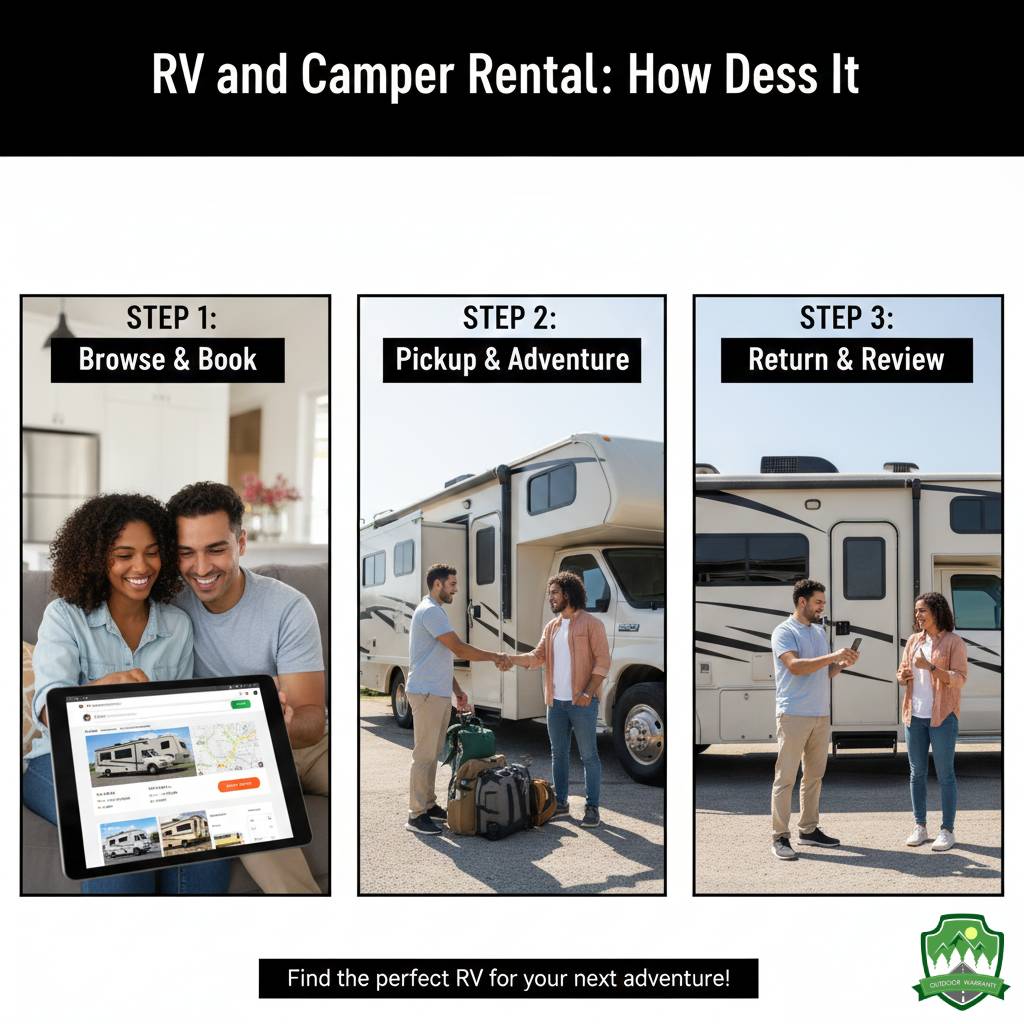
RV Rental works by following the nine steps below.
Choosing an RV Type. Select the size and class of RV based on travel needs, group size, and features such as sleeping capacity, kitchen setup, and bathroom availability.
Booking Online or In-Person. Reserve the RV through a rental website or a local RV rental location. Camper rental platforms allow date selection, location preferences, and comparison of available models.
Reviewing and Signing the Rental Agreement. Read the rental terms and conditions carefully. Sign a formal agreement outlining rental duration, mileage limits, cleaning policies, and applicable fees.
Understanding Insurance Requirements. Confirm insurance coverage before departure. Rental companies offer basic insurance with optional upgrades for full coverage or zero-liability protection.
Scheduling Pickup or Delivery. Choose between picking up the RV at a specified location or arranging delivery to a designated address, depending on the rental provider.
Inspecting Vehicle Orientation. Receive a walk-through of the RV to understand how to operate its features. Document the condition of the vehicle before driving off.
Using the RV During the Trip. Follow road safety guidelines, campground regulations, and rental policies. Keep the vehicle clean and operate systems as instructed.
Returning the RV. Return the RV on the scheduled date and time. Complete a post-rental inspection to confirm the condition and settle any additional charges if necessary.
Final Billing and Receiving Deposit Refund. Review the final invoice, including mileage or fuel charges. Receive the security deposit refund after the vehicle passes inspection.
The types of RVs you can rent are listed below.
Class A Motorhome: Large, bus-style RV ideal for long-distance travel and family vacations. Class A motorhomes offers spacious interiors, full kitchens, bathrooms, and multiple sleeping areas. It is best for extended trips with numerous passengers.
Class B Campervan: A compact and fuel-efficient van-style RV is perfect for solo travelers or couples. It includes basic amenities like a small kitchen and sleeping area and is suited for urban travel or short road trips.
Class C Motorhome: A mid-sized RV with a cab-over bed, ideal for families or small groups. Class C Motohome Balances maneuverability with space, including kitchen, bath, and sleeping areas.
Fifth Wheel Trailer: Large, luxurious, towable types of RV that connect to a truck bed. The fifth wheel trailer offers multi-room layouts and is suitable for extended stays or full-time RV living.
Travel Trailer: A versatile RV in various sizes, towed by trucks or SUVs. The travel trailer is suitable for families and couples looking for flexible travel.
Popup Camper (Folding Trailer): Lightweight trailer that expands into a tent-like living space. The pop-up camper is Ideal for weekend camping and travelers looking for an affordable, easy-to-tow option.
The advantages of renting an RV versus buying one are cost savings, short-term flexibility, and avoiding long-term maintenance responsibilities. Renting eliminates the need for a large upfront payment or long-term financing when purchasing an RV. Ownership involves depreciation, insurance, storage fees, and registration costs, all avoided with short-term rentals. The average cost to own and maintain an RV exceeds $1,000 per month, while a rental price is as low as $100–$200 per day, depending on the type and season, according to the Recreational Vehicle Industry Association (RVIA).
Renting provides flexibility for occasional or seasonal trips without the burden of owning an underutilized vehicle. Renting allows access to different RV sizes and features, depending on travel needs. Renting is ideal for first-timers who want to test the RV lifestyle before committing to ownership. Rental agencies handle inspections, cleaning, repairs, and mechanical upkeep. The rental agencies eliminate the time and cost of maintaining an RV, including engine service, plumbing repairs, tire replacements, and winterizing procedures.
Rent-to-own campers offer a hybrid solution where monthly rental payments contribute toward eventual ownership. The approach offers lower initial costs than buying outright but includes higher interest rates and longer financial commitments than standard RV loans. Rent-to-own is suitable for renters planning to own it eventually, but without the ability to purchase it immediately.
Yes, you should find an RV lot for rent because it is ideal in situations that require extended stays, such as seasonal living, long-term work assignments, or attending multi-day events like festivals and fairs. Renting a stationary lot provides a stable and cost-effective base without the obligations of property ownership. Renting a stationary lot is convenient for snowbirds, digital nomads, or families looking for a semi-permanent residence in a specific area.
Event-based stays benefit from pre-arranged RV lots that offer proximity to venues, built-in utilities, and enhanced security. The lots reduce the logistical hassle of setup and provide a social environment with like-minded travelers. Location plays a crucial role when selecting an RV lot, as access to shopping centers, medical services, fuel stations, and natural attractions improves convenience and livability.
Full hookups for water, sewer, electricity, internet access, laundry services, and waste disposal are key features to consider in an RV lot. Gated security, pet-friendly policies, and recreational spaces further increase comfort during long-term use. Renting an RV lot is a practical choice for travelers seeking affordability, convenience, and access to essential services during extended stays.
Renting an RV costs between $100 and $275 daily. Renting an RV involves variable pricing based on the vehicle type, rental duration, and location. Class A motorhomes cost between $175 and $275 per night, and they are known for their luxury and ample living space. Class B camper vans offer compact mobility at $100 to $200 per night. Class C motorhomes are priced from $150 to $200 per night, which balances size and amenities. Travel trailers are the most budget-friendly, averaging $50 to $125 per night, depending on size and features.
Renting an RV for a week varies from around $350 for smaller trailers to over $1,900 for top-tier Class A units. Monthly RV rental rates are discounted, with camper vans ranging from $3,840 to $8,190 monthly and Class A units costing up to $12,000 monthly. The long-term options are ideal for travelers seeking extended adventures or temporary living arrangements.
Additional expenses affect the total RV rental cost. Rentals include limited mileage, with extra charges between $0.35 and $0.50 per mile. Insurance is required, priced from $10 to $50 daily based on coverage and provider. Generator usage is billed at $3.50 per hour if applicable. Cleaning fees apply if the vehicle is returned in poor condition, with charges up to $250. Refundable security deposits, ranging from $500 to $1,000, are standard industry practice.
Cost management strategies include booking early to secure favorable rates, choosing off-peak travel seasons for better deals, and comparing peer-to-peer and traditional rental platforms. Reviewing rental agreements carefully helps avoid unexpected fees. Travelers planning trips must evaluate all expenses to accurately estimate how much it is to rent an RV for a week or a month, using monthly RV rental and RV rental cost search terms to find competitive options.
Factors such as vehicle size affect the price of an RV rental, including amenities, rental duration, seasonality, and delivery services. Each variable contributes differently to the total rental cost. Vehicle size is one of the most significant price indicators, as larger RVs, such as the Class A model, cost more due to their spacious interiors, powerful engines, and luxury features. Mid-sized Class C motorhomes offer moderate pricing, while smaller Class B camper vans or towable trailers are more budget-friendly.
Amenities directly affect rental rates, as units with added comforts like full kitchens, entertainment systems, slide-outs, climate control, or solar panels are priced higher. Premium features like high-end furnishings, upgraded insulation, onboard Wi-Fi, and modern tech controls raise costs.
Rental duration affects pricing structure. Short-term rentals are priced at a higher daily rate. Weekly and monthly rentals provide discounted pricing and lower the per-day cost. For example, a daily rental costs $200, while the same unit rented for a month could drop to $150 per day.
Seasonality is vital in cost fluctuations. High travel periods like summer, school vacations, and holidays drive demand and prices. Lower demand during fall or winter results in more affordable rental rates and increased availability.
Delivery services add convenience but increase total rental costs. Owners or rental companies offer delivery and setup to campgrounds or customer-selected sites. Delivery fees are calculated per mile or based on a flat rate, depending on the provider’s policy.
A combination of size, amenities, length of rental, time of year, and additional services, such as delivery, determines RV rental prices. Evaluating each factor ensures a better match between rental value and travel needs.
Yes, there are additional fees to consider when renting an RV. The charges exceed the base rental rate, impacting the total cost. Generator use is a standard add-on fee, charged per hour if usage exceeds a preset limit. Rentals include a limited number of free hours daily, with extra hours billed separately. Campsite reservations are not included in RV rental costs and must be booked and paid for independently, ranging from $30 to $80 per night, depending on location and amenities.
Kitchen kits are not standard and are an optional rental package for an added fee, which includes cookware, utensils, and dishware. Cleaning fees are another frequent expense if the RV is returned in poor condition or without proper sanitation. The fees range from $50 to $250, based on the company’s policy.
Insurance costs are mandatory or highly recommended, with daily charges varying from $10 to $50 depending on the coverage level. Rentals require proof of external insurance or offer coverage options directly through the rental platform.
Class C motorhomes or small towable RVs are ideal for first-time renters due to their manageable size, user-friendly layout, and balanced features. The options offer a comfortable entry point into RV travel without the challenges of larger or more complex vehicles.
Class C motorhomes are built on a truck or van chassis, which makes them easier to drive than larger Class A models. Class C motorhomes range from 20 to 30 feet long, providing enough space for sleeping, cooking, and bathroom use while maintaining a compact footprint that suits campgrounds and parking areas. The over-cab sleeping area adds functionality without increasing the vehicle's length, making it practical for families or groups of three to five people.
Small towable RVs, such as lightweight travel trailers or pop-up campers, are suitable for beginners. The units are towed by mid-sized SUVs or trucks and offer simple setups. Towable RVs' smaller size allows easier storage, better fuel efficiency, and flexibility when navigating campsites or public roads. Towables are ideal for weekend trips, minimalistic travelers, or users testing the RV lifestyle before investing in a larger unit.
Yes, you can rent an RV for a one-way trip or long-term use. Rental providers offer options to accommodate different travel plans and durations. One-way RV rentals are available for cross-country or point-to-point travel, allowing pick-up at one location and drop-off at another. The option is ideal for relocation, road trips across multiple states, or seasonal travel such as snowbird migration. Companies charge a one-way fee, depending on the distance between pick-up and drop-off locations.
Long-term RV rentals are offered with discounted monthly rates for extended travel. The rentals suit digital nomads, seasonal workers, retirees, and families taking extended vacations. Monthly RV rental agreements include special pricing, additional mileage allowances, and flexible terms that differ from short-term rentals.
One-way and long-term rentals are available through national chains and peer-to-peer platforms, providing flexibility for customized travel plans without returning to the original location.
The amenities you should look for in an RV rental are listed below.
Sleeping Areas: Beds include queen or full-size mattresses, convertible sofas, bunk beds, or overhead cab beds in Class C units. These provide designated rest areas for comfort during overnight stays.
Kitchen Appliances: Rental campers have a refrigerator, microwave, stove, and sink. Some RV rentals include an oven or freezer compartment. Appliances allow for meal preparation and food storage during travel.
Bathroom Facilities: Full or partial bathrooms include a toilet, sink, and shower. Wet baths combine all fixtures in a waterproof space, while larger models offer separate rooms.
Air Conditioning and Heating: Climate control systems regulate temperature for year-round comfort. Rooftop air conditioning units and built-in furnaces are standard in most mid-size and large RVs.
Fresh Water and Waste Systems: A water pump, freshwater tank, gray water tank (sink/shower waste), and black water tank (toilet waste) support daily living functions while off-grid or at campgrounds.
Wi-Fi and Connectivity: RVs offer built-in Wi-Fi boosters, mobile hotspots, or smart TVs with streaming capabilities. Useful for remote work or entertainment.
Outdoor Setups: Awning-covered patio areas, exterior speakers, outdoor kitchens, folding chairs, and tables improve outdoor relaxation and cooking.
Slide-Out Sections: Motorized slide-outs expand the interior living space when parked, offering more room for lounging or dining.
Backup Cameras and Navigation Aids: Safety-enhancing tools that help with parking, reversing, and maneuvering in tight areas.
Entertainment Systems: Built-in TVs, DVD players, Bluetooth stereos, or satellite receivers provide in-vehicle entertainment during downtime.
Yes, you can rent an RV with delivery services or stationary setups. RV rental platforms and independent owners provide delivery options, bringing the RV directly to a specified location, such as a campground, event site, or private property.
Delivery services include transportation, setup, and orientation. The option is ideal for renters who prefer not to drive or tow the RV. Delivery fees are calculated based on distance, with providers offering free delivery within a certain radius.
Stationary rentals are another standard option, where the RV remains parked at a designated lot, RV park, or private site. The setups function like vacation rentals, allowing full use of the RV’s amenities without requiring mobility. Utilities such as water, power, and sewage are pre-connected for convenience.
Beginners should know the following before renting an RV are listed below.
Research Rental Companies: Evaluate traditional and peer-to-peer RV rental platforms. Compare pricing, available RV types, included mileage, insurance options, and customer reviews.
Understand the Rental Contract: Read the agreement in full. Check for mileage caps, generator use limits, insurance responsibilities, cleaning expectations, and deposit terms. Understand cancellation and refund policies before confirming the reservation.
Confirm Driving License Requirements: A standard Class C driving license is sufficient for operating rental campers and RVs under 26,000 lbs. No special license is needed for standard Class B or Class C motorhomes. Larger units or specific states require additional permits or age restrictions.
Plan Routes and Campsites in Advance: Map the travel route ahead of time. Consider RV-specific restrictions like bridge clearances, road width, or tunnel access. Reserve RV-compatible campsites early, especially near national parks or during holiday periods.
Inspect and become familiar with the Vehicle: Walk through the RV with the provider before driving. Use essential systems such as electricity, water hookups, propane, slide-outs, leveling jacks, and waste tanks.
Practice Safe Driving: Adjust to the RV’s size and blind spots. Practice basic maneuvers such as turning, reversing, and lane positioning. Use mirrors and rear cameras when available, and avoid narrow or unpaved roads unless permitted.
Pack Travel Essentials and RV Equipment: Bring items like leveling blocks, fresh water hoses, sewer connections, extension cords, and surge protectors. Include personal essentials, tools, and emergency kits.
Budget for Additional Costs: Prepare for fuel charges, campsite fees, insurance, extra mileage costs, and possible damage or cleaning fees. Optional add-ons like kitchen kits, bedding, or bike racks increase the total rental cost.
You prepare for driving or towing an RV safely by checking the RV's condition. Driving or towing an RV safely requires preparation, awareness of vehicle dimensions, and hands-on practice. Proper preparation ensures safe handling, reduces accident risks, and improves confidence on the road.
Start by practicing maneuvers in an open space, like an empty parking lot. Focus on turning, backing up, parking, braking, and lane changes. The exercises help adjust to the vehicle’s longer length, wider turns, and limited rear visibility. Using side mirrors and backup cameras enhances control when navigating tight spots.
Understanding the RV’s height, width, and length is essential. Know bridge clearances, overhead signs, low-hanging branches, and campground size limits. Knowing the vehicle's weight is critical for braking distance and road compliance. Check for the Gross Vehicle Weight Rating (GVWR) and ensure the load does not exceed limits.
Confirm compatibility between the tow vehicle and trailer for towable RVs. Ensure the hitch type, tongue weight, and towing capacity match. Use a properly rated hitch, sway control devices, and trailer brakes as required. Inspect the tire pressure, brake connections, and signal wiring before every trip.
Maintain slow speeds during turns and descents. Increase the following distance to allow time for braking. Avoid sharp turns and sudden maneuvers. Use turnouts to let faster vehicles pass, especially on narrow or mountain roads.
You can rent out your personal RV to others by following the eight steps below.
Choose a Peer-to-Peer Rental Platform. Sign up on trusted RV rental platforms. The platforms connect RV owners with renters, providing listing management, insurance, and payment processing.
Create a Detailed Listing. Upload high-quality photos of the RV’s interior and exterior. Write a clear description that includes vehicle type, amenities, capacity, and usage guidelines. Mention whether the RV is stationary or available for travel.
Set Pricing and Availability. Determine competitive daily, weekly, or monthly rates based on RV type, location, and season. Use local listings as benchmarks. Set minimum rental days, mileage limits, security deposit, and cancellation terms.
Define Rules and Restrictions. Establish clear usage policies. Specify if pets are allowed, smoking is prohibited, or festivals are off-limits. Detail pickup and return times, fuel and cleaning expectations, and off-road limitations.
Offer Delivery Options if Possible. Provide delivery and setup services to campgrounds or homes for added convenience. Set delivery radius and fees based on mileage. Renters prefer delivered RVs to avoid driving or towing.
Maintain the RV’s Condition. Perform regular inspections before and after each rental. Check fluid levels, brakes, tires, electrical systems, and water connections. Deep clean interiors and restock essentials such as propane or toiletries as needed.
Use Platform-Provided Insurance and Support. Enable commercial insurance offered through the rental platform to protect against accidents, damages, or liability. Take time-stamped photos before each rental as documentation.
Communicate Clearly with Renters. Answer questions promptly. Provide instructions on operating systems like electrical, water, sewage, and climate controls. Offer an in-person or video walkthrough during pickup or delivery.
Yes, you should consider an extended warranty when renting an RV. Listing RVs on rental platforms benefits owners, as warranties help cover the cost of unexpected mechanical or system failures during a rental period, reducing out-of-pocket repair expenses. The protection is valuable for high-mileage or older units with higher breakdown risks. Warranties support faster repairs, minimize downtime, and maintain rental availability. The assurance of a well-maintained, protected vehicle adds confidence to the trip experience. Added peace of mind is provided for parties involved through extended warranties for RVs.
Repairs and breakdowns covered under extended warranties are listed below.
Appliance Coverage: Repairs or replacements for RV refrigerators, stoves, ovens, microwaves, and air conditioners. Covered parts include cooling systems, burners, thermostats, control panels, and compressors.
Plumbing Systems: The system covers water pumps, heaters, faucets, valves, holding tanks, and connecting pipes. Protection applies to leaks, malfunctions, and structural failures.
Electrical Components: The electrical components apply to 12V and 120V systems, including lighting, wiring, fuses, inverters, converters, and generators. Repairs include electrical shorts, power failures, and system diagnostics.
Heating and Cooling Systems: Includes furnace blowers, burners, thermostats, and climate control sensors. Coverage ensures that heating and cooling systems function properly in different weather conditions.
Slide-Out and Leveling Mechanisms: Protects motors, gear tracks, and electrical systems when extending slide-outs or stabilizing the RV. The mechanisms are critical for functionality and interior space.
Entertainment and Connectivity Systems: Plans extend to onboard electronics such as televisions, antennas, Bluetooth audio, and Wi-Fi signal boosters, depending on the warranty provider's terms.
Extended warranties differ from insurance for rented RVs in the different types of protection they provide. Extended warranties cover repairs and replacements related to mechanical failures, wear, or system malfunctions. The mechanical failures include internal components such as appliances, plumbing systems, electrical circuits, slide-out mechanisms, and generators. The warranties are focused on the performance and functionality of the RV's operational systems.
Insurance protects against external events such as accidents, theft, vandalism, and natural disasters. Insurance includes liability coverage in case of injury or property damage involving other people or vehicles. Insurance policies offer collision coverage, comprehensive protection, and legal defense in applicable cases.
Warranties support maintenance and mechanical reliability, while insurance covers incident-related losses and legal responsibilities. Rental protection is most effective when forms are combined, while insurance for RVs remains essential for safeguarding against unexpected damage or legal exposure during the rental period.
👉 Call Us 574–505–6246
Let us give you the best quote we can! 👇
You agree to receive automated follow-up, reminder, and promotional messages with varying frequency. Text and data rates may apply. Reply STOP to end. Text HELP for help. Click for Terms of Service and Privacy Policy.