1029, 4024 Elkhart Rd. Ste 26, Goshen, IN 46526
Call Us at 574-505-6246
INTEREST FREE PLAN
| Rated Excellent 4.8/5
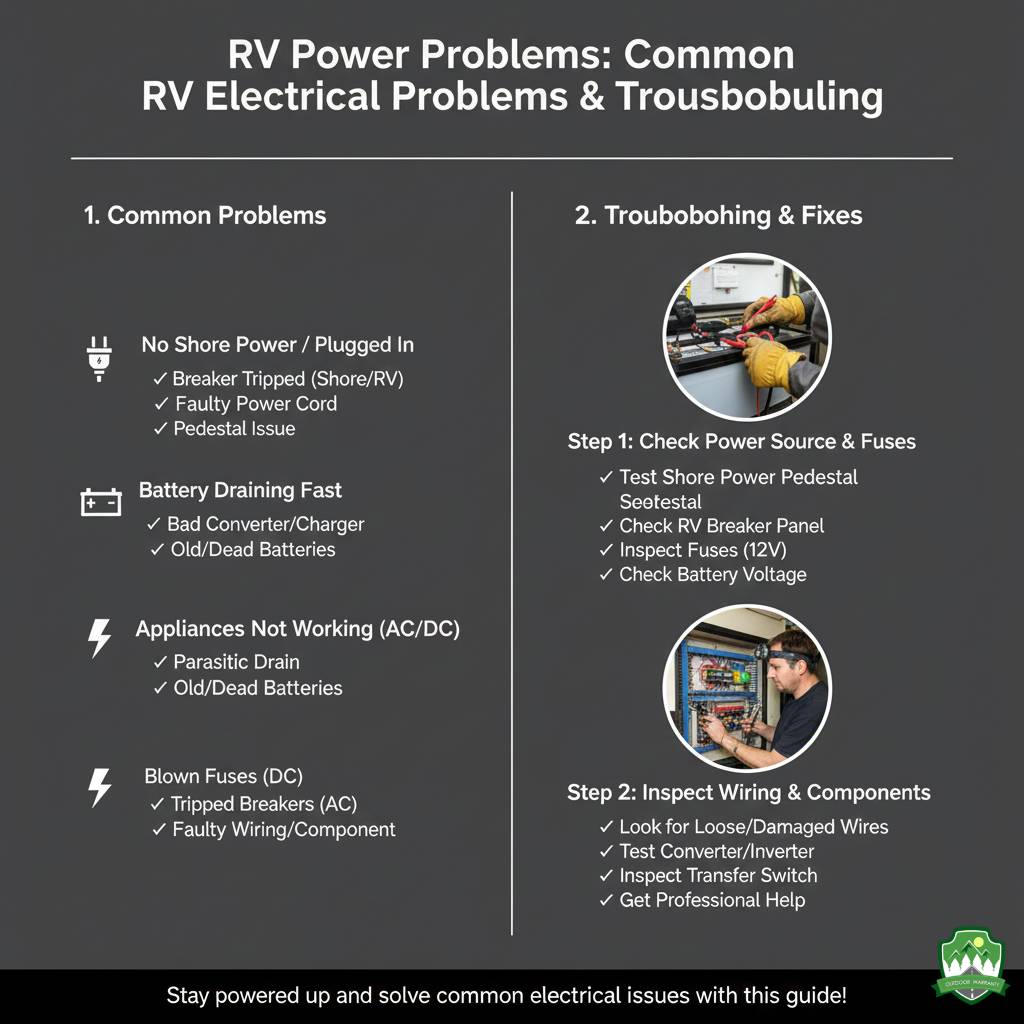
RV power problems stem from malfunctioning electrical systems, faulty wiring, or issues with the power source, such as an uncharged battery or an inadequate shore power connection. Understanding common RV electrical problems and troubleshooting are essential for running the electrical system smoothly. Common RV electrical failures include power loss, faulty inverters, converter issues, overloads, and tripped circuits. These problems result in an unreliable power supply, leaving appliances and devices without power.
Begin by checking the power source, such as shore power, a generator, or the battery, if the RV power is not working. Inspect fuses, breakers, and connections to ensure they are secure and functioning. Use a multimeter to check for any voltage issues in the electrical system. Inverters and converters are vital in converting DC power to AC power. Faulty inverters prevent appliances from operating, while a malfunctioning converter fails to charge the battery. Replacement or repair is needed if either component shows signs of failure, such as erratic voltage, unusual noises, or overheating.
Overloading circuits or tripping breakers are common causes of RV power problems. Ensure that the load on each circuit is within its capacity. Check the circuit breakers to reset any tripped breakers and inspect the wiring for any signs of wear or damage. Regular checks on the electrical system must be performed to avoid recurring RV electrical problems. Inspect batteries, wiring, and fuses before each trip. Using surge protectors and circuit analyzers helps prevent electrical damage caused by power surges or faults in the power supply.
The Most Common RV Electrical Problems are listed below.
Power surges damage electrical components in an RV. A surge occurs due to lightning strikes or faulty connections. These sudden spikes in voltage fry-sensitive devices. Power surges weaken the RV’s electrical system.
A malfunctioning converter prevents the proper conversion of 120V AC to 12V DC. The issue is that the stoplights, fans, and appliances do not work. Overheating or loose connections are common causes of converter failure.
Inverters are responsible for converting DC power to AC power. Appliances that require AC power do not function when an inverter fails. Causes of inverter failure include overheating or using too much power at once.
Circuit overloads happen when too many devices draw power from one circuit. The RV’s fuses or circuit breakers trip as a result. It causes disruptions to the entire electrical system, potentially damaging components.
Dead or weak batteries cause a lack of power in an RV. Batteries fail due to age, poor charging, or inadequate maintenance. Battery problems result in the inability to power lights, fans, or the RV’s electrical appliances. Regular maintenance and careful attention during RV setup help avoid these common problems.
You can troubleshoot RV electrical issues by turning off all electrical devices to reset the system. Turning off all electrical devices ensures no further power is drawn during troubleshooting. Check whether the RV’s power source is shore power, a generator, or the RV’s battery. Inspect the power cord for any visible damage or fraying if the issue is with shore power. Ensure the power source is working properly by testing it with another device.
Check the RV’s fuse box and circuit breakers. Look for any blown fuses or tripped circuit breakers. Replace any blown fuses and reset any tripped breakers. There is an underlying issue, like a short circuit or overload if the fuse blows repeatedly or the breaker trips. Inspect the converter and inverter. A faulty converter prevents proper power conversion, while an inverter failure stops AC-powered devices from working. Test both components to ensure they are functioning correctly. Replace or repair the unit if either is malfunctioning.
Examine the RV battery. A weak or dead battery disrupts the RV’s electrical system. Check the battery’s voltage using a multimeter. It needs to be recharged or replaced if the battery shows low voltage. Identify and address common electrical issues in an RV by following these troubleshooting steps. Regular checks and maintenance of the electrical system help avoid these problems in the future.
Your RV is not getting power because the power source is disconnected or malfunctioning. Check if the RV is connected to shore power, running off a generator, or using the battery as the power source. Ensure the power source is functioning properly and has not been disrupted. Inspect the power connections for any loose or damaged wires. Secure all connections and look for any signs of wear or corrosion. A poor connection prevents power from reaching the RV’s electrical system.
Check the fuses and circuit breakers. A blown fuse or tripped breaker causes a complete power loss. Assess all fuses and breakers to ensure they are intact and not overloaded. Replace any blown fuses and reset any tripped breakers to restore power. Identify the cause of the power issue by performing these checks. Identifying the root cause helps prevent future RV problems from occurring.
The common troubleshooting steps for an RV water heater that is not heating water are listed below.
Verify if the water heater is connected to a working power source. Inspect the circuit breaker and reset it if it has tripped. Replace blown fuses to restore electrical power.
Ensure the propane tank has enough fuel to operate the water heater. Open the gas valve completely to allow proper flow. Check for leaks using a soapy water solution and tighten connections if bubbles appear.
Look at the light to see if it burns. Relight it following the manufacturer’s instructions if it has gone out. Clean the thermocouple if the flame does not stay lit.
Use a multimeter to check if the heating element is functioning. Replace the element if it does not show continuity. Ensure all connections are secure before restoring power.
Adjust the thermostat to a higher setting to test its response. Replace the thermostat if it does not maintain the correct temperature. Ensure the sensor is in proper contact with the heating element.
Drain the tank completely to remove sediment buildup. Refill it with fresh water to improve heating efficiency. Clean the tank regularly to prevent further blockages.
Examine the burner and orifice for dirt or debris. Use compressed air or a brush to remove any obstructions. Ensure the burner produces a steady, blue flame.
inspect if the valve is open to allow water flow. Verify that the bypass valve is in the correct position for heating. Replace faulty valves to restore proper operation.
Lift the handle to see if water flows out. Replace the handle if it leaks or fails to release pressure. Ensure the valve is free from mineral buildup.
Inspect all wiring connections for loose or damaged wires. Tighten or replace connections as needed. Use a voltage tester to check for consistent electrical flow.
Your RV Water Heater only produces lukewarm water because Sediment buildup inside the tank creates an insulating layer between heating elements and water, decreasing heat transfer efficiency. Faulty thermostats fail to signal proper heating temperatures, while damaged heating elements or gas burners deliver insufficient heat output.
Mixing valves malfunction by allowing excessive cold water into the hot water line, diluting the temperature. Smaller water heaters struggle to meet demand when multiple fixtures operate at once. Electrical problems contribute to lukewarm water issues in recreational vehicles. Low voltage from weak batteries or inadequate shore power connections prevents heating elements from reaching optimal temperatures.
Gas-powered units experience performance degradation from clogged burner tubes, faulty gas valves, or improper propane pressure. Water flow rates exceeding heater capacity force water through before adequate heating occurs. Professional inspection identifies specific causes through systematic troubleshooting of thermostat settings, heating elements, gas supply lines, sediment levels, and electrical connections to restore proper hot water function.
The things you should check if the RV Water Heater is not getting power are circuit breakers, fuses, power supply connections, on/off switches, and reset buttons. Circuit breakers trip due to power surges or electrical faults, while blown fuses interrupt current flow completely. Shore power connections must remain secure at campground pedestals and RV inlets.
Water heater power switches located on control panels require activation before operation begins. Problems frequently stem from thermal cut-off switches designed to prevent overheating component damage. Electrical wiring conditions play a role in water heater functionality, with loose, corroded, or damaged wires preventing proper current flow to heating elements. Voltage testing with multimeters verifies appropriate power levels reaching units, while control boards regulate all Electric water heater not working electrical functions within modern systems.
Ground Fault Circuit Interrupter (GFCI) outlets are installed for safety and shut down automatically when ground faults occur. Battery power levels below 12 volts prove insufficient for ignition systems, even when gas heating modes operate. Evaluation becomes required when basic troubleshooting fails to restore power, as internal component damage requires specialized repairs to prevent system deterioration or safety hazards.
You can fix the RV Hot Water Heater not igniting by checking propane supply levels and ensuring gas valves remain fully open. The ignition system requires cleaning to remove spider webs, debris, and carbon deposits, which block proper gas flow. Control boards must receive adequate 12-volt power from batteries or converters to operate ignition circuits. Igniter electrodes need adjustment to maintain proper spark gap, while gas pressure regulators require inspection for correct pressure settings. Thermocouple or thermopile components demand replacement when damaged because they are critical safety devices that verify flame presence before allowing continuous gas flow.
Propane-powered water heaters dominate the RV market because they heat water more rapidly than electric alternatives and operate effectively without shore power connections. The advantages include faster recovery times, the ability to function while boondocking, and dual-fuel capability when combined with electric elements.
Disadvantages involve more complex maintenance requirements, the potential for gas leaks, and dependency on propane availability. Modern Direct Spark Ignition (DSI) heaters replaced older pilot light systems with electronic ignition, which provides greater reliability in RV Problems (root-domain/rv/problem) situations but introduces additional electronic
Fix your RV power problems by following a step-by-step approach to address common issues. Start by resetting any tripped circuit breakers and replacing any blown fuses. These simple fixes restore power to the RV’s electrical system. Check the power source. Ensure the power cord is securely plugged in and not damaged if connected to shore power. Verify that the generator is running properly for generator-powered RVs. Check its voltage if relying on the battery, ensure it is fully charged, or replace it if necessary.
Inspect the RV’s electrical connections after checking the power source. Loose or corroded wires cause power disruptions. Tighten or clean connections to ensure proper power flow. Troubleshoot for electrical faults if the issue persists. Inspect the converter, inverter, and any other electrical components for signs of damage or malfunction. Replace any faulty parts to restore full electrical functionality. Fix common RV power problems and prevent future disruptions by performing these steps. Regular checks and maintenance help avoid these issues from arising in the future.
The Causes of Electrical System Overload in an RV are listed below.
Using too many high-powered devices simultaneously overwhelms the electrical system. Appliances like air conditioners, space heaters, and microwaves draw significant power, leading to an overload.
Worn or damaged wiring causes an imbalance in the electrical system. Poor connections increase resistance, creating an overload in the system and potentially causing a fire hazard.
Plugging too many devices into a single circuit trips the circuit breaker. The system becomes overloaded when too many devices draw power from the same circuit, causing disruptions or failures in the electrical system.
Using a generator with insufficient capacity for the RV’s electrical needs causes an overload. A generator that does not handle the total wattage of the RV’s appliances and systems strains and potentially fails.
Batteries with low voltage or insufficient capacity struggle to support electrical demands, leading to an overload. An undercharged or weak battery disrupts the RV’s electrical systems, causing power shortages in RVs.
You should check the power source if the RV power converter is not working. Ensure the power source is connected and functioning properly. Verify that the converter is plugged in securely and that the circuit breaker has not tripped.
Inspect the converter’s output voltage. Use a multimeter to test if the voltage is within the expected range. Check for signs of failure, such as overheating, unusual noises, or burning smells, which indicate internal damage.
Consider testing it with a multimeter for a more accurate diagnosis if the converter shows signs of failure or does not provide the correct output voltage. Replace the converter with a new one to restore functionality to the RV electrical system if the issue persists.
Yes, you can prevent battery issues in your RV by regularly charging the battery when the RV is unused. Follow the manufacturer’s guidelines for charging to avoid overcharging or undercharging, both of which damage the battery.
Store the battery in a cool, dry place when not in use, and disconnect it to prevent drainage. Clean the terminals to avoid corrosion and ensure the connections are secure.
A battery monitor is recommended to track the health and voltage of the battery.
The device helps identify potential issues before they become major problems, ensuring the battery performs optimally throughout its life. These practices help prolong the lifespan of RV batteries and provide reliable power during trips.
RVs get power by drawing electricity from sources, including shore power, a generator, and onboard batteries. Shore power is the most common source when the RV is parked at a campsite and plugged into an external power supply. Generators provide power when the RV is off-grid or shore power is unavailable. They convert fuel into electricity, supplying power for various appliances and systems within the RV.
Onboard batteries supply power for essential systems when the RV is not connected to shore power or a running generator. These batteries store energy from the RV’s charging system, providing power for lights, fans, and other small electrical devices. Each power source is crucial in keeping the RV’s electrical system running smoothly during travel and parking.
Your RV Outlets are not working because of the reasons listed below.
Verify whether the outlets are receiving power by checking the power supply. Ensure the RV is connected to shore power or the generator is running properly. Check the voltage to confirm sufficient energy if using battery power.
Check the circuit breakers and the ground fault interrupter (GFI). A tripped breaker or GFI interrupts the flow of electricity to the outlets. Reset any tripped breakers or GFI to restore power to the outlets.
Inspect the wiring and connections to the outlets. Loose or damaged wires prevent proper power flow. Tighten any loose connections or replace damaged wiring to fix the issue.
The water heater is not working, indicating a larger electrical issue, as many RVs rely on electrical power for water heating. Check the water heater’s power supply and ensure it receives adequate power. A malfunctioning water heater signals a larger electrical problem that affects the outlets.
To Diagnose Electrical Problems in an RV, follow the eight steps listed below.
It helps prevent further damage and allows for a clean start in diagnosing the issue.
Verify whether the RV is connected to shore power, running on generator power, or using battery power. Inspect each power source for proper functionality. Proceed to the next step if the power source is working.
Look for any blown fuses or tripped circuit breakers. Replace any blown fuses and reset any tripped breakers.
A multimeter is used to test the voltage at various outlets. It helps determine if the electrical system has a voltage drop or power loss.
Inspect electrical components like the converter, inverter, and wires for signs of overheating, such as scorch marks or burnt smells. Overheating indicates a short circuit or malfunctioning part.
Look for any loose, corroded, or damaged wires. Tighten any loose connections and replace any damaged or frayed wiring.
Check the RV’s power converter and inverter to ensure they function correctly. A faulty converter or inverter prevents the RV from receiving or distributing power properly.
Inspect the RV battery to ensure it is fully charged. Use a multimeter to check the voltage. It needs to be replaced if the battery is undercharged or dead.
The Signs of a Faulty RV Power Converter are listed below.
A faulty RV power converter fails to provide power to the 12V DC system. The converter is the issue if lights, fans, or other 12V devices are not working.
Overheating occurs if the converter is malfunctioning. It indicates an internal fault if the converter feels hot to the touch or emits a burning smell.
A malfunctioning converter produces unusual sounds, such as buzzing or humming. These noises signal an issue with the internal components.
Fluctuating voltage is a sign of a failing converter if the voltage output from the converter fluctuates or is inconsistent. It causes devices to underperform or shut down unexpectedly.
Inspect the converter’s wiring for signs of burn marks, discoloration, or melting. These are indicators that the converter has overheated and caused damage to the electrical system.
The power converter does not correctly convert AC power to DC if the RV battery is not charging properly. The issue leads to power shortages in the RV.
You can fix your RV generator if it’s not providing power by following the eight steps listed below.
Ensure the generator has enough fuel. Refill it and check if the generator starts providing power if the fuel tank is low. Verify that the fuel valve is open and that the fuel lines are not clogged.
Low oil levels cause the generator to shut down or fail to start. Check the oil level and top it up if necessary. Generators have an automatic shut-off feature when oil is low.
A clogged air filter causes the generator to malfunction. Inspect the air filter and clean or replace it if it is dirty or clogged to ensure proper airflow.
Inspect the circuit breaker to ensure it is not tripped. Reset any tripped breakers to restore power. A breaker trips if there is an overload or a fault in the system.
A faulty spark plug prevents the generator from starting or running smoothly. Remove and inspect the spark plug for wear or damage. Replace it if necessary to improve performance.
Ensure the battery is fully charged for generators that rely on a battery to start. Check the battery terminals for corrosion and clean them if needed. Replace the battery if it shows signs of failure.
Use a multimeter to test the generator’s output voltage. The generator’s internal components are damaged if the voltage is low or inconsistent. Further repairs or replacements are needed.
Review the generator’s manual for troubleshooting tips or contact a repair professional if the above steps do not resolve the issue. They identify more complex issues like damaged internal components or wiring.
The role of an RV inverter is to convert DC power from the RV’s battery to AC power, and troubleshooting begins by checking the power connection. RV inverter is essential for converting DC power from the RV’s battery to AC power, which is needed to run appliances like microwaves, TVs, and other electronics. The inverter enables the use of standard household devices while off-grid or when not connected to shore power.
Begin by checking the power connections to troubleshoot an inverter. Ensure the inverter is securely connected to the battery and that there are no loose or corroded terminals. Faulty connections prevent the inverter from working properly.
Test the inverter’s output. A multimeter is used to measure the voltage coming from the inverter. The inverter is malfunctioning, and further inspection is needed if the output is low or inconsistent.
Inspect the inverter’s fuses or circuit breakers. A blown fuse or tripped breaker stops the inverter from working. Replace any blown fuses and reset the breaker to restore functionality.
The inverter needs to be repaired or replaced if these steps do not resolve the issue. Regular checks and maintenance help ensure the inverter operates efficiently, powering essential RV appliances when off-grid.
You can fix an RV with no power from the battery by checking the battery voltage. Use a multimeter to measure the voltage and ensure it is within the normal range. A low or dead battery requires recharging or replacement.
Inspect the battery connections to ensure they are secure and free of corrosion. Loose or corroded terminals prevent the battery from supplying power to the RV’s electrical system. Clean the terminals if necessary and tighten the connections.
Check the battery charging system to ensure it is functioning properly. Inspect the alternator, solar panels, and shore power connections to confirm they provide the battery with the necessary charge. A malfunctioning charging system prevents the battery from maintaining its charge.
Inspect the battery cables for any visible damage or wear. Damaged cables interrupt the flow of power from the battery. Replace any damaged cables to restore the battery’s power to the RV’s electrical system.
Your RV electrical system keeps shutting off because of issues like a low battery, faulty converter, tripped breaker, and loose or damaged wiring. Begin by investigating the battery voltage. Low battery voltage causes the electrical system to shut down. Use a multimeter to check the battery’s voltage and recharge or replace it if necessary.
Examine the converter. A faulty converter prevents the proper conversion of AC to DC power, causing the system to malfunction. Inspect the converter for any signs of failure, such as overheating or noise.
Check the circuit breakers to ensure none are tripped. A tripped breaker cut off power to the system. Reset any tripped breakers to restore functionality. Inspect for loose connections or damaged wiring. Loose or corroded wires lead to intermittent power loss, causing the system to shut off unexpectedly. Tighten or replace any damaged connections to maintain a stable power flow.
You check loose or broken electrical connections in your RV by visually inspecting the wiring and connections. Look for any wear, fraying, or corrosion on the wires. Ensure that all terminals are securely fastened, as loose terminals disrupt the power flow. Use a multimeter to check the continuity and voltage across the connections. Set the multimeter to the continuity setting to test if the current flows through the connections properly. It indicates a broken or disconnected wire if the multimeter shows no continuity.
Set the multimeter to measure voltage and check each connection to ensure the correct voltage for voltage testing. Low or no voltage indicates a problem with the connection or the power source. Repair or replace the damaged wiring or connections to restore a stable electrical system in the RV if any issues are found.
The key difference between troubleshooting RV AC and DC electrical problems is their natures. AC (alternating current) systems power appliances like air conditioners, microwaves, and refrigerators, while DC (direct current) systems supply power for lights, fans, and other smaller devices.
Begin by checking the AC circuits, including breakers and connections, to troubleshoot AC problems. Inspect the inverter, converting DC power to AC power for AC appliances. It disrupts the AC power supply if the inverter is malfunctioning. Ensure the AC circuit breakers are not tripped and the wiring is intact.
Start by testing the DC circuits and inspecting the RV battery for troubleshooting DC problems. Check the battery voltage with a multimeter to ensure it is charged. Inspect the charging system, including the alternator and solar panels, to ensure they properly charge the battery. Any charging system or battery issues lead to power loss in DC circuits. RV troubleshooting efficiently identifies and resolves problems, electrical in AC and DC by understanding these distinctions and using the appropriate troubleshooting techniques.
You can prevent RV electrical problems while traveling by taking proactive measures to ensure the electrical system remains in good condition. Regularly check the battery charge to ensure it is properly maintained and has enough power for the trip. Keeping a spare set of fuses on hand helps quickly resolve any blown fuse issues during travel.
Ensure the power converter is functioning properly before hitting the road. A faulty converter causes significant power issues, so testing it regularly prevents disruptions. Inspect the wiring before each trip. Look for any signs of wear, corrosion, or loose connections that lead to electrical malfunctions while traveling. Addressing potential issues beforehand helps avoid electrical failures on the road.
You should check for issues with the shore power connection, the power cord, and the external power supply if your RV is not getting power when plugged in. Ensure the power cord is securely connected to the RV and the external power source. Look for any visible damage or wear on the power cord that prevents proper power flow.
Inspect the RV’s internal power distribution panel, circuit breakers, and fuses. Check if any breakers are tripped or if any fuses are blown. Reset tripped breakers and replace any blown fuses to restore power. Consider having a professional inspect the RV’s electrical system for deeper issues if the power supply and internal systems are functioning properly and the RV is still not receiving power.
The Symptoms of a Bad RV Converter are listed below.
A bad RV converter fails to charge the RV’s battery properly. The converter is not working properly if the battery remains low or uncharged despite being plugged into shore power.
A malfunctioning converter causes fluctuating or inconsistent voltage levels. It results in devices receiving too much or too little power, leading to unpredictable performance or damage.
The converter is faulty and does not properly convert DC power to AC power for appliances. It prevents appliances like microwaves, TVs, or refrigerators from working, as they rely on AC power.
A bad converter overheats during use, emitting a burning smell or becoming excessively hot to the touch. It is a sign of internal failure and potential damage.
A malfunctioning converter produces buzzing, humming, or other unusual sounds. These noises indicate internal issues, such as faulty components or wiring.
Yes, electrical problems are covered by an extended warranty for RVs, but coverage depends on the specific terms and conditions of the warranty. Extended warranties cover major electrical components, such as the power converter, inverter, and wiring issues. However, some warranties exclude coverage for routine maintenance or wear-and-tear items.
Review the warranty agreement carefully to understand the scope of coverage. Warranties have specific exclusions for certain electrical issues or components. Opt for a comprehensive extended warranty plan to ensure full coverage for electrical problems. Verify the details before purchasing a warranty to guarantee that the extended warranty for the RV includes the necessary electrical coverage.
👉 Call Us 574–505–6246
Let us give you the best quote we can! 👇
You agree to receive automated follow-up, reminder, and promotional messages with varying frequency. Text and data rates may apply. Reply STOP to end. Text HELP for help. Click for Terms of Service and Privacy Policy.