1029, 4024 Elkhart Rd. Ste 26, Goshen, IN 46526
Call Us at 574-505-6246
INTEREST FREE PLAN
| Rated Excellent 4.8/5
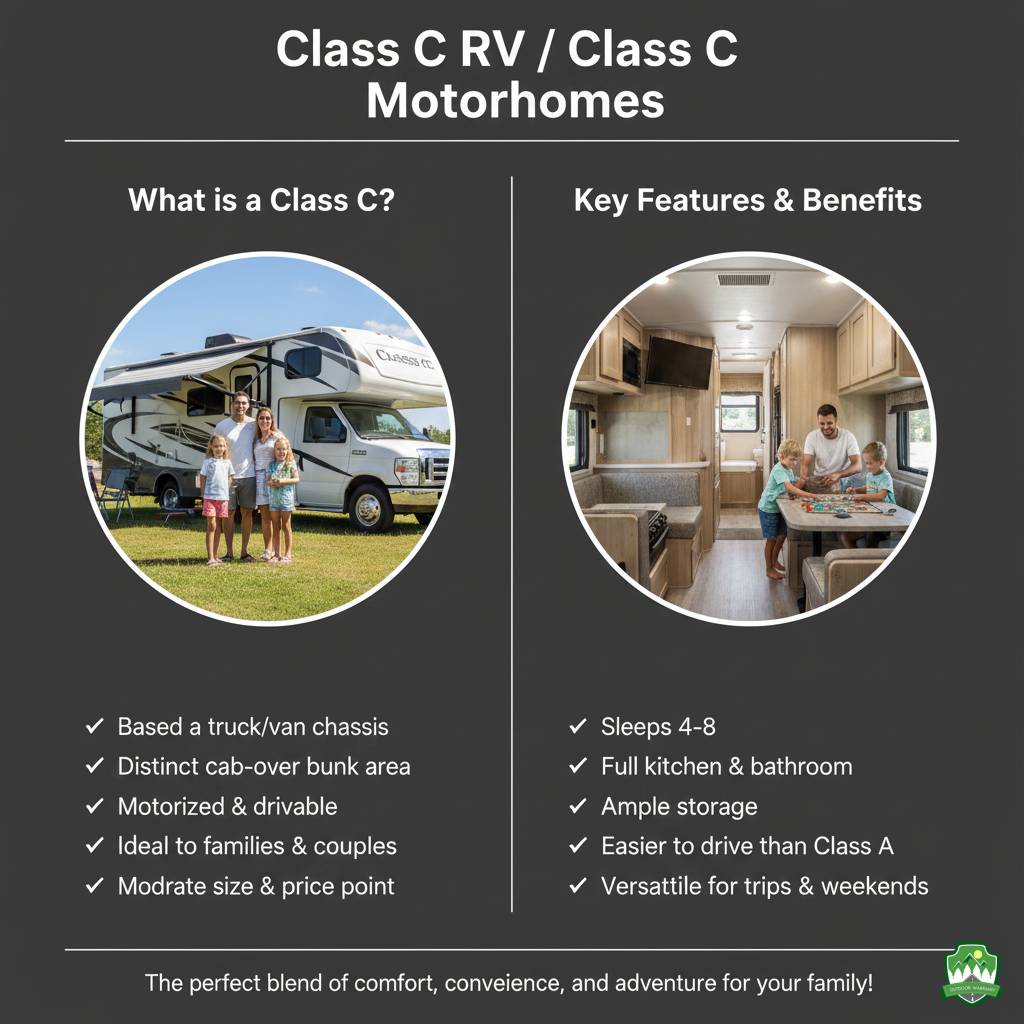
A Class C RV balances comfort and functionality, featuring an over-cab sleeping area, a fully equipped kitchen, a bathroom, and multiple sleeping arrangements. Interior layouts of Class C RVs maximize space efficiency, offering slide-outs for added room and convertible furniture for flexibility. A small Class C RV maintains the same essential amenities in a more compact design, making maneuvering in urban settings and tighter campsites easier. Class C motorhomes offer better fuel efficiency and lower operating costs than Class A motorhomes while providing more space and amenities than a Class B camper. The suitability of a Class C motorhome depends on travel needs, as its mid-sized design supports long-distance road trips and family adventures while maintaining effortless driving.
The cost of a new Class C RV ranges from $50,000 to $150,000, while used models range from $30,000 to $100,000, depending on brand, features, and overall condition. Maintenance expenses, including oil changes, tire replacements, and generator servicing, range from $1,000 to $3,000 annually. Interior modifications such as upgraded appliances, entertainment systems, and specialized storage solutions enhance functionality. Recreational Vehicle (RV) manufacturers provide warranties covering structural components, engine performance, and electrical systems, with extended coverage options.
Usage flexibility extends to long-term travel, weekend camping, and full-time RV living, supported by onboard utilities and storage. Towing capacity ranges from 5,000 to 10,000 pounds, allowing the attachment of small trailers, boats, or towed vehicles for additional convenience. The affordability, adaptability, and essential features make a Class C RV a practical choice for various travel and recreational needs.
A Class C RV is a mid-sized motorhome built on a truck or van chassis, balancing comfort and drivability. The over-cab sleeping area provides additional living space without increasing length. Class C models include larger kitchens, bathrooms, and more sleeping arrangements, making them suitable for families or long-distance travelers, compared to small motorhomes. A Class B recreational vehicle is a compact, van-style motorhome built on a van chassis, offering excellent fuel efficiency, easy maneuverability, and the ability to fit into standard parking spaces. Class B campers provide the convenience of self-contained travel, including kitchen amenities, with smaller interiors that limit their sleeping capacity and kitchen amenities. A Class C RV remains easier to drive and park than a Class A motorhome, ensuring greater accessibility to various camping locations. The affordability, practicality, and onboard amenities make it a preferred choice for users seeking a versatile recreational vehicle.
The features that Class C Motorhomes have are listed below.
Fully Equipped Kitchen: Cooking spaces include a stove, refrigerator, microwave, and sink. The counter space remains compact while being functional for meal preparation.
Private Bathroom: Bathrooms feature a toilet, sink, and shower. Layouts vary between full wet baths and dry baths with separate shower stalls.
Multiple Sleeping Areas: Beds include a cab-over bunk, convertible dinette, and dedicated rear bed. Larger models provide additional sleeping options for families.
Ample Storage Space: Overhead cabinets, under-bed compartments, and exterior bays provide organization. Cargo limits depend on chassis's strength and design.
Entertainment Systems: Built-in TVs, Bluetooth speakers, and Wi-Fi boosters enhance relaxation. There are RV models that include surround sound and streaming capabilities.
Luxury Upgrades: Slide-outs, solar panels, and automatic leveling systems improve comfort. Modern interiors incorporate LED lighting, upgraded upholstery, and smart controls.
A Class C RV balances size and maneuverability, providing a more fuel-efficient and affordable option than a Class A motorhome, larger in size, more powerful, and suited for luxury travel. The compact structure of a Class C model allows for easier handling on highways and city roads, offering travelers flexibility without sacrificing essential amenities. Fuel economy remains a key advantage, as smaller engines consume less fuel than the heavy-duty engines in Class A models. Lower purchase costs and maintenance expenses enhance the appeal of Class C motorhomes, making them accessible to a broader range of buyers.
Class A Motorhome designs cater to users prioritizing spacious interiors and premium features, offering larger kitchens, expanded sleeping areas, and greater storage capacity. The additional space benefits families or full-time travelers needing a residential feel while on the road. The increased length and height limit parking options of a Class A motorhome and require more skill to operate safely. Class C motorhomes excel in scenarios where adaptability and cost-effectiveness matter, such as frequent road trips or shorter getaways. The choice between the Class A and Class C motorhomes depends on travel style, budget considerations, and the need for luxury versus convenience.
The best Class C RVs in the market are listed below.
Tiffin Wayfarer: The Tiffin Wayfarer stands out for the luxury styling and comfort. The Tiffin Wayfarer model is 25' 8" long and is built on the Mercedes Sprinter platform, which makes it more efficient and agile than most other Class C RVs. The upscale interior includes the finest fabrics, materials, and amenities the industry offers. A two- to four-person RV is ideal for couples who are joined by guests on the road.
Jayco Greyhawk 29XK: The Jayco Greyhawk 29XK is a front-living model with ample living space due to its single slide-out, which houses a U-shaped dinette and a jackknife sofa. The 32.5' Class C RV sleeps up to seven occupants. The recreational vehicle is built on a Ford E-450 chassis and has a powerful engine suitable for cross-country driving. Jayco's reputation for building excellent products helps cement the Greyhawk as one of the best Class C motorhomes.
Winnebago View 24V: The Winnebago View 24V is built on a Mercedes-Benz Sprinter chassis and sleeps up to four occupants. The 25'6" length makes it an excellent option for consumers seeking a compact Class C RV. The interior includes a full bathroom, dinette, TrueComfort sofa, and TV area, which is ideal for adventurers who want to hit the open road without leaving home.
Thor Motor Coach Four Winds 27P: The Thor Motor Coach Four Winds 27P is ready to take the owners everywhere. The Thor Motor Coach Four Winds 27P is a Class C RV with the latest tech and the best ride. The RV is designed with families in mind and is ready to elevate camping adventures. The Four Winds 27P is built on a Ford E-Series chassis and offers a modern design for every family and adventurous lifestyle.
Entegra Coach Esteem 31F: The Entegra Coach Esteem 31F offers impressive sleeping capacity, accommodating up to ten passengers. The Entegra Coach Esteem 31F includes a queen-size bed, a pair of bunks, a 68-inch jackknife sofa, a dinette, and a cabover bunk. The model is ideal for large families or groups seeking ample sleeping arrangements.
The common floor plans in Class C RVs are the bunkhouse model, rear-bedroom layout, slide-out floor plan, over-cab sleeping design, dinette and sofa combination, split bathroom layout, and compact layout with convertible spaces. The bunkhouse model incorporates bunk beds along the side or rear, providing dedicated sleeping areas for multiple occupants. The rear-bedroom layout features a separate sleeping space with a queen or full-size bed, ensuring privacy and comfort. The slide-out floor plan expands sections of the RV to create additional living space when parked, increasing room for movement.
Space allocation in Class C RVs prioritizes a balance between living, sleeping, and storage areas. The living space includes a dinette and sofa combination, serving as seating and convertible sleeping options. The over-cab sleeping design integrates an overhead bunk above the driver’s area, maximizing sleeping capacity without occupying main floor space. The split bathroom layout separates the shower from the toilet and sink, allowing multiple occupants to use facilities efficiently. Storage solutions range from overhead compartments and wardrobes to exterior storage bays, ensuring organized space for essentials and personal belongings.
Yes, Class C RVs come with king-size beds. Larger models incorporate extended floor plans allowing spacious sleeping arrangements without sacrificing essential living areas. The larger designs accommodate king-size beds while maintaining access to full kitchens, bathrooms, and storage solutions. Luxury-focused Class C RVs enhance comfort with high-quality mattresses, additional bedding options, and upgraded sleeping quarters that mirror residential standards.
Class C models with slide-outs provide more interior flexibility, creating room for king-size beds in select layouts. A standard Class C RV includes a queen-sized or convertible sleeping area for space optimization, while high-end models offer king-sized beds, larger wardrobes, and dedicated sleeping zones. Choosing an RV with a king-size bed depends on available space, travel needs, and layout preferences.
Yes, Class C RVs can have washer and dryer units. Space limitations require compact or combination models rather than full-sized appliances. Recreational Vehicles (RV) floorplans include designated laundry areas, while others require modifications to accommodate plumbing and electrical needs. Ventless washer-dryer combos fit within cabinets or storage compartments, providing a convenient solution for long trips. Larger Class C models with slide-outs offer more flexibility for installing separate units. Water usage and power consumption impact efficiency, making connections or onboard generators essential for continuous operation.
The advantages of owning a class C RV are listed below.
Balanced Size and Maneuverability: Class C RVs provide a practical balance between spacious interiors and easy handling. A truck-based chassis allows for better control on highways and in tighter spaces.
Affordable Purchase Price: Class C motorhomes are less expensive than Class A models without sacrificing amenities. A lower initial investment makes ownership easier.
Greater Fuel Efficiency: A smaller size and lighter weight contribute to better fuel economy than Class A motorhomes. A gas-powered engine reduces fuel expenses on long trips.
Enhanced Sleeping Capacity: The cab-over bunk creates an additional sleeping area without using extra floor space. Families and groups benefit from multiple dedicated beds.
Full Living Amenities: Class C motorhomes include a kitchen, bathroom, and dining area within a compact layout. A functional design provides convenience without sacrificing comfort.
Easier Parking and Storage: A shorter length allows parking in standard campsites and driveways. Storage options become more manageable compared to larger motorhomes.
Towing Capabilities: A built-in attachment allows towing a small vehicle, boat, or trailer. Additional transportation options improve flexibility during trips.
Safer Driving Experience: A truck-style cab provides a familiar driving position and better visibility. A lower center of gravity increases stability on the road.
Lower Maintenance Costs: Standard automotive parts reduce repair expenses compared to custom-built Class A components. Readily available service centers make maintenance more convenient.
Versatile Travel Options: A Class C motorhome suits weekend getaways, extended road trips, and seasonal living. A compact and fully equipped layout supports different travel needs.
The disadvantages of owning a Class C RV are listed below.
Limited Living Space: Interior space feels restricted compared to Class A models. Slide-outs add room, while movement remains tight in high-traffic areas.
Lower Storage Capacity: External compartments hold fewer items than larger motorhomes. Interior cabinets lack the depth required for extensive packing.
Reduced Towing Ability: Towing smaller vehicles limits flexibility on trips. Engine power is restricted by the size and weight of trailers.
Fuel Efficiency Concerns: Gas mileage remains higher than that of Class B models. The truck-like chassis increases fuel consumption, even on long drives.
Average Ride Comfort: The Suspension absorbs fewer road imperfections than luxury RVs. Wind resistance impacts stability at highway speeds.
Less Insulation for Extreme Weather: Climate control struggles in hot or cold conditions. Walls provide less thermal protection than Class A motorhomes.
Cab-Over Bed Maintenance Issues: Water leaks develop around the sleeping area. Overhead space becomes difficult to access for cleaning and repairs.
Higher Maintenance Costs Than Class B RVs: Repairs require specialized service due to the truck chassis. Engine and transmission upkeep surpasses smaller camper vans.
Harder to Manoeuvre Than Vans: Parking in cities requires extra effort. Low-hanging branches and tight spaces create navigation challenges.
Loud Interior While Driving: Cabinets, drawers, and appliances rattle on rough roads. Conversations become harder to maintain at high speeds.
The typical dimensions of a Class C motorhome are 22 to 32 feet in length, 10 to 12 feet in height, and 8 to 8.5 feet in width. The size varies based on floor plans, slide-outs, and chassis configurations, influencing interior space and maneuverability. Shorter models provide greater accessibility for urban travel and smaller campsites, while longer options offer expanded living areas with additional sleeping arrangements and storage. The height provides sufficient headroom inside, accommodating overhead cabinetry, bunk spaces, and full-size appliances.
Class C motorhomes offer a good balance between space and drivability. Class A motorhomes, reaching up to 45 feet long, provide larger living quarters while requiring more careful handling and parking accommodations. Class B motorhomes, called camper vans, range from 18 to 24 feet long and prioritize compact mobility over spacious interiors. The mid-range dimensions of a Class C motorhome allow for a comfortable layout while maintaining ease of navigation on highways and campgrounds, providing a versatile option for extended travel.
The towing capacity of a Class C motorhome is 5,000 to 10,000 pounds, depending on the chassis, engine power, and manufacturer specifications. Heavier-duty models built on diesel platforms support the higher end of the range, while standard gasoline-powered versions handle lighter loads. Standard attachments include tow dollies for smaller cars, flat-towed vehicles, and trailers carrying motorcycles, ATVs, or extra storage units. Hitch-mounted cargo carriers and bike racks provide additional transport options without exceeding weight limits.
Weight restrictions depend on the gross vehicle weight rating (GVWR) and gross combined weight rating (GCWR), which determine the safe amount of cargo and towing capacity. Exceeding the limits affects braking efficiency, fuel consumption, and overall vehicle stability, increasing the risk of mechanical strain. Proper weight distribution, reinforced hitches, and braking systems for towed loads ensure safe operation. Checking manufacturer guidelines and understanding load constraints prevent excessive wear, maintaining performance and longevity for extended travel.
Yes, Class C RVs are good for long-term travel. Spacious interiors allow for comfortable movement, while full kitchens, private bathrooms, and multiple sleeping areas support daily routines. Built-in storage compartments hold clothing, cookware, and travel needs, keeping living spaces organized. Climate control systems, including air conditioning and heating, maintain comfort in different weather conditions.
Power sources such as solar panels, generators, and campground hookups provide electricity for appliances and entertainment systems. Regular maintenance, including engine servicing, plumbing checks, and roof inspections, prevents costly repairs and ensures reliability. Waste disposal planning, fuel management, and selecting suitable parking locations contribute to a smooth and enjoyable travel experience.
Yes, Class C RVs can be used for off-grid camping. Self-contained systems, including freshwater tanks, propane stoves, and built-in generators, support daily necessities without requiring external connections. Energy-efficient appliances and expanded battery storage allow extended lighting, refrigeration, and cooking equipment operation.
Solar panels provide a renewable power source, reducing generator use and conserving fuel for longer stays. Upgraded lithium batteries store energy more efficiently, ensuring consistent power supply in remote locations. Composting toilets and advanced water filtration systems promote sustainability by minimizing waste and extending resource availability. Strategic planning for fuel reserves, water replenishment, and waste disposal ensures a seamless off-grid experience while maintaining essential comforts.
Yes, a Class C RV is suitable for full-time living. The layout and features vary by model, with models providing dedicated sleeping spaces, slide-outs for added room, and well-equipped kitchens. The compact size of a Class C RV allows for easier maneuverability compared to larger motorhomes, allowing for easy exploration of different locations without the difficulties of larger rigs. RV models include built-in generators, solar panel options, and advanced insulation, ensuring year-round comfort regardless of climate conditions.
Modern appliances make the RV more convenient for long-term use. Challenges include limited space for storage, requiring efficient organization to accommodate daily necessities without clutter. Vertical storage solutions, under-bed compartments, and foldable furniture increase the functionality of a living area. Taking time off in an RV living helps the owner maintain essential comforts such as a bathroom, storage compartments, and a comfortable living area. Regular decluttering and a minimalist approach help prevent overcrowding, ensuring that crucial items remain accessible.
A Class C RV costs between $50,000 and $150,000 for new models, while used options range from $30,000 to $100,000, depending on age and condition. The price varies based on brand reputation, construction quality, and included features. Luxury models with high-end interiors, full kitchens, and advanced technology command higher prices, while entry-level options with basic amenities remain more affordable.
Size influences cost, with longer RVs featuring additional slide-outs, larger storage areas, and expanded living spaces priced higher than compact versions. Solar panels, onboard generators, and upgraded suspension systems contribute to pricing differences. The choice between gasoline and diesel engines affects upfront costs and long-term expenses. Diesel models offer greater fuel efficiency and longevity while requiring a higher initial investment.
Customization impacts the total cost, as buyers seeking specific layouts, premium furnishings, or off-grid capabilities pay more for factory upgrades or aftermarket modifications. Insurance, maintenance, and registration fees add to the investment, requiring careful budgeting for long-term ownership. A Class C RV's versatility balances affordability and functionality, ideal for travelers seeking a self-contained motorhome.
The typical maintenance cost for Class C motorhomes ranges from $1,000 to $3,000 yearly, depending on usage, model, and required services. Regular upkeep includes oil changes, which cost between $100 and $250, depending on the engine type. Tire replacements vary between $200 and $500 per tire, with most Class C motorhomes requiring six tires. Brake service, battery replacement, and fluid checks are additional costs that ensure safe operation and prevent mechanical failures.
Regular inspections and servicing contribute to long-term reliability, with annual checkups averaging $300 to $600. Inspection of the roof for leaks and testing of electrical systems and appliances such as fridges, water heaters, and air conditioners are part of motorhome maintenance. Generator servicing, which includes oil and filter changes, costs $150 to $300 annually. Unexpected repairs increase total expenses, such as plumbing issues or slide-out malfunctions.
Storage and seasonal upkeep influence costs, especially for owners parking their motorhomes in facilities with monthly fees ranging from $50 to $300. Winterization services, which include antifreeze application and water system drainage, cost between $150 and $400, depending on location. Cleaning and detailing expenses range from $100 to $500, preserving exterior finishes and interior components.
Yes, Class C RVs are a good investment. Resale value remains strong when well-maintained, with popular brands retaining higher market demand. The cost-to-use ratio improves for regular travelers, reducing expenses on hotels and airfare while providing long-term savings. Versatility allows for family vacations, road trips, and remote work setups, making ownership practical for consumers who travel regularly. Rental income offers another financial advantage, as owners lease their RVs when not used. Proper maintenance, including engine care, interior upkeep, and system inspections, preserves value and ensures reliability over time.
The insurance options for Class C RVs are liability, comprehensive, collision, and roadside assistance coverage. Liability insurance covers bodily injury and property damage caused to others in an accident, meeting legal requirements for road use and preventing financial responsibility for third-party claims. Comprehensive protection includes coverage for theft, vandalism, fire, falling objects, and weather-related damages such as hail or flooding, ensuring financial security against non-collision incidents. Collision insurance handles repair costs resulting from accidents, regardless of fault, providing coverage for damages sustained during crashes with other vehicles, objects, or rollovers.
Insurance for RVs extends to roadside assistance, offering essential services such as towing, battery jump-starts, lockout assistance, tire replacement, and emergency fuel delivery, minimizing travel disruptions and unexpected expenses. Personal belongings protect valuable items inside the RV from theft or damage. The insurance for RVs includes vacation liability, providing coverage when the RV is parked and used as a home. Full-time RV insurance is available for consumers who live in their RVs year-round, covering personal liability and emergency lodging in case of significant repairs.
Premiums depend on RV value, mileage, and storage location, influencing costs and policy selection. Regular usage, whether full-time living or seasonal travel, determines coverage needs, with higher usage increasing risk exposure and insurance rates. Higher deductibles and lower monthly premiums, with increased out-of-pocket expenses for claims, require careful consideration based on budget and risk tolerance. Selecting the right combination of coverage ensures financial protection, safeguards against unexpected repair costs, and maintains affordability while traveling.
Yes, there are Class C diesel RVs. Diesel engines provide better torque and are well-suited for towing heavier loads and navigating steep inclines without excessive strain. Increased low-end power ensures smoother acceleration, improving driving performance in mountainous regions and challenging terrains. Improved fuel efficiency allows for longer travel distances between refueling stops, reducing fuel expenses on extended road trips. Diesel engines operate at lower Revolutions per Minute (RPM), minimizing wear and enhancing longevity as a practical choice for regular travelers and recreational vehicle owners.
Durability extends engine lifespan, lowering long-term maintenance costs compared to gas-powered models. Diesel Class C RVs feature reinforced chassis designs, increasing stability and ride comfort on highways and rough roads. Manufacturers produce diesel-powered models with advanced technology, including digital dashboards, adaptive cruise control, and enhanced driver-assist features. Luxury amenities such as high-end furnishings, expanded storage compartments, and modern entertainment systems provide a premium travel experience. Off-grid capabilities improve with larger fuel tanks, extended battery life, and solar power integration, making diesel Class C RVs ideal for long-term travel and remote camping.
Yes, Class C RVs have slide-outs for additional space. Expanding sections create larger living areas, increasing comfort during extended stays. RV models include one or more slide-outs in the living room, bedroom, or dining area, providing extra room for seating, sleeping arrangements, or storage. Enhanced interior space allows for a more open layout, making movement easier inside the RV.
Slide-outs require regular maintenance, including seal inspections, lubrication, and alignment checks, to prevent leaks and mechanical issues. Additional weight impacts fuel efficiency and vehicle performance, requiring careful load distribution. Extended components increase exposure to external elements, leading to probable wear over time. Slide-outs enhance functionality, making Class C Recreational Vehicles (RVs) ideal for travelers seeking additional space without upgrading to a larger motorhome.
Yes, Class C RVs can be customized. Interior upgrades, including premium flooring, high-end countertops, and modern appliances, enhance comfort and functionality. Solar panels, upgraded battery systems, and advanced entertainment setups improve energy efficiency and convenience. Custom decor, including furniture replacements, personalized cabinetry, and lighting modifications, allows owners to create a unique living space.
Costs vary based on the level of customization, with minor modifications remaining budget-friendly and extensive renovations requiring significant investment. Structural limitations, including weight capacity and floorplan constraints, influence upgrade options. Aftermarket modifications affect manufacturer warranties, making professional installation necessary for substantial alterations. Customization allows a more personalized and comfortable travel experience despite potential costs and limitations.
Yes, extended warranty can be applied to Class C RVs. Manufacturer warranties cover defects and limited repairs, while additional protection helps manage unexpected repair costs beyond the original coverage period. Mechanical components, appliances, and electrical systems are covered under the Extended Warranty for RVs, reducing out-of-pocket expenses for major repairs. Coverage varies by provider, with plans including roadside assistance, trip interruption benefits, and replacement parts. Policy costs depend on RV age, mileage, and coverage level. Exclusions and deductibles apply, requiring careful review before purchase. Extended protection offers long-term value by safeguarding against costly breakdowns and unforeseen maintenance needs.
👉 Call Us 574–505–6246
Let us give you the best quote we can! 👇
You agree to receive automated follow-up, reminder, and promotional messages with varying frequency. Text and data rates may apply. Reply STOP to end. Text HELP for help. Click for Terms of Service and Privacy Policy.