1029, 4024 Elkhart Rd. Ste 26, Goshen, IN 46526
Call Us at 574-505-6246
INTEREST FREE PLAN
| Rated Excellent 4.8/5
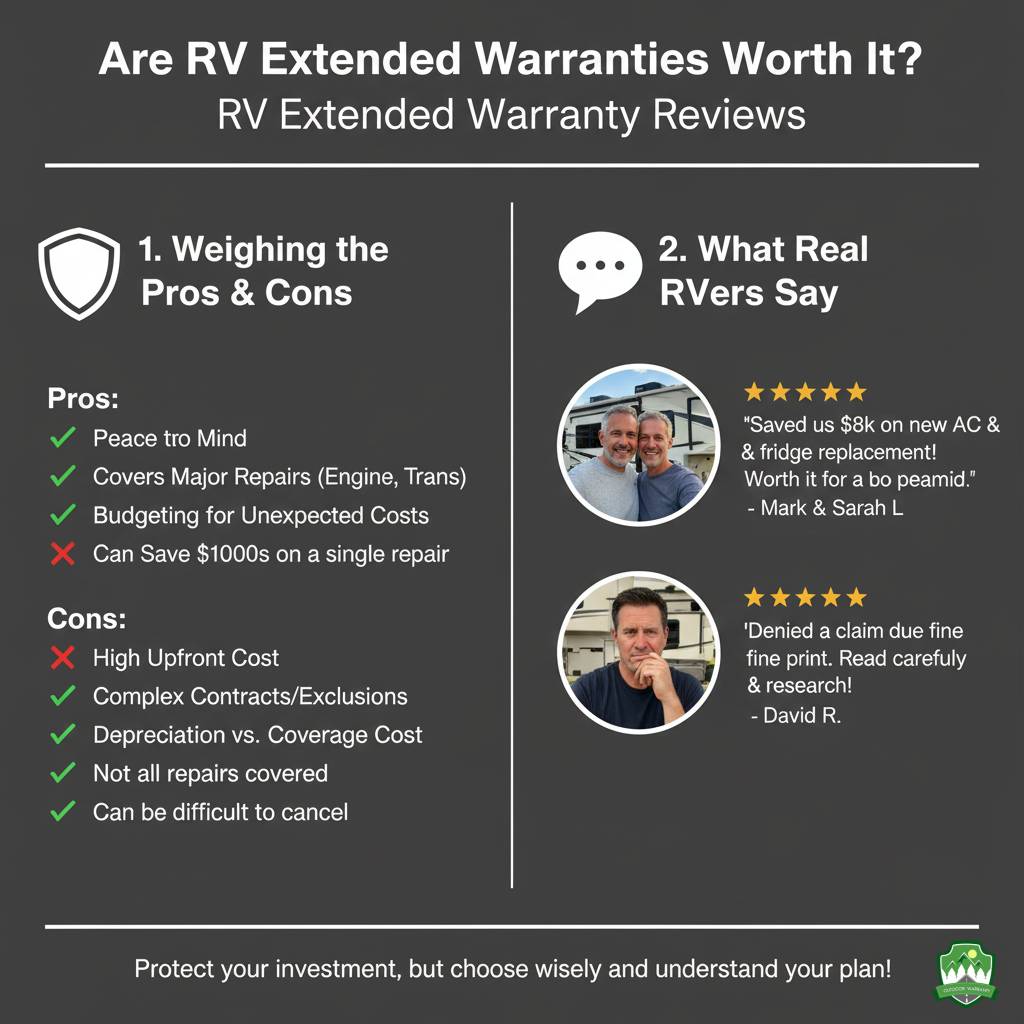
Yes, RV extended warranties are worth it. The warranties provide financial security when issues appear after the manufacturer’s warranty expires. RV extended warranties cover various mechanical and electrical systems, including the engine, transmission, appliances, plumbing, and electrical systems. The costs of these warranties vary based on the coverage level, the RV’s age, and the provider. Basic plans are more affordable but provide limited protection, while comprehensive plans, offering broader coverage, are pricier. Compare plans to find the right balance between cost and coverage for RV.
Standard RV warranties offered by manufacturers cover defects in materials and workmanship for a limited period. RV owners are responsible for repair costs. An RV extended warranty provides coverage once the standard warranty expires, helping to cover repairs related to mechanical and electrical issues that occur from regular use. RVers depend on their RVs daily, and any breakdown disrupts their lifestyle. An extended warranty protects them against expensive repairs, ensuring continued peace of mind while on the road. Full-time RVers experience more wear and tear, increasing the chances of needing repairs, making these warranties even more beneficial.
RV extended warranties and RV Insurance serve different purposes. RV Insurance covers accidents, liability, theft, and weather-related damage, while extended warranties protect against mechanical and electrical failures. RV insurance and warranty provide comprehensive coverage, as RV Insurance covers external damages, and the extended warranty covers internal mechanical failures. Consider several factors when choosing an RV extended warranty, including the reputation of the provider, the coverage options, eligibility (such as age and mileage limits), and the claims process. Reviewing RV protection plans from different providers is crucial to ensure owners get the best value for their RV.
An RV extended warranty provides excellent value for RV owners who want to avoid expensive repairs. Evaluating the warranty’s costs, coverage, and potential repair expenses is key. An extended warranty is a worthwhile investment for frequent RV users or owners with older vehicles. The price does not justify the need for occasional users or new RVs. RV protection plans offer peace of mind for RV owners who prefer extra security for their RV investment.
Yes, RV extended warranties are worth it because they provide security and coverage against sudden repair costs. RV extended warranties cover repair costs once the manufacturer’s warranty expires. Manufacturer warranties cover defects in materials or workmanship for a limited period, whereas extended warranties deliver longer-term protection. Coverage includes wear and tear, mechanical failures, and roadside assistance.
The primary purpose of an RV extended warranty is to protect owners from costly mechanical and electrical breakdowns. RVs have complex systems combining automotive and residential components, making repairs expensive. Extended warranties cover essential parts like the engine, transmission, drivetrain, electrical systems, and optional add-ons like seals, gaskets, or tires.
Extended warranties are worth it for several reasons. Extended warranties provide peace of mind by covering major repairs, reducing travel stress. The RV extended warranty saves money in the long run, as RV repairs are expensive. The warranties offer flexibility, allowing customization based on individual needs. Extended warranties are not necessary for everyone. The age and condition of the RV, how frequently it is used, and the owner’s ability to handle repair costs must be considered. Setting aside funds for pending repairs is better than acquiring an extended warranty.
An RV extended warranty cover and exclude are listed below.
Coverage includes essential vehicle components such as the engine, transmission, and drivetrain.
Repairs for appliances, wiring, air conditioning, and heating systems are included.
Freshwater and waste systems, including pumps and tanks, are covered under most policies.
The mechanisms that operate slide-outs and leveling jacks are usually included.
Onboard generators are covered for repair costs.
Warranties allow additional seals, gaskets, or tire coverage.
RV extended warranties exclude certain items, such as cosmetic damage like scratches, dents, or wear on upholstery. Routine maintenance like oil changes and tire rotations are excluded, as are pre-existing conditions present before the warranty was purchased. Damage from accidents, weather events, or natural disasters falls outside coverage. Non-mechanical items like cabinets and carpets are excluded as well.
An RV extended warranty costs from $2,000 to $20,000. The price depends on factors such as the RV’s age, mileage, type, and the level of coverage selected. Warranties range from $2,000 to $5,000, as the vehicle is under the manufacturer’s original coverage and has a lower risk for mechanical issues. Warranties for used RVs are more expensive, ranging from $2,000 to $7,000, due to the higher likelihood of wear and tear and the increased risk of breakdowns. RVs with higher mileage or commercial use have higher warranty costs.
The type of coverage selected impacts the price. Basic plans covering essential systems like the engine and transmission are less expensive, while comprehensive plans that include coverage for additional systems, roadside assistance, and travel interruption benefits cost more. Optional features, such as tire protection, further increase the warranty cost. Factors such as the RV’s make and model, the warranty provider’s reputation, and the purchase location affect pricing. The Extended RV Warranty Cost varies based on these aspects.
Yes, RV extended warranties are worth it for new and used RVs, but the decision depends on the circumstances. An extended warranty is a good investment for new RVs after the manufacturer’s warranty expires. The price of an extended warranty on a new RV is comparable to, or even cheaper than, a shorter warranty on an older RV. The likelihood of needing repairs increases as the RV ages, making an extended warranty a valuable option. Purchasing one when the RV is new ensures more value and protection as the vehicle operates.
Extended warranties are more expensive for used RVs due to the increased risk of breakdowns as the vehicle ages. Extended coverage is used for RVs for full-time or commercial RV users. The lack of manufacturer coverage and the higher potential for wear and tear make a warranty beneficial, providing peace of mind against unexpected maintenance costs. The value of an extended warranty depends on factors such as the RV type, age, and usage. Carefully reviewing coverage options and comparing prices from multiple providers help ensure the best value for the specific RV model and individual needs.
Yes, an RV extended warranty is worth it for full-time RVers. Full-time RVers, who use their vehicles extensively and travel frequently, encounter a higher risk of mechanical breakdowns than owners who use their RVs occasionally. Constant travel across different terrains, weather conditions, and road types leads to accelerated wear and tear on the RV’s essential systems. The engine, transmission, electrical systems, plumbing, and appliances strain continually. It increases the likelihood of breakdowns as the RV accumulates higher mileage.
An extended warranty offers comprehensive protection by covering the repair costs of these crucial components, helping full-time RVers avoid out-of-pocket expenses. An extended warranty protects RV owners from unexpected breakdowns during their travels due to the high cost of RV repairs. The coverage benefits high-mileage vehicles, which are more prone to failures as they age.
RVers on the move are more likely to suffer breakdowns in remote locations, resulting in long delays and expensive towing charges. An extended warranty sometimes includes additional services like roadside assistance, making a difference. The added peace of mind allows full-time RVers to maintain their RV Lifestyles without the stress of managing expensive repairs or being stranded on the road.
The best RV Extended Warranty Providers are listed below.
Outdoor Warranty stands out as an excellent choice for an RV extended warranty provider due to its strong reputation, transparent policies, and flexible coverage options. The provider is known for positive customer reviews and offers comprehensive coverage for essential systems like the engine, transmission, and appliances. Outdoor Warranty maintains transparency with no hidden fees, an important criterion when looking for RV extended warranty. The company’s claims process is efficient, allowing for timely repairs, and they offer flexible plans with additional services such as roadside assistance. The criteria make Outdoor Warranty a reliable and customer-focused option for RV owners.
Wholesale Warranties is well-regarded for its transparency and exceptional customer service. Wholesale Warranties offers a variety of RV insurance plans tailored to different RV types, working directly with customers to ensure smooth claim processing. Its reputation in the RV community has been built on providing clear, reliable information and maintaining strong customer relationships. Wholesale Warranties offers a range of options to meet diverse needs, including comprehensive coverage for various RV systems. The company’s claims process is efficient, ensuring that repairs are handled promptly. The provider is ideal for RV owners looking for a trustworthy, customer-focused service.
Good Sam is one of the most trusted names in the RV industry, known for providing mechanical breakdown insurance rather than a traditional warranty. The company offers flexible deductible options and covers various RV components. Good Sam has built a loyal customer base with a long-standing reputation due to its excellent customer service and broad coverage options. Good Sam’s claims process is streamlined, making it easier for RV owners to have their vehicles repaired quickly. Good Sam is ideal for RVers who want extensive coverage and flexibility, backed by a reliable and established provider.
America’s RV Warranty is known for its comprehensive coverage and flexibility, including mobile mechanic support. The provider is well-regarded for its quick and efficient claims processing, ensuring RV owners get back on the road with minimal delay. Its plans cater to various types of RVs, offering coverage for all essential systems. America’s RV Warranty is perfect for RV owners looking for a flexible and reliable extended warranty option.
RVing Solutions is a budget-friendly option that has been serving the RV industry since 2005. RVing Solutions is recognized for offering affordable yet reliable coverage, catering to RV owners who want a practical solution without breaking the bank. Its coverage options are less extensive than some more expensive providers, but it effectively covers essential systems. RVing Solutions offers a simple and transparent claims process, ensuring that their customers are well-supported when needed. The provider is best for RV owners seeking reliable coverage at an affordable price.
Eagle Vision is a newer provider in the RV extended warranty market, but it has quickly gained attention for offering competitive pricing and solid coverage options. Eagle Vision’s affordable plans and customer-centric approach have made them popular for budget-conscious RV owners. Eagle Vision covers the essential systems of RVs, and its claims process is straightforward and efficient. The company is ideal for RV owners looking for a cost-effective warranty provider without compromising coverage quality.
RV extended warranties and RV insurance serve distinct purposes when compared to protecting an RV investment. RV Insurance primarily covers accidents, theft, and liability. It is required in most states and provides financial protection in collisions, vandalism, natural disasters, and liability claims. Insurance includes liability, collision, and comprehensive coverage, addressing damage to the RV or injuries caused to others. It does not cover mechanical or electrical breakdowns that result from regular use over time.
RV extended warranties cover repairing or replacing mechanical and electrical components once the manufacturer’s warranty expires. The warranties cover systems such as the engine, transmission, appliances, and structural elements like slide-outs and leveling systems. Extended warranties focus on the internal workings of the RV, protecting it against failures due to regular use while excluding damage from accidents or misuse.
Extended warranties and RV insurance work together to provide comprehensive protection. Insurance covers external, unforeseen events, while an extended warranty covers mechanical and electrical issues arising from regular usage. RV insurance and extended warranty ensure that your RV remains protected from external damage and internal mechanical failures, preserving its value and functionality.
The pros and cons of RV extended warranties are listed below.
| Pros | Cons |
|---|---|
| Covers costly repairs for mechanical and electrical breakdowns, saving you from unexpected expenses. | Extended warranties can be expensive, with upfront fees and deductibles. |
| Provides reassurance during travels, especially for full-time RVers or those with older vehicles. | Not all components are covered, and some policies have fine print that may lead to denied claims |
| Warranties include perks like roadside assistance or mobile mechanic services. | Warranties are only available through specific dealerships or third-party companies. |
| Options to tailor coverage based on your RV type and usage. | A slow or cumbersome claims process results in disputes over what qualifies as coverage. |
| Protection after the manufacturer’s warranty expires, providing longer-term peace of mind. | Plans come with high deductibles, making them less cost-effective for minor repairs |
| Parts like cosmetic damages or pre-existing conditions are excluded from coverage. |
Yes, an extended warranty for travel trailers is worth it because it provides valuable support if the travel trailer lacks a robust manufacturer’s warranty. An extended warranty provides several advantages for travel trailers, including financial protection against costly repairs for mechanical and electrical breakdowns for older or heavily used trailers. It gives frequent travelers who rely on their trailers for extended journeys. Warranties offer perks like roadside assistance or mobile mechanic services, which are invaluable if issues arise.
Travel trailer extended warranty coverage differs from a motorhome or fifth wheel. Travel trailers do not have engines or powertrains, so warranties focus on components like appliances, plumbing, and electrical systems rather than engine-related parts. A travel trailer warranty is less expensive than a motorhome warranty because it does not include engine coverage. The value of an extended warranty on a travel trailer largely depends on the trailer’s age, how it is used, and risk tolerance.
The warranties offset the cost of major repairs, such as engine, transmission, or appliance failures, which are expensive. The warranties cover the repair or replacement of components that experience wear and tear or breakdowns due to everyday use, but maintenance of RVs that involves preventive care or regular servicing is not included. The distinction ensures that RV owners focus their resources on essential repairs rather than routine upkeep, leading to greater peace of mind.
The things that you should look for when choosing an RV Extended Warranty are listed below.
Check for age and mileage limits before selecting an RV extended warranty. Some providers may have restrictions based on the RV’s age or miles traveled. Warranties are unavailable for RVs older than 10-15 years or with over 100,000 miles. The limits vary by provider, so confirming the eligibility requirements is essential before purchasing.
The policies offer the most comprehensive coverage by covering everything except the explicitly listed exclusions. Converge policy is the best choice for maximum RV protection as it provides broader coverage. The guidelines specify precisely what is covered and exclude everything not mentioned. Included policies are more affordable than exclusionary ones, but their coverage gaps and potential surprises require careful attention when submitting a claim.
Research the reputation of the warranty provider. Review customer reviews, BBB ratings, and industry feedback to ensure reliability and trustworthiness. A provider with a strong reputation for transparency and fairness makes the claims process smoother and helps avoid unnecessary frustration.
Effective customer service support is essential for handling claims efficiently. Choose a provider with robust backing, quick claim resolutions, and clear communication. Good customer service impacts the experience, ensuring that repairs are handled without delays or complications.
RV extended warranties offer extra benefits, such as roadside assistance, towing, or trip interruption coverage. The perks provide added value for full-time RVers or travelers who travel frequently, as they help mitigate the inconvenience of unexpected breakdowns during a trip.
Yes, RV extended warranties are worth the money because they provide valuable financial protection against unexpected repairs, which can be costly. The RV extended warranties help offset the high expenses of mechanical and electrical breakdowns for older RVs or vehicles with heavy usage. Full-time RVers or travelers who rely on their RV for frequent trips benefit from peace of mind.
Evaluate the costs and exclusions before purchasing an extended warranty. The cost of these warranties is high, with high upfront costs and sometimes high deductibles. Warranties have exclusions or limitations, such as not covering specific components or pre-existing conditions. Reviewing the policy details thoroughly to ensure that it provides the coverage needed and aligns with budget and risk tolerance.
👉 Call Us 574–505–6246
Let us give you the best quote we can! 👇
You agree to receive automated follow-up, reminder, and promotional messages with varying frequency. Text and data rates may apply. Reply STOP to end. Text HELP for help. Click for Terms of Service and Privacy Policy.