1029, 4024 Elkhart Rd. Ste 26, Goshen, IN 46526
Call Us at 574-505-6246
INTEREST FREE PLAN
| Rated Excellent 4.8/5
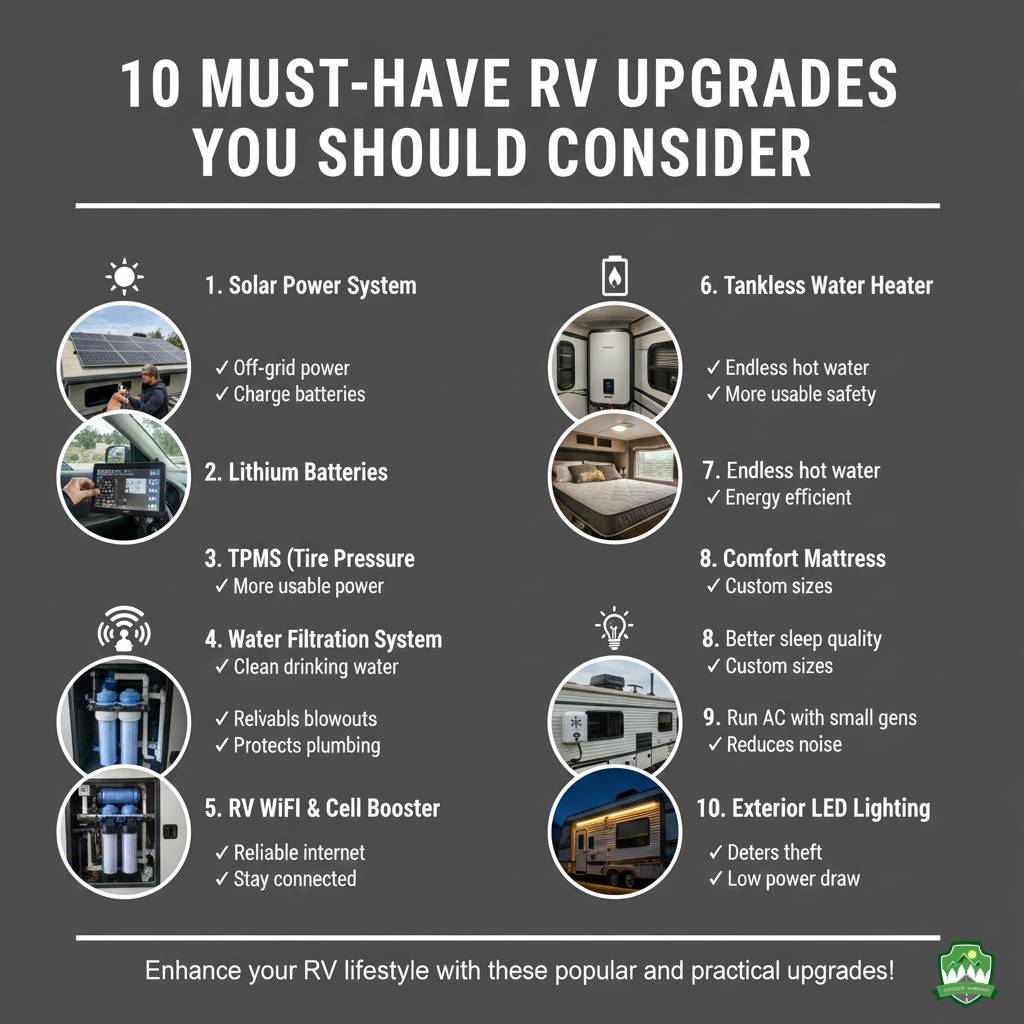
The RV upgrades you should consider are Tire Pressure Monitoring System (TPMS), solar setup, RV lithium battery upgrades, tankless water heater, and RV Wi-Fi upgrades for functionality and comfort. A TPMS ensures safety by alerting owners to tire issues, reducing the risk of accidents. A solar setup offers energy independence, allowing RV owners to power essential devices without relying on campsites. RV lithium battery upgrades provide reliable, long-lasting power storage, helping to eliminate the need for frequent recharging. A tankless water heater offers instant hot water without wasting valuable space or energy.
Other essentials include RV modifications for better comfort, such as interior enhancements or smart gadgets. The RV mods improve the living experience, making it more enjoyable for long trips. RV gadgets like Wi-Fi boosters, portable air conditioners, or backup cameras enhance travel convenience and safety. Upgrading all the systems ensures a smoother and more comfortable RV experience.
Tire Pressure Monitoring System (TPMS) is a digital sensor installed inside RV tires for real-time pressure readings. TPMS alerts drivers through dashboard notifications when tire pressure drops below safe levels. TPMS prevents tire blowouts by monitoring temperature fluctuations within each tire.
TPMS upgrades improve fuel efficiency by maintaining optimal tire pressure levels, and the installation costs range from $200 to $500 for a complete system. TPMS manufacturers offer 2 to 5-year warranties covering sensor defects, and insurance companies provide discounts for RVs equipped with TPMS technology.
Surge Protector safeguards RV electrical systems from power spikes and voltage fluctuations. Surge Protectors disconnect power automatically when detecting dangerous electrical conditions. The Surge upgrades protect expensive RV appliances and electronics from damage. Surge Protectors cost between $100 to $400 depending on amperage rating, and the warranties last 1 to 3 years with replacement coverage for damaged units. Insurance policies require surge protection for full coverage of electrical system damages.
RV Backup Camera provides clear rear visibility when parking or maneuvering in tight spaces. Backup Cameras eliminate blind spots through wide-angle lenses mounted on the RV exterior. The camera upgrades reduce accident risks while reversing into campsites. Backup Camera systems range from $150 to $800 based on display size and features, and the warranties cover manufacturing defects for 12 to 24 months. Insurance carriers offer premium reductions for RVs with installed backup camera systems.
Solar setup in an RV converts sunlight into electricity using roof-mounted panels, charge controllers, and batteries, allowing RV owners to live off-grid without relying on campground hookups or generators. The Solar upgrade provides energy independence, ensuring reliable power for appliances and devices while camping. The installation of the solar cost ranges from $2,000 to $5,000, depending on the system’s size. Solar kits come with 10 to 25-year warranties for the panels and 3 to 5-year coverage for electrical components. Insurance policies must be updated to cover the value of the solar system. Solar upgrades are worth considering for RV owners seeking long-term savings, eco-friendly power, and greater freedom on the road.
RV Lithium Battery Upgrade replaces traditional lead-acid batteries with lithium iron phosphate technology, offering better power storage. Lithium batteries provide consistent voltage and three times the usable capacity of standard batteries. Batteries last over 10 years and are half the weight of lead-acid batteries. Faster charging and deeper discharge cycles make them ideal for off-grid camping.
The upgrade costs between $2,000 and $6,000, depending on the amp hour capacity. Lithium batteries come with 5 to 10-year warranties against defects, and insurance coverage requires proof of professional installation. RV owners must consider upgrading for improved performance, longer battery life, and lighter weight, but be aware of the higher upfront cost.
Portable Generator provides backup AC power through compact fuel-powered units designed for RV use. The reliable power source runs air conditioners and high-draw appliances when shore power remains unavailable. Inverter technology produces clean electricity safe for sensitive electronics. The popular RV generator brands include Honda, Yamaha, and Champion models ranging from $500-$2,000. Generator warranties cover 2 to 3 years of residential use, with extended options available. Insurance policies include generator coverage under personal property protection, and proper maintenance ensures optimal generator performance and longevity.
RV Vent Fan is a roof-mounted system that provides powerful airflow with adjustable speed controls. The vent Fan removes cooking odors, excess moisture, and stale air from the RV, improving air quality inside. Better air circulation helps prevent mold growth and keeps temperatures comfortable. RV fan models have rain sensors and automatic closure mechanisms to protect against weather.
The vent fans range from $200 to $500, including installation hardware, and manufacturers offer 1 to 3-year limited warranties covering the motor and electrical parts. The insurance coverage includes vent fan damage under comprehensive RV policies. Upgrading to a vent fan improves air quality and comfort but requires an investment in the fan and installation.
Tankless Water Heater provides instant hot water by heating it on demand without needing a storage tank. Electric or propane-powered models save space while offering an unlimited hot water supply. The heater systems reduce propane usage and eliminate the wait time for water to heat up, and the temperature controls help maintain a consistent temperature for showers and dishes. The cost for complete tankless water heater systems ranges from $800 to $1,500, including the installation. Manufacturers offer 5 to 10-year warranties that cover leaks and defects. The Insurance requires proof of professional installation for coverage, and upgrading to a tankless water heater provides convenience and energy efficiency but requires a higher initial cost.
RV Wi-Fi Upgrade combines cellular boosters and routers to provide reliable internet connections while on the road. The system strengthens weak cellular signals and distributes Wi-Fi throughout the RV, supporting multiple devices for streaming, work, and communication. The professional-grade Wi-Fi equipment packages range from $200 to $450. The Wi-Fi systems come with 1-2 year warranties, with options for extended protection plans, and insurance coverage includes Wi-Fi equipment under personal property limits. Upgrading to an RV gadget like Wi-Fi enhances connectivity, making travel more convenient but requires a long-term investment.
RV Temperature Monitoring System tracks the interior climate using wireless sensors placed throughout the RV. The monitoring system provides real-time temperature readings for the refrigerator, freezer, and living areas on digital displays. Mobile alerts notify owners of harmful temperature changes while the RV is unoccupied. Remote monitoring helps prevent food spoilage and protects RV systems from freezing.
The complete monitoring system costs between $150 and $400, depending on the number of sensors. The manufacturers offer 1 to 3-year warranties covering hardware and software, and insurance providers offer loss prevention credits for having a monitoring system in place. Upgrading to a temperature monitoring system ensures the RV stays in good condition while saving on potential repair costs.
The upgrades affect the value of your RV through improvements that increase functionality. Popular upgrades like solar panels, which provide off-grid power, increase resale value by 15-20%. Remodeled interiors, including updated kitchens and bathrooms, raise value by making the RV more modern. Professional lithium battery installations add 10 to 15% value by providing reliable, long-lasting power storage, and backup cameras and safety monitoring systems contribute 5 to 8% value increase through enhanced safety features.
Over-customization decreases the RV’s value, limiting the vehicle’s appeal to a broader range of buyers. Highly personalized or extreme changes, such as custom paint jobs or niche features, are not suited to everyone’s taste and make the RV harder to sell. Buyers prefer practical features without being too specialized or customized.
Desirable upgrades include solar power systems, tankless water heaters, and Wi-Fi systems, which improve energy efficiency, living conditions, and connectivity. Features like overly customized interiors for Recreational Vehicle or impractical additions such as too many luxury items do not appeal to all buyers. Simple, functional upgrades add value than excessive or highly personalized modifications.
Yes, upgrading void your RV Warranty when modifications alter the original manufacturer specifications without proper authorization. Warranties cover factory-installed components for a specific time or mileage, but after-market installations performed by unauthorized service providers are excluded.
DIY modifications to the electrical system lead to complete warranty cancellation, while structural changes made by non-certified technicians void construction warranties. Huge plumbing changes performed by unlicensed installers void water system coverage.
RV owners must follow manufacturer-approved upgrade procedures and seek certified dealership installations, to maintain warranty protection. Professional documentation proving authorized modifications is required for warranty claims, ensuring continued support from the manufacturer.
RV owners must contact the manufacturer or review service manuals to understand which upgrades are allowed because authorized modifications are documented with approval letters, which protect the warranty rights of the owner. The factory-recommended components keep warranty coverage intact. RV owners must verify warranty terms by contacting the manufacturer or checking online warranty portals for clarification before making any upgrades.
Service advisors at dealerships guide owners through the warranty requirements and suggest acceptable upgrades. Owners must request written authorization for upgrades and consult the RV Extended Warranty to understand long-term coverage options.
Yes, the insurance covers RV modifications, but it depends on the policy and the changes made. Standard RV insurance policies do not automatically cover after-market upgrades, such as custom furniture or appliances. RV owners must add them to their policy to protect the additions. For example, custom furniture, solar panels, or upgraded appliances are added to the insurance coverage.
Communicate with the insurance provider about any new upgrades to ensure the insurance is included in the policy. The insurers offer specific coverage for customizations, protecting investments in upgrades. Reviewing the RV Insurance policies and discussing modifications with the insurer helps maintain adequate coverage, and regularly updating the insurance policy to reflect new modifications ensures continued protection.
The downsides of Upgrading your RV are listed below.
Upgrades such as solar panels, lithium batteries, and advanced appliances require huge investments. The expenses strain the budgets and do not always give immediate financial returns. Installing a solar power system costs between $2,000 and $5,000, depending on capacity.
Modifying an RV with unauthorized upgrades voids existing manufacturer warranties. It means that any future repairs or issues are not covered, leading to unexpected expenses. DIY electrical system modifications lead to complete warranty cancellation.
Upgrades require professional installation, which is complex and time-consuming. Improper installation leads to malfunctions or safety hazards.
Advanced solar systems, or high-efficiency appliances, require more maintenance. Increasing maintenance adds to the overall upkeep of the RV and involves specialized knowledge or services.
Not all upgrades are compatible with every RV model. Installing incompatible components leads to system failures or the need for additional modifications. Adding a high-capacity inverter without considering the RV’s electrical system capacity causes issues.
Upgrades affect insurance premiums or coverage. Inform the insurance provider about any modifications to ensure adequate coverage.
Excessive or niche upgrades do not align with the preferences of future owners, making the RV harder to sell.
Additional batteries or heavy-duty appliances add weight to the RV. It affects fuel efficiency, handling, and compliance with weight regulations.
Upgrades do not comply with local regulations or campground rules. Non-compliance leads to fines or the inability to use facilities
The things to consider before upgrading something on your RV are listed below.
Assess the financial impact of the upgrade, including the initial investment and long-term savings.
Ensure the proposed upgrade is compatible with the RV’s current systems and infrastructure.
Evaluate how the upgrade affects the RV’s weight distribution, towing capacity, and fuel efficiency.
Review the warranty terms to understand if the upgrade voids any existing coverage.
Determine if the installation requires professional assistance or is a DIY project.
Consider the ongoing maintenance needs of the upgrade and if maintenance fits the RV owner’s lifestyle.
Think about how the upgrade affects the RV’s resale value, especially if it is a highly personalized change.
Verify that the upgrade complies with all local laws and regulations to avoid potential fines or restrictions.
Consider how the upgrade improves energy efficiency and reduces reliance on external power sources.
Reflect on how the upgrade matches the RV owner’s travel habits and if it improves comfort or convenience based on use.
Yes, you can modify something in a rental RV, but limitations apply. Permanent or structural changes are prohibited. Temporary modifications, such as using adhesive hooks, are allowed. Unauthorized modifications lead to fees or penalties.
Rental agreements prohibit permanent alterations to maintain the RV’s condition. Temporary changes result in additional charges or penalties. Review the agreement and consult with the RV Rentals to understand permissible modifications before making any changes.
👉 Call Us 574–505–6246
Let us give you the best quote we can! 👇
You agree to receive automated follow-up, reminder, and promotional messages with varying frequency. Text and data rates may apply. Reply STOP to end. Text HELP for help. Click for Terms of Service and Privacy Policy.